Background: Maximizing Existing Data for Next-Generation AI
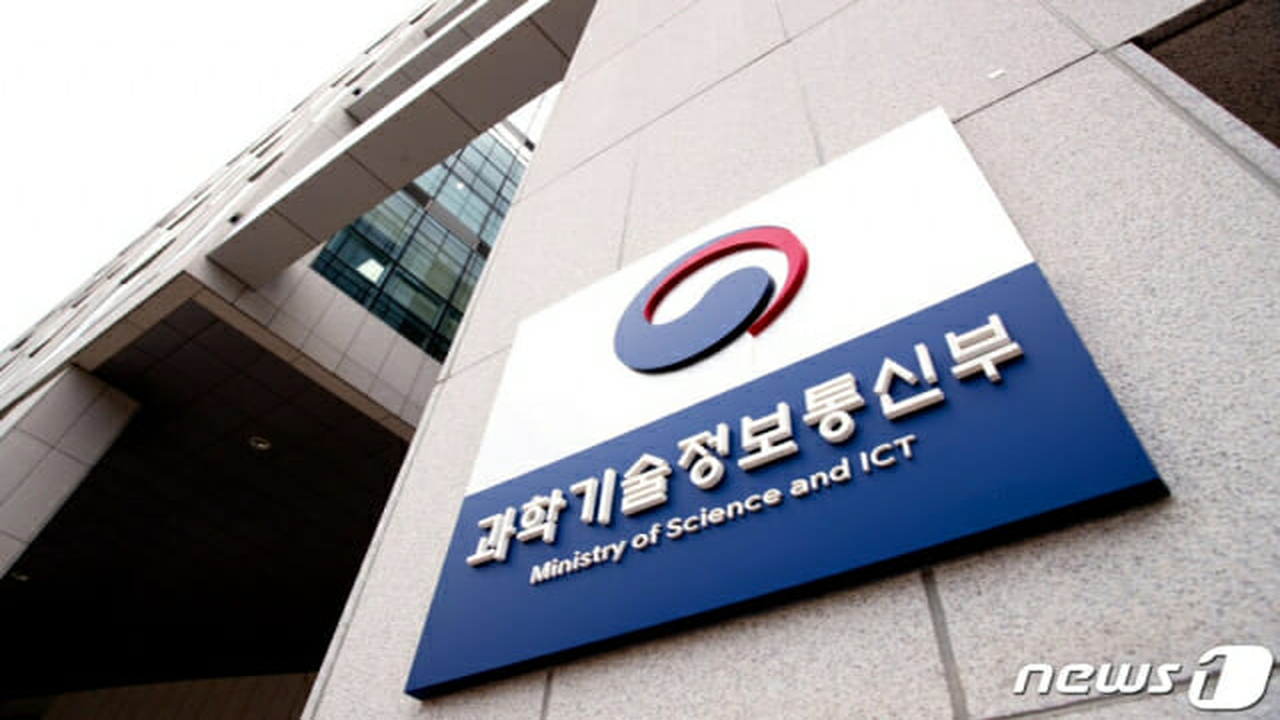
The Ministry of Science and ICT (MSIT) in South Korea has launched a novel initiative, the “AI Learning Data Upcycling” project, aimed at enhancing the nation’s artificial intelligence competitiveness. This project addresses a crucial challenge in AI development: the efficient utilization of vast amounts of existing, often siloed, AI learning data. The goal is to transform currently available discrimination-based AI labeling data into formats suitable for advanced generative AI models, including incorporating inference and action-oriented information. Announced by MSIT and the Korea National Information Society Agency (NIA) on April 30, 2026, this program focuses on repurposing 691 distinct types of data assets already present on the national AI Hub.
Key Findings: Dual-Track Data Transformation for LLMs and Physical AI
The upcycling process is specifically tailored for two critical domains: Large Language Models (LLMs) and Physical AI. For LLMs, the initiative involves restructuring existing text data to embed complex inference processes. This includes steps such as question-basis review, error verification, and answer confirmation, designed to equip LLMs with more sophisticated reasoning capabilities beyond mere text generation. This approach aims to reduce the need for entirely new data collection and labeling, leveraging existing resources more effectively.
- MSIT launches “AI Learning Data Upcycling” project.
- Repurposes existing discrimination-based AI data for generative AI.
- Utilizes 691 data types from the AI Hub.
- LLM data transformed to include inference processes (e.g., Q&A, error verification).
- Physical AI data upgraded to integrate visual info, language commands, and actions.
For Physical AI, the project focuses on upgrading existing image and video data. This involves integrating visual information with language commands and corresponding actions/controls. The objective is to enable AI to move beyond simple object recognition, developing the ability to understand temporal changes in situations, object interactions, and to generate goal-based actions. This is crucial for applications in robotics, autonomous systems, and advanced manufacturing, where real-world interaction and nuanced environmental understanding are paramount.
Technical Significance & Outlook: A Strategic Leap in AI Data Management
This “upcycling” strategy holds significant technical merit. By systematically enriching and restructuring existing datasets, South Korea aims to accelerate the development of more capable and competitive LLMs and physical AI systems. This approach not only optimizes resource utilization but also ensures that new AI models are trained on more comprehensive and contextually rich data, leading to improved performance and versatility. For the global AI community, this project offers a scalable model for leveraging existing data infrastructure, reducing data acquisition costs, and speeding up the innovation cycle. The outlook suggests that such strategic data management will be critical for countries seeking to maintain a competitive edge in the rapidly evolving field of generative and embodied AI, fostering the creation of highly intelligent agents and robots capable of sophisticated real-world interactions.