Background: The Shifting Paradigm of AI Competition
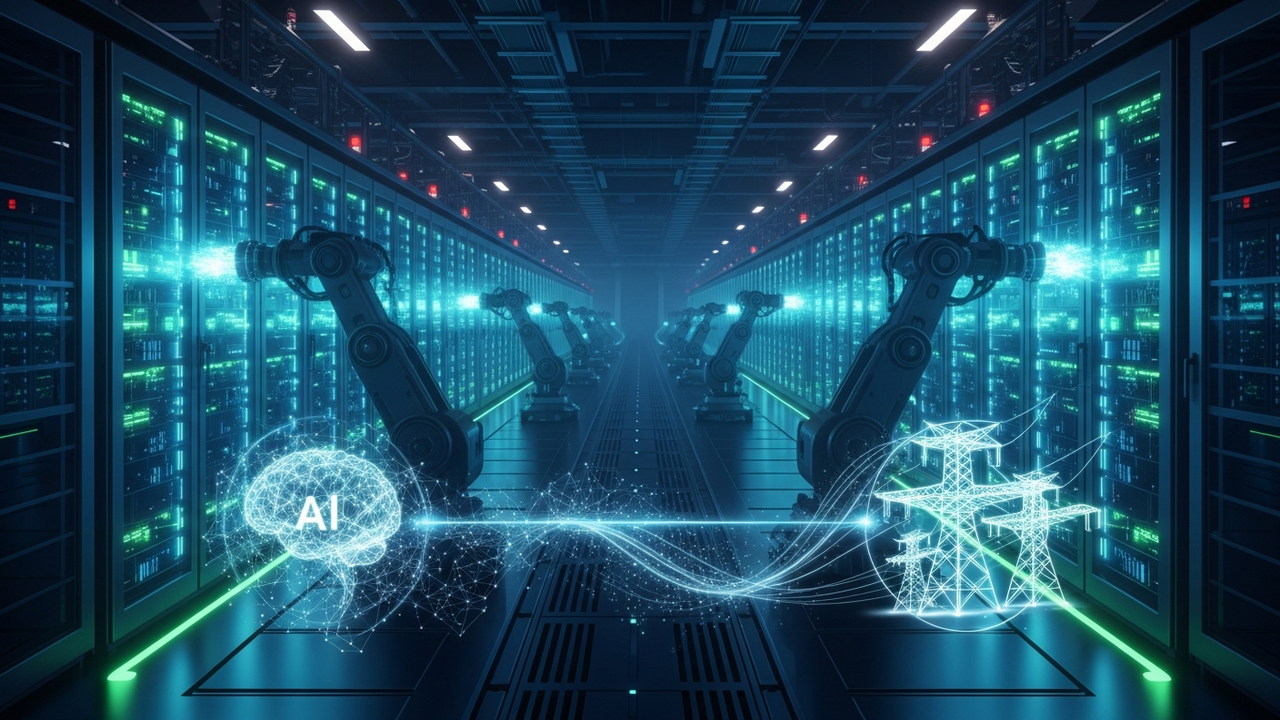
The rapid advancement of artificial intelligence has fundamentally reshaped the competitive landscape. The focus is no longer solely on the development of sophisticated AI models but has decisively shifted towards the construction of the underlying physical infrastructure required to power these models—dubbed the ‘AI factory.’ This comprehensive infrastructure encompasses power generation, land acquisition, advanced cooling systems, chip procurement, and operational expertise. In this evolving environment, NVIDIA, a leader in AI computing, and IREN, a prominent data center operator, have forged a strategic partnership to deploy AI infrastructure on an unprecedented scale, aiming for up to 5 gigawatts (GW) of capacity.
Key Findings: The Necessity of Massive AI Infrastructure Investment
This collaboration envisions integrating NVIDIA’s DSX (Data Center System for AI) aligned AI infrastructure into IREN’s robust data center pipeline. In an era where the quality and cost of generative AI services are profoundly dependent on the availability and efficiency of computational resources, investments of this magnitude are not merely advantageous but essential for maintaining competitive edge and driving innovation. The strategic imperative is clear: securing ample and efficient compute resources is paramount for the scalable and sustainable delivery of advanced AI services.
- NVIDIA and IREN partner to deploy up to 5GW of AI infrastructure.
- AI competition shifts from model development to building comprehensive ‘AI factories.’
- ‘AI factories’ encompass power, land, cooling, chips, and operations.
- Generative AI service quality and cost are heavily dependent on compute resource availability.
- Criteria for AI adoption now include stability, cost, and regional infrastructure, beyond just intelligence.
Technical Significance & Outlook: Redefining AI Adoption Criteria
The implications of this partnership are far-reaching. While the intelligence of an AI model was once the primary benchmark for adoption, the criteria are now expanding. For enterprises and individuals evaluating AI solutions, factors such as the ‘stability’ of the AI service, its ‘cost-effectiveness,’ and the ‘regional availability’ of its underlying infrastructure are becoming equally, if not more, critical. This signifies a maturation of the AI market, where practical deployment considerations are gaining prominence.
From a technical standpoint, the challenges of building a 5GW AI infrastructure are immense, involving:
- Power Generation and Distribution: Securing and distributing vast amounts of clean, reliable energy.
- Advanced Cooling Technologies: Implementing highly efficient liquid or immersion cooling solutions for dense GPU clusters.
- Optimized Chip-to-System Design: Integrating high-performance AI chips with efficient interconnects and system architectures.
- Operational Excellence: Developing robust management systems for complex, large-scale AI data centers.
The NVIDIA-IREN partnership is a blueprint for addressing these challenges holistically. The outlook suggests that similar strategic alliances will become increasingly common as the global demand for AI compute continues to soar. This shift underscores that the future of AI is not just about algorithmic breakthroughs but also about the engineering marvels that power them, demanding a new level of integration and scale in infrastructure development.