
Background: Retinitis Pigmentosa and the Promise of iPSC Therapy
Retinitis Pigmentosa (RP) is a progressive, inherited ocular disease defined by the gradual degeneration and loss of photoreceptor cells and retinal pigment epithelial (RPE) cells, ultimately leading to blindness. Current effective treatments are severely limited, leaving many patients to endure progressive vision loss and constriction of their visual fields. For RP, the crucial therapeutic strategy involves replenishing dysfunctional RPE cells and either protecting existing photoreceptor cells or facilitating their regeneration.
Induced pluripotent stem cells (iPSCs) have emerged as a highly promising avenue for regenerative medicine in RP, owing to their remarkable proliferative capacity and their ability to differentiate into a multitude of cell types, including RPE cells. Specifically, RPE cell sheets generated from healthy donor iPSCs offer the distinct advantage of mass production and, with appropriate genetic modifications to mitigate immunogenicity, hold the potential to become widely accessible to a broader patient population.
Key Findings / Results: Outcomes of the iPSC-Derived Retinal Sheet Transplantation Study
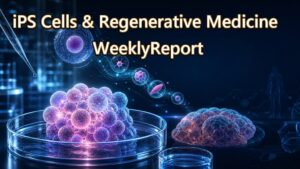
A clinical study (jRCTa050200027) focused on allogeneic iPSC-derived retinal sheet transplantation for patients with retinitis pigmentosa, spearheaded by Kobe City Eye Center Hospital in Japan, has concluded its observation phase, with final results published on September 30, 2025. The study’s primary objective was to rigorously evaluate the safety and potential efficacy of transplanting retinal pigment epithelial cell sheets, differentiated from healthy donor iPSCs, into the subretinal space of affected patients.
Key Research Findings:
- Safety Profile:
A paramount primary endpoint of this investigation was the safety of the transplanted cellular material. Over an extensive long-term observation period spanning 208 weeks (approximately four years), no severe adverse events attributable to the transplanted tissue were reported. Significantly, potential risks commonly associated with iPSC-derived cell transplantation, such as tumor formation (specifically teratoma formation), immune rejection, or unanticipated overgrowth, were not observed. This constitutes a critical finding, strongly indicating that iPSC-derived cells exhibit a robust safety profile within ocular tissue and can achieve stable, long-term engraftment. - Graft Engraftment:
Comprehensive imaging diagnostics and fundus examinations unequivocally confirmed the stable engraftment of the transplanted RPE cell sheets within the patients’ subretinal space. Successful and stable engraftment is an indispensable prerequisite for RPE cells to effectively exert their vital functions and provide crucial support to the surrounding photoreceptor cells. - Impact on Visual Function (Secondary Endpoints):
While the study’s primary focus was on safety and engraftment, preliminary data indicated stabilization or, in some cases, mild improvements in visual acuity and visual fields for a subset of patients. Nevertheless, the study emphasized that larger-scale clinical trials are imperative for a definitive and conclusive assessment of improvements in visual function. - Advantages of Allogeneic Transplantation:
The “allogeneic transplantation” strategy, leveraging iPSCs derived from healthy donors, offers substantial advantages over “autologous transplantation” (utilizing the patient’s own cells). These benefits include streamlined manufacturing processes, enhanced standardization of quality, reduced costs, and significantly shorter treatment timelines. These positive results robustly support the feasibility and potential widespread applicability of allogeneic transplantation.
Impact and Outlook: Accelerating Retinal Regenerative Medicine
The outcomes of this pivotal clinical study offer profound promise for the future trajectory of iPSC-based regenerative medicine specifically tailored for retinal diseases, encompassing retinitis pigmentosa. The unequivocal confirmation of safety and sustained engraftment provides a robust foundational platform for accelerating further clinical development.
- Acceleration of Clinical Development:
Building upon these encouraging results, the pace of larger-scale clinical trials involving iPSC-derived RPE cell transplantation for RP and other debilitating retinal degenerative diseases (e.g., Age-related Macular Degeneration) is anticipated to significantly accelerate. Furthermore, this opens avenues for the concurrent development of sophisticated combination therapies incorporating other cell types, such as photoreceptor precursors. - Overcoming Technical Challenges:
Future research and development efforts will need to systematically address several technical challenges. These include navigating the necessity of long-term immunosuppression regimes, optimizing the transplanted cells themselves (e.g., enhancing their functional capacity and long-term survival rates), and innovating more efficient and precise cell delivery methods. - Manufacturing and Cost Efficiency:
To facilitate the commercial-scale production and widespread clinical adoption of allogeneic RPE cell sheets, continuous advancements are imperative. These include refining mass culture techniques for producing high-quality cells at scale, developing highly automated manufacturing processes, and achieving substantial improvements in overall cost efficiency. - Contribution to Quality of Life (QOL) Improvement:
Ultimately, the successful implementation of iPSC-derived retinal sheet transplantation holds the transformative potential to restore lost visual function and dramatically enhance the quality of life for countless patients afflicted with retinitis pigmentosa.
This study stands as a landmark achievement, exemplifying Japan’s unwavering commitment to iPSC research and its consistent translation from fundamental basic science to tangible clinical application, thereby making a substantial and globally impactful contribution to the advancement of regenerative medicine in ophthalmology.
Source: https://jrct.mhlw.go.jp/latest-detail/jRCTa050200027




Comments