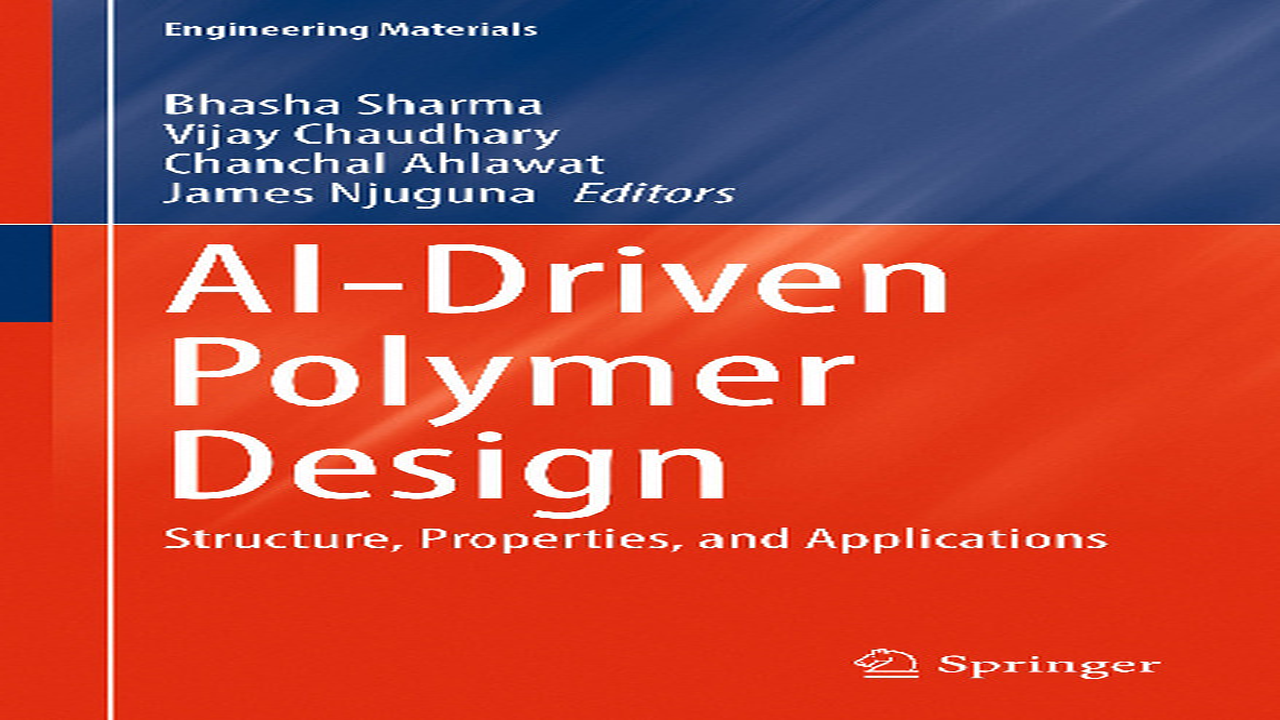
Background
The field of materials science constantly seeks the discovery and development of polymers with novel functionalities. However, fully understanding the complex relationships between polymer molecular structures and their diverse properties, and subsequently synthesizing materials that meet specific requirements, has traditionally been an incredibly time-consuming and costly process. Conventional materials development heavily relies on experimental trial-and-error and empirical rules, often requiring many years for new materials to reach the market. There is a strong imperative to find innovative approaches that overcome this inefficiency and enable more rapid and systematic design and synthesis of new polymers.
Key Findings / Results
In recent years, Artificial Intelligence (AI) technologies, specifically Machine Learning (ML) and Deep Learning (DL), have emerged as powerful tools poised to transform the paradigm of polymer design and materials discovery. AI can learn vast amounts of information from existing polymer datasets to identify complex correlations between molecular structures and material properties. This capability has led to significant advancements in areas such as:
- Improved Property Prediction Accuracy: AI can predict properties like glass transition temperature, mechanical strength, and thermal stability from known structures with high precision.
- Inverse Design: AI proposes polymer structures that possess desired properties, drastically narrowing the experimental search space.
- Synthesis Pathway Optimization: AI identifies optimal synthesis routes and reaction conditions, reducing experimental failure rates.
- Discovery of Novel Polymers: Data-driven approaches enable efficient exploration of previously overlooked polymer candidates.
Consequently, this allows for the rapid design and optimization of polymers tailored to specific needs, such as high-performance dielectric materials or environmentally friendly biodegradable plastics. AI-driven experimental optimization strategies, like Bayesian optimization, significantly reduce the number of necessary experiments, dramatically increasing research efficiency and accelerating time-to-market for innovative materials.
Technical Significance & Outlook
The integration of AI-driven polymer design promises to have an immeasurable impact across a wide range of industrial sectors, including medicine, energy, electronics, and automotive. In medicine, it will accelerate the development of biocompatible polymers for drug delivery systems and regenerative medicine. In the energy sector, efficient polymers for solar cells and safer polymer electrolytes for batteries can be rapidly developed. For electronics, the design of high-performance dielectrics and semiconductor encapsulants crucial for next-generation devices will be optimized. AI overcomes the challenges of complex multivariate analysis that traditional materials scientists faced, removing bottlenecks in materials development. In the future, the convergence of AI with automated experimental systems (e.g., ‘robot scientists’) could lead to the realization of ‘autonomous laboratories’ capable of self-discovering, synthesizing, and evaluating new materials without human intervention, fundamentally transforming the paradigm of materials science research and accelerating technological progress at an unprecedented rate.
Source: https://dokumen.pub/ai-driven-polymer-design-structure-properties-and-applications.html









Comments