Project Background and Decarbonization Imperative
The United Kingdom is aggressively pursuing its net-zero targets by 2050, with industrial decarbonization identified as a critical challenge. Green hydrogen is emerging as an indispensable element for driving the energy transition in hard-to-electrify sectors like manufacturing and heavy industry. The Barrow Green Hydrogen project is designed to contribute directly to this national objective by providing a sustainable energy source for regional industrial consumers.
Final Investment Decision (FID) and Technical Specifications
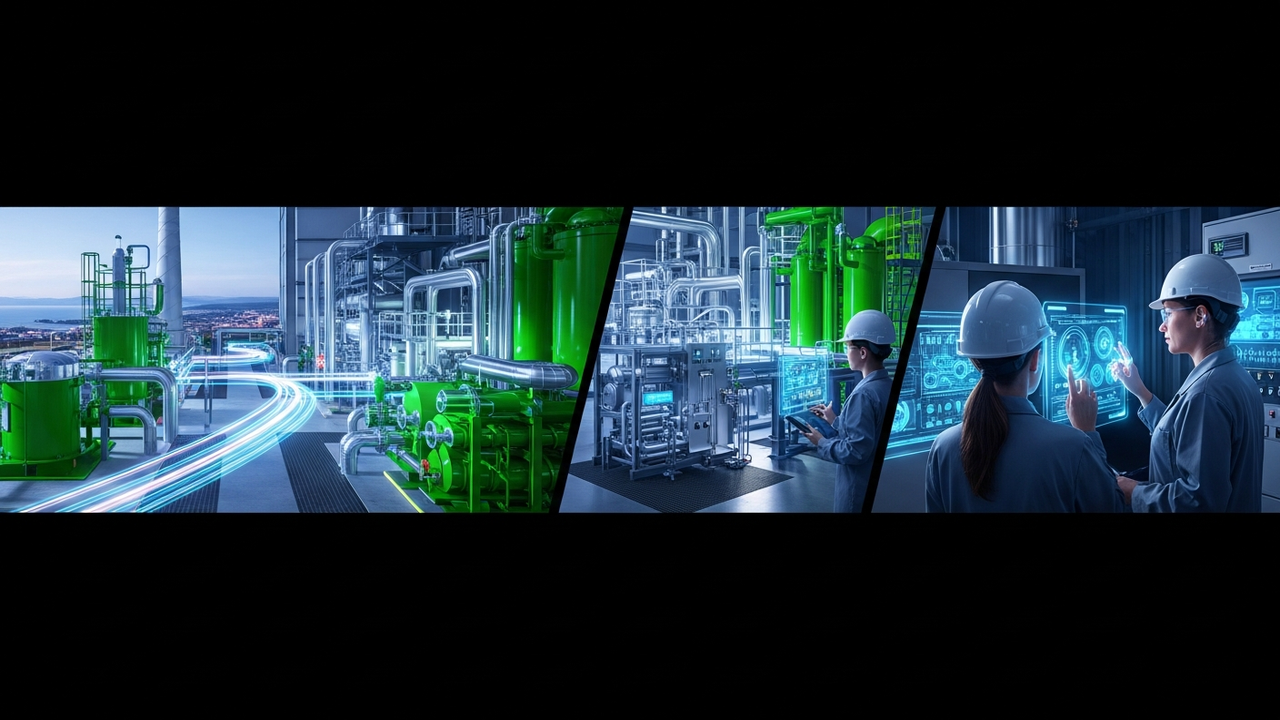
Plug Power and Carlton Power have announced the Final Investment Decision (FID) for their 30MW green hydrogen production facility, to be located in Barrow-in-Furness, Cumbria. This decision signifies that the project is financially viable and ready to proceed to its construction phase. The facility will integrate six state-of-the-art GenEco PEM (Proton Exchange Membrane) electrolyzers from Plug Power. These electrolyzers will utilize renewable electricity to split water, generating high-purity green hydrogen.
- Production Capacity: The project is engineered to produce approximately 100 GWh of green hydrogen per year. This output is primarily targeted for industrial consumption, specifically to supply Kimberly-Clark’s local manufacturing operations.
- Technological Advantages: PEM electrolyzers are highly valued for their rapid response capabilities and ability to operate efficiently under partial load, making them ideal for integration with intermittent renewable energy sources. This ensures a stable and reliable supply of green hydrogen.
- Regional Economic Impact: The construction and operational phases of the project are expected to create local employment opportunities and stimulate economic activity in the region.
Industry Impact and Future Outlook
The Barrow Green Hydrogen project is poised to serve as a significant milestone in the UK’s industrial decarbonization strategy. It will provide a tangible model for energy-intensive industries, such as papermaking, to transition from fossil fuels to green hydrogen. The success of this project is expected to yield crucial lessons and insights for the deployment of future large-scale green hydrogen hubs, accelerating the development of a broader green hydrogen ecosystem across the UK. Moreover, it will contribute to reducing emissions throughout the supply chain, fostering a shift towards more sustainable manufacturing practices.
Source: #





Comments