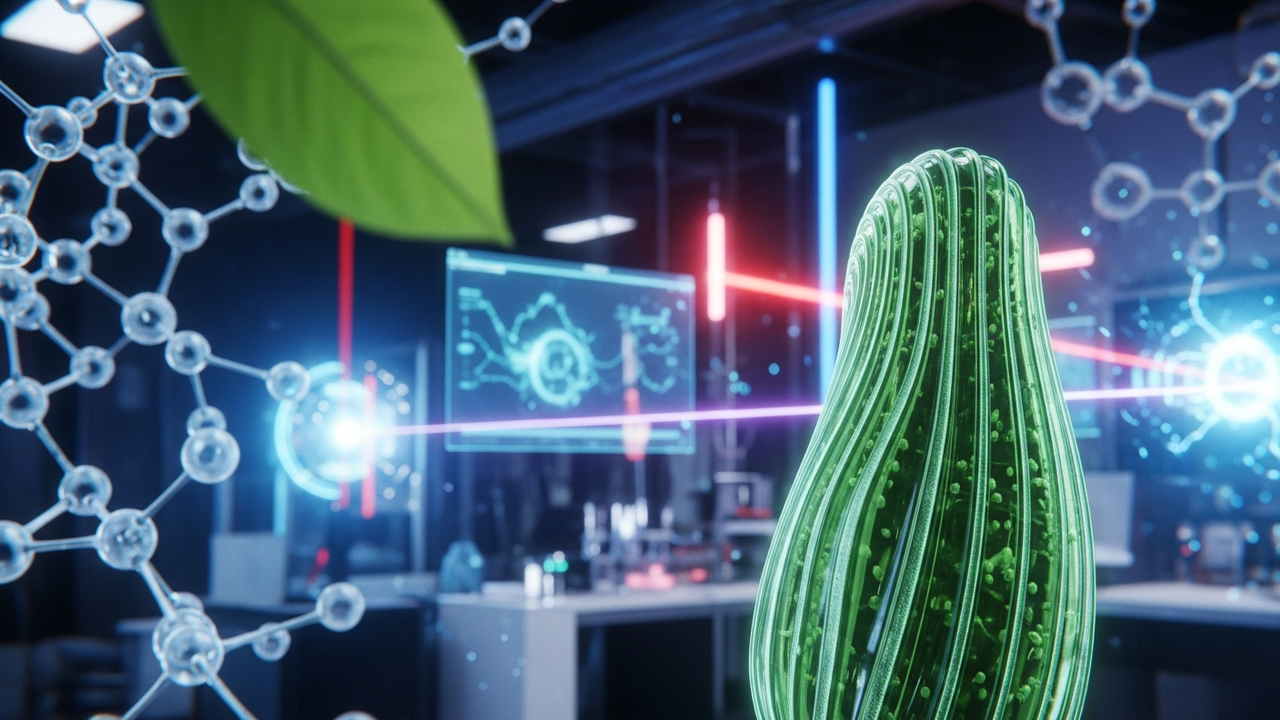
Background: Challenges in Biobased Composites and the Importance of Interfacial Compatibility
In response to plastic pollution, biobased polymers like polylactic acid (PLA) have gained attention for their biodegradability and renewability. However, neat PLA often suffers from brittleness and thermal instability. To improve mechanical properties such as strength and toughness, efforts are being made to create composites with other biobased polymers, such as bio-ethanol esters (BEE). A common challenge in blending different polymers is their often-low compatibility. Poor compatibility leads to phase separation within the material and weak interfacial adhesion, preventing the desired improvement in the final composite’s mechanical performance. Overcoming this interfacial compatibility issue and developing high-performance biobased composites is a critical research area in sustainable materials science.
Key Findings: Enhancing Compatibility and Performance through Integrated MD and Experimental Approaches
This study employed an innovative integrated approach combining Molecular Dynamics (MD) simulations and experimental methods to enhance the compatibility and overall performance of biobased BEE/PLA composites. The key technical features of this integrated approach are:
- Utilization of High-Molecular-Weight Compatibilizers: High-molecular-weight compatibilizers were introduced to promote chemical or physical interactions between BEE and PLA. These compatibilizers act as ‘bridges’ between the two polymer chains, reinforcing interfacial adhesion.
- Molecular Dynamics (MD) Simulations: Before or in parallel with experiments, MD simulations were conducted to model the interactions of BEE, PLA, and compatibilizers at the molecular level. This enabled detailed prediction and understanding of how compatibilizers influence the microstructure, compatibility, and interfacial adhesion of the polymer blend at the atomic level. For example, the mechanism by which compatibilizer introduction lowers interfacial energy and suppresses phase separation was elucidated.
- Experimental Validation and Characterization: Based on insights from MD simulations, BEE/PLA composites were physically manufactured under various compositions and conditions, and their mechanical properties (tensile strength, impact strength, toughness), thermal properties (DSC, TGA), and morphological properties (SEM, TEM) were thoroughly evaluated. This confirmed the validity of simulation predictions and guided optimal material design.
- Comprehensive Analysis of Interfacial Behavior: Through comparative validation between MD simulations and experimental data, a comprehensive analysis was performed to understand how compatibilizers affect intermolecular forces, entanglement, and diffusion behavior at the BEE-PLA interface. This in-depth understanding provides guidance for future composite material design.
This integrated approach successfully demonstrated that the introduction of high-molecular-weight compatibilizers significantly improves the interfacial compatibility of BEE/PLA composites, leading to substantial enhancements in mechanical properties such such as tensile strength and toughness.
Technical Significance & Outlook: Design Guidelines for Sustainable High-Performance Materials
The results of this research provide crucial theoretical foundations and practical guidelines for designing high-performance biobased composite materials. Combining MD simulations with experiments enables a deeper understanding of the relationship between material microstructure and macroscopic properties, thereby streamlining the development process. This is expected to lead to advancements in the following areas:
- Sustainable Packaging Materials: Enhancing the strength and durability of PLA-based packaging materials, expanding their range of application.
- Automotive Components and Building Materials: Developing lightweight, environmentally friendly high-performance components.
- Biomedical Materials: Biodegradable and mechanically robust implants and medical devices.
This novel methodology is broadly applicable to the interfacial science research of other polymer blends and composite materials, not just biobased polymers, and will contribute to accelerating material innovation towards a sustainable society. Future research will focus on precise control over long-term stability and biodegradation behavior.



Comments