Background
Quantum computing holds immense potential to revolutionize diverse fields, from drug discovery and materials science to financial modeling, through its unparalleled computational power. Consequently, global investment in quantum technologies is accelerating, with governments and major corporations dedicating vast resources to gain a competitive edge. However, a significant barrier to the practical implementation and widespread adoption of quantum computing has been the demanding requirement for ultracold environments—often near absolute zero—for current technologies such as superconducting qubits and ion traps. The complex, large-scale infrastructure needed to maintain these extreme conditions has severely limited accessibility and escalated operational costs.
Key Findings
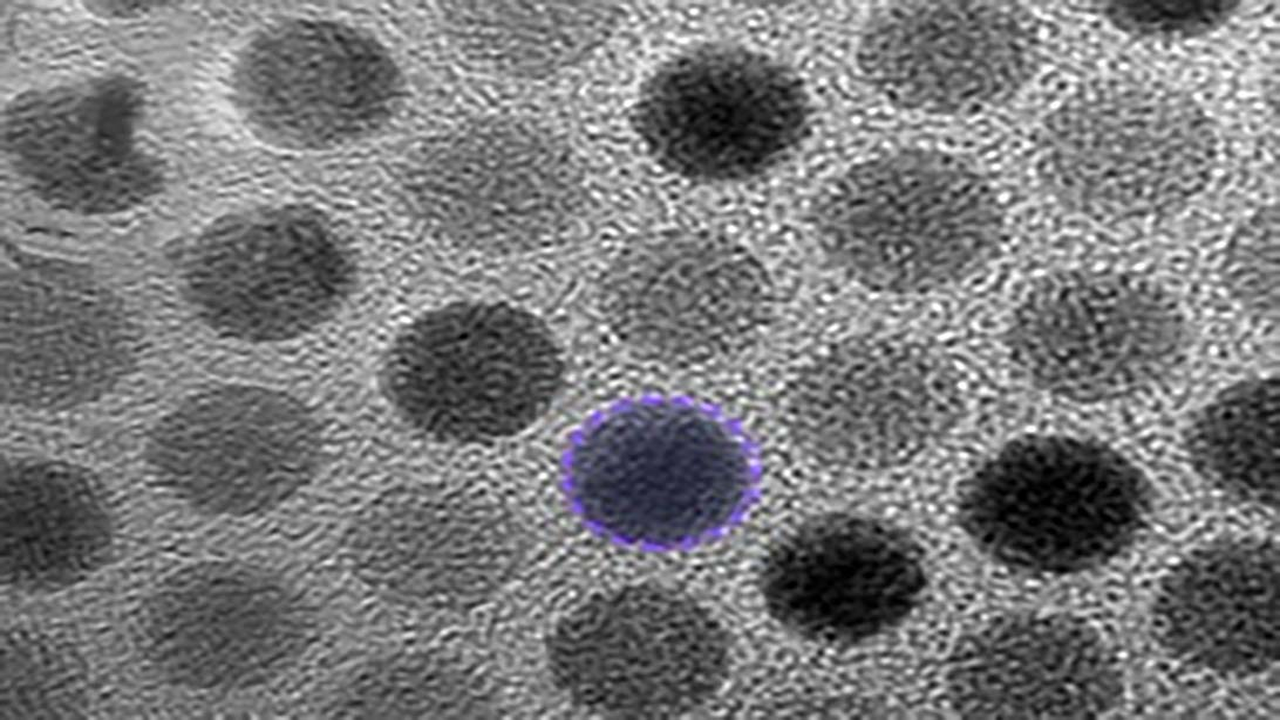
A collaborative research team from Brown University and the University of Michigan has achieved a significant breakthrough: the stable generation of a new phase of matter, previously only theorized, by precisely manipulating nanoscale building blocks. This groundbreaking structure, termed a “superlattice,” provides a critical pathway toward realizing quantum computing at room temperature and promises to accelerate innovation across the entire field of information science.
The researchers constructed these nanoscale superlattices by alternately stacking extremely thin layers of different materials. Through this meticulous design, they discovered that a novel “quantum phase” is stably maintained within the material, wherein electrons and other quantum degrees of freedom exhibit specific, predicted behaviors. Crucially, this new quantum phase demonstrates remarkable robustness against external thermal noise, suggesting the potential to sustain quantum coherence—the ability to maintain a quantum state—for comparatively long durations even under ambient conditions.
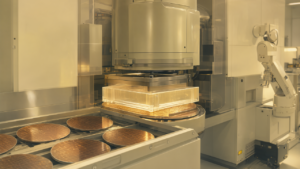
The technical approach involved advanced nanofabrication techniques, including Atomic Layer Deposition (ALD) and Molecular Beam Epitaxy (MBE), allowing for the exquisite control over the thickness and composition of each individual layer. This level of precision was essential for engineering the desired quantum properties.
The realization of quantum computing that operates at room temperature would overcome the major barrier of cryogenic requirements, dramatically enhancing the accessibility of quantum technology. This development is not only critical for significantly reducing research and development costs but also for expanding quantum applications into a much wider array of fields, ultimately paving the way for general-purpose quantum computers.
Beyond quantum computing, this superlattice breakthrough opens doors for next-generation ultra-low-power electronics, highly sensitive sensors, and devices exhibiting novel material properties. Future research will focus on further optimizing the stability and coherence time of this new quantum phase and, critically, on constructing practical elements that can function as qubits. Should practical room-temperature quantum computers materialize, they would solve complex problems currently intractable for classical computers, vastly expanding the frontiers of scientific and technological endeavor. This discovery has the potential to be a true “game-changer,” blurring the boundaries between physics and engineering and redefining the future of information science.