Key Findings
Nanomaterial-based biosensors are driving revolutionary changes across diverse fields, including clinical diagnostics, environmental monitoring, and food safety, owing to their exceptional sensitivity, selectivity, and rapid response times. Advanced nanomaterials such as gold nanoparticles, graphene, and carbon nanotubes are significantly pushing the performance limits of conventional biosensors, enabling detection at the nanoscale.
Technical / Clinical Details
The enhanced performance of nanomaterial-based biosensors primarily stems from the following mechanisms and determinants:
- High Surface Area: Nanomaterials possess an extremely high surface-area-to-volume ratio, which dramatically increases the available interaction sites for target molecules. This maximizes the number of detectable molecules and improves sensor sensitivity. For instance, graphene and carbon nanotubes (CNTs) exhibit excellent adsorption capabilities due to their monolayer or tubular structures.
- Unique Physicochemical Properties: Gold nanoparticles (AuNPs) significantly enhance optical detection sensitivity through localized surface plasmon resonance (LSPR) effects. Graphene, with its high electrical conductivity and field-effect transistor (FET) properties, can convert minute charge changes into electrical signals, enabling highly sensitive detection of biomolecules like DNA, proteins, and viruses. CNTs improve electrochemical biosensor performance through their electron transport properties and mechanical strength.
- Immobilization of Biorecognition Elements: Nanomaterials provide excellent platforms for stable and high-density immobilization of biorecognition elements such as antibodies, enzymes, and nucleic acid aptamers. This enhances sensor selectivity, allowing accurate identification of specific targets even in complex biological samples.
- Rapid Response Time: The short-range transport characteristics and highly efficient surface reactions of nanomaterials significantly reduce the time from target molecule binding to signal generation, enabling real-time or near-real-time detection.
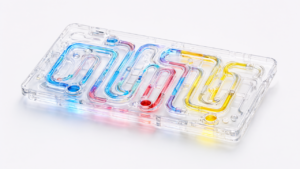
These properties allow nanomaterial-based biosensors to be applied in a wide range of applications, including early diagnosis of cancer biomarkers (detection at picomolar to femtomolar levels), ultra-trace detection of heavy metals and pollutants in the environment, and rapid screening of allergens and pathogens in food. Notably, their integration into lab-on-chip devices and flexible wearable diagnostic systems is advancing, offering high-precision, portable analytical solutions.
Background & Context
In modern society, early disease detection and prevention, environmental pollution monitoring, and ensuring food safety are pressing challenges. Conventional detection technologies have faced limitations in terms of sensitivity, selectivity, response time, or cost. Advances in nanotechnology have opened new avenues to overcome these challenges, fundamentally improving biosensor performance. Nanomaterials, with their unique properties, serve as a bridge between biology and electronics, providing innovative tools for numerous industrial sectors, including healthcare, environmental science, and agriculture.
Strategic Significance & Outlook
Nanomaterial-based biosensors are expected to continue their rapid evolution, becoming indispensable technologies in personalized medicine, smart agriculture, and advanced environmental monitoring systems. Future developments anticipate the discovery and optimization of more diverse nanomaterials, enhanced data analysis capabilities through integration with Artificial Intelligence (AI), and the creation of multiplex detection platforms. Challenges include ensuring the biocompatibility and long-term stability of nanomaterials, as well as managing cost-efficiency and quality control in large-scale production. However, as these challenges are overcome, nanomaterial-based biosensors will further increase their importance as powerful tools for safeguarding our health and living environment.