Key Findings
A novel modular input-output biosensor design utilizing de novo protein switches has been presented. This innovative approach has successfully led to the development of functional biosensors responsive to specific helical binders, including glucagon-like peptide-1 (GLP-1), neuropeptide Y (NPY), and peptide YY (PYY). This design holds significant potential to broaden the diversity and applicability of diagnostic tools.
Technical / Clinical Details
At the core of this biosensor design is a protein structure called a ‘latched domain,’ which was designed using computational chemistry. Researchers modularly incorporated helical binders for GLP-1, NPY, and PYY into these latched domains. Upon binding to their specific target molecules (analytes), these binders induce a conformational change in the latched domain. This structural change is transduced to an effector output module, ultimately generating a visually interpretable colorimetric signal.
- Modular Design: A key advantage of this approach is its modularity, allowing different helical binders to be easily ‘plug-and-played.’ This facilitates rapid development of new biosensors for various targets.
- Computational Design: The protein switches were designed based on precise computational modeling, which efficiently yielded protein structures with specific binding affinities and switching functionalities.
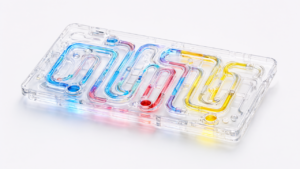
- Colorimetric Output: The sensor’s output manifests as a color change, often mediated through enzymatic reactions, allowing results to be read by the naked eye without requiring expensive instrumentation. This is particularly useful for point-of-care (POCT) diagnostics and on-site testing.
- Sensitivity: The developed biosensors demonstrate the capability to detect targets at concentrations close to clinically relevant levels, such as plasma hormone levels or disease marker concentrations. This suggests potential applications in early diagnosis and disease monitoring.
Specifically, GLP-1 is a hormone that regulates blood glucose, while NPY and PYY are neuropeptides involved in appetite and energy balance. Accurate monitoring of these molecules is critical in managing diabetes, obesity, and eating disorders.
Background & Context
Current biosensor development often relies on highly specific recognition molecules (e.g., antibodies, aptamers) for target detection, but their design and optimization are time-consuming and costly. Furthermore, visualizing detection results frequently requires complex instrumentation. The modular design using de novo protein switches addresses these challenges by providing a platform for faster and more flexible development of new diagnostic tools. There is a growing demand for non-invasive, low-cost POCT devices, particularly in the diagnosis and monitoring of diabetes and metabolic disorders.
Strategic Significance & Outlook
This modular biosensor design has the potential to be applied not only to GLP-1, NPY, and PYY but also to many other proteins, peptides, and even small-molecule biomarkers. In the future, integrating these protein switches into wearable devices or lab-on-a-chip systems is expected to lead to powerful tools for personalized health monitoring, early disease diagnosis, and drug screening. The commercialization of this technology could have a significant impact on the diagnostic market, contributing to the provision of more accessible diagnostic solutions.