Key Findings
Researchers at the National University of Singapore (NUS) and the Solar Energy Research Institute of Singapore (SERIS), in a strategic collaboration with China’s JinkoSolar, have achieved a remarkable 32.76% certified power conversion efficiency (PCE) for a perovskite-silicon tandem solar cell. This record-breaking achievement ranks among the highest for monolithic perovskite/tunnel oxide passivated contact (TOPCon) tandem solar cells globally. Furthermore, the device demonstrated exceptional stability, retaining 91% of its initial efficiency after 1,700 hours of continuous operation under accelerated degradation tests, significantly boosting prospects for practical application.
Technical Details
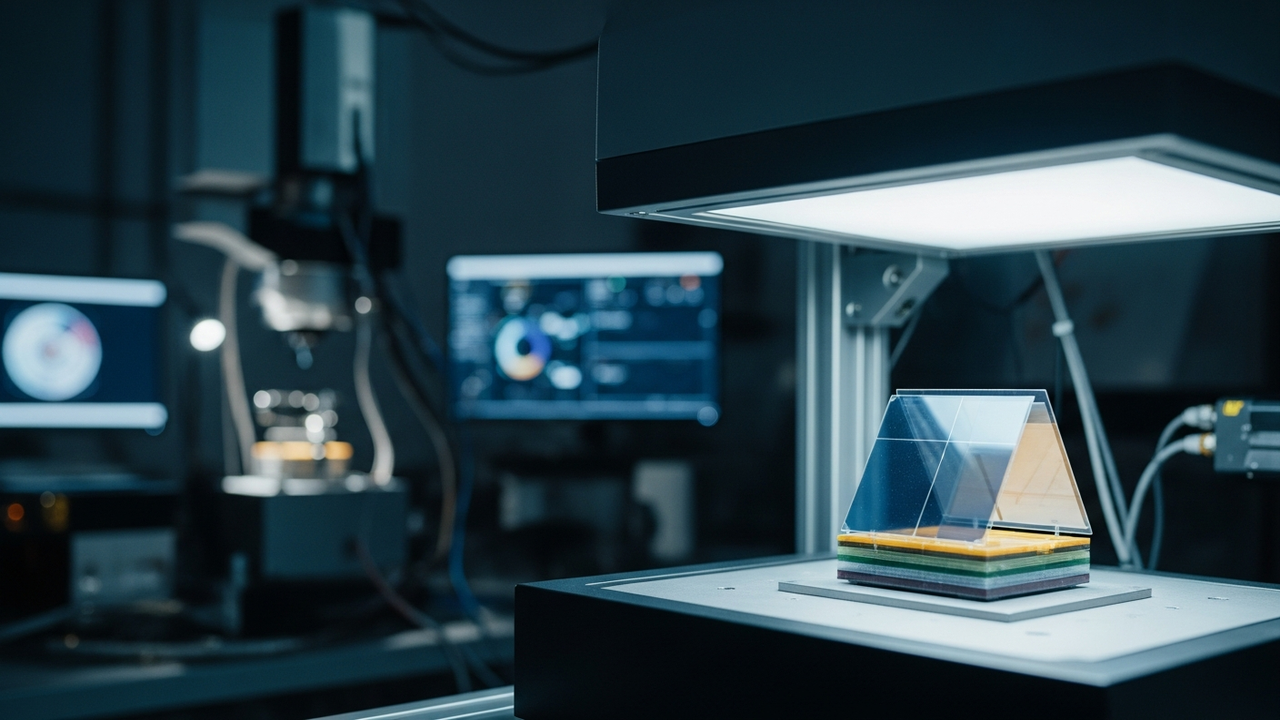
This innovative tandem solar cell employs a stacked architecture, with a transparent perovskite layer on top and a high-efficiency silicon TOPCon cell beneath. Key technological advancements include the optimized interface passivation between the perovskite and silicon layers, along with precise tuning of the light absorption spectrum. This design allows for efficient absorption of different light wavelengths, maximizing overall power generation. Specifically, uniform perovskite film deposition techniques and the integration of stabilizing layers to suppress ion migration have been instrumental in maintaining high efficiency over extended periods. The technology is also designed with compatibility for large-scale production processes, envisioning integration into existing silicon solar cell manufacturing infrastructure.
Background & Context
Perovskite solar cells are gaining significant attention as a next-generation technology poised to surpass the limitations of traditional silicon solar cells, owing to their high efficiency potential and low manufacturing costs. The tandem architecture, combining perovskite with silicon, is particularly promising for achieving efficiencies beyond the theoretical limits of single-junction devices. This breakthrough exemplifies the success of international collaboration between Singaporean research institutions and a major Chinese solar manufacturer, marking a critical milestone towards global clean energy goals. The development of such high-efficiency, highly stable tandem cells fortifies the technological foundation necessary to accelerate the global energy transition.
Strategic Significance & Outlook
The certified efficiency of 32.76% and high stability after 1,700 hours provide compelling evidence for the commercial viability of perovskite-silicon tandem solar cells. This technology is expected to see widespread adoption across various applications, including residential rooftops, commercial buildings, and utility-scale solar farms. With the involvement of major manufacturers like JinkoSolar, large-scale production and market introduction are becoming increasingly realistic within the next few years. This achievement is poised to play a crucial role in further reducing the cost of solar electricity and accelerating the global deployment of renewable energy.