Key Findings
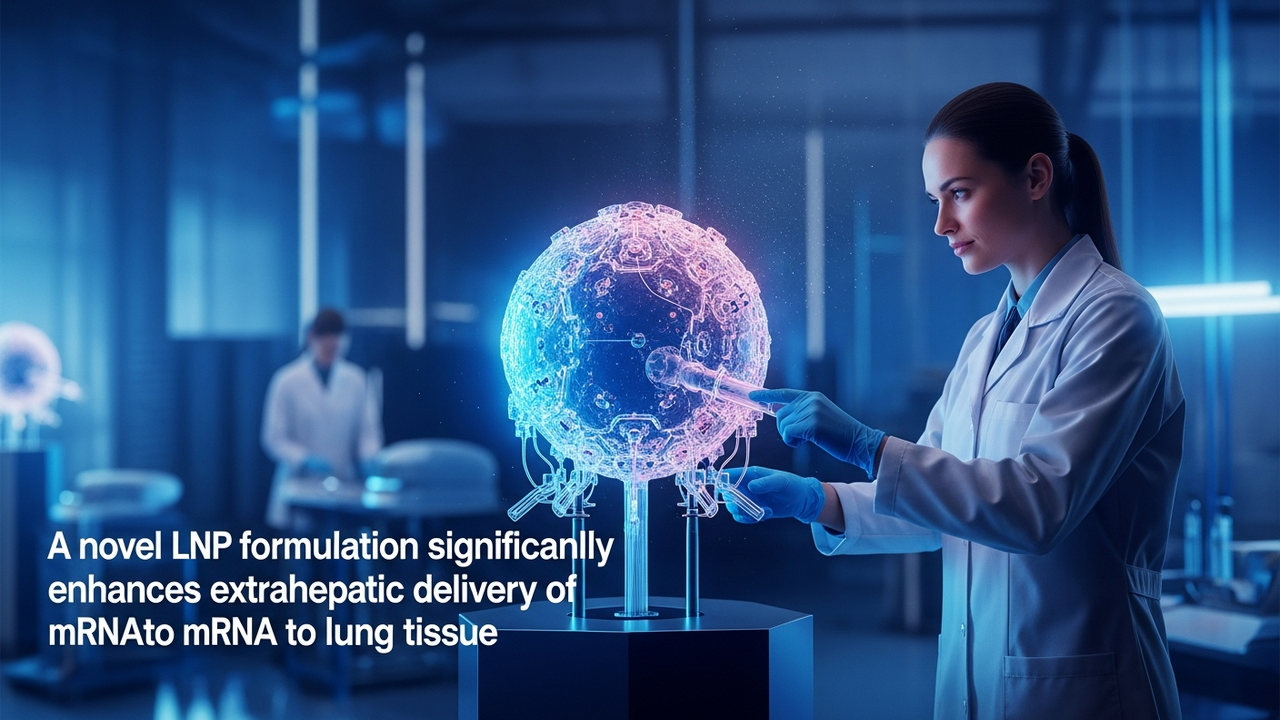
A groundbreaking research paper published in Nature Communications reports the development of a novel lipid nanoparticle (LNP) formulation that significantly enhances the specific delivery of messenger RNA (mRNA) to lung tissue. Crucially, this formulation has succeeded in dramatically improving extra-hepatic delivery efficiency, minimizing accumulation in the liver.
Technical / Clinical Details
Traditional LNP formulations typically exhibit high tropism for the liver, which has limited the scope of mRNA therapeutic applications. The novel LNP developed in this study, through specific lipid compositions and structural design, achieves high selectivity for pulmonary endothelial cells and optimized cellular uptake efficiency. In in vivo experiments, mRNA encapsulated within this LNP demonstrated expression levels several to tens of times higher in lung tissue compared to conventional LNP formulations, while minimizing hepatic accumulation. This effective local production of therapeutic proteins in the lung via mRNA translation opens up significant possibilities for the treatment of pulmonary diseases.
Background & Context
mRNA therapeutics have demonstrated their potential with COVID-19 vaccines, but maximizing their efficacy requires efficient and specific delivery to target organs. For pulmonary diseases, in particular, there are numerous unmet medical needs, including genetic disorders (e.g., cystic fibrosis) and acquired conditions (e.g., ARDS, pulmonary fibrosis). The liver’s high affinity for LNPs has historically been a bottleneck, but this enhanced extra-hepatic delivery technology represents a breakthrough that dramatically expands the applicability of mRNA therapeutics.
Strategic Significance & Outlook
This novel LNP formulation holds promise for a wide range of pulmonary disease treatments, including gene replacement therapies for lung-targeted genetic disorders, immunotherapies for lung cancer, or modulatory therapies for inflammatory lung conditions. In the future, building upon this technology, the development of LNP platforms enabling specific delivery to other non-hepatic organs will further enhance the clinical utility of mRNA therapeutics. This underscores that DDS technology is a key factor determining the success of next-generation gene therapies.
Source: #