Key Findings
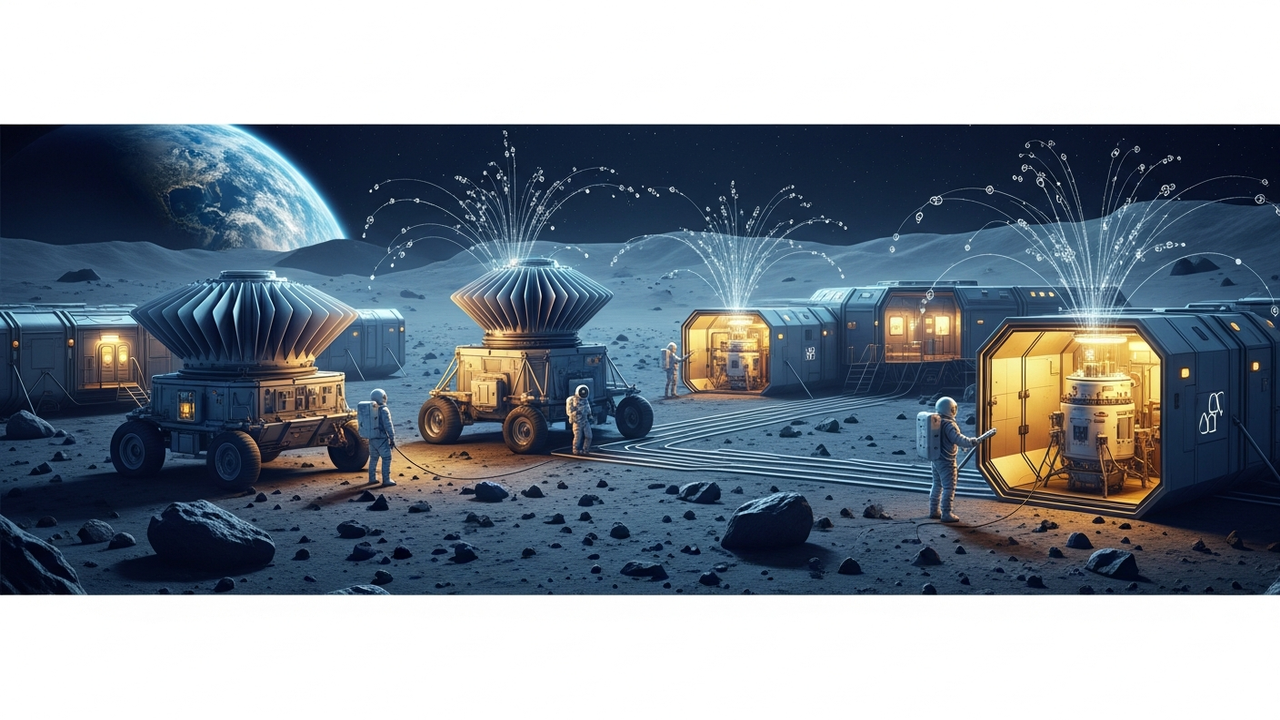
On May 30, 2026, the Reddit r/nasa forum hosted a vibrant discussion concerning the potential and challenges of utilizing nuclear energy on the Moon. The debate primarily centered on the differences in practicality, safety, and scale between Radioisotope Thermoelectric Generators (RTGs), which have a long-standing track record in uncrewed satellites and Apollo missions, and the full-scale fission reactors envisioned for future lunar bases.
Technical & Clinical Details
Radioisotope Thermoelectric Generators (RTGs) convert heat from the natural decay of radioisotopes, such as Plutonium-238, into electricity. RTGs have a proven history as power sources for dozens of deep-space probes like Voyager, Cassini, Curiosity, and Perseverance, as well as scientific instruments deployed on the Moon during Apollo missions. In contrast, fission reactors for lunar bases are designed to provide significantly higher power outputs (kilowatt to megawatt scale) by controlling nuclear fission reactions. The discussion noted the potential of fission reactors to provide stable, high-power electricity essential for long-term lunar base operations. However, concerns were also raised regarding their complexity, installation safety, and the risk of radioactive material dispersion in the event of an accident. Specifically, past objections to the Cassini-Huygens mission, which carried Plutonium-238, were cited, prompting calls for reconsideration of the potential dangers of radioactive materials.
Background & Industry Context
Establishing a long-term human presence on the Moon and Mars necessitates a stable, high-power energy supply independent of solar illumination. During the Moon’s long night (approximately 14 Earth days), solar panels become inoperative, making nuclear energy one of the most promising options for lunar base power solutions. The U.S. Department of Energy (DOE) and NASA are working to demonstrate fission surface power systems on the Moon by the late 2020s, reflecting growing interest in this area. While nuclear technology is generally considered proven for space operations, its large-scale implementation involves social acceptance, regulation, and strict safety protocols, similar to reactor construction on Earth.
Future Outlook
The debate surrounding nuclear energy on the Moon underscores the complexity of power strategies for future space exploration programs. Fission reactors have the potential to significantly enhance the self-sufficiency of lunar bases and play a crucial role in supporting activities such as scientific research, resource exploration, and space tourism. However, their realization requires not only resolving technical challenges but also prioritizing public safety, environmental considerations, and achieving international consensus. NASA and other space agencies will continue to develop and demonstrate this technology with safety and reliability as paramount concerns. This discussion provides diverse perspectives on energy issues in space and fosters critical dialogue to shape the future of sustainable space exploration.
Source: https://www.reddit.com/r/nasa/comments/1trp4uc/the_idea_of_nuclear_energy_on_the_moon/





Comments