Key Findings
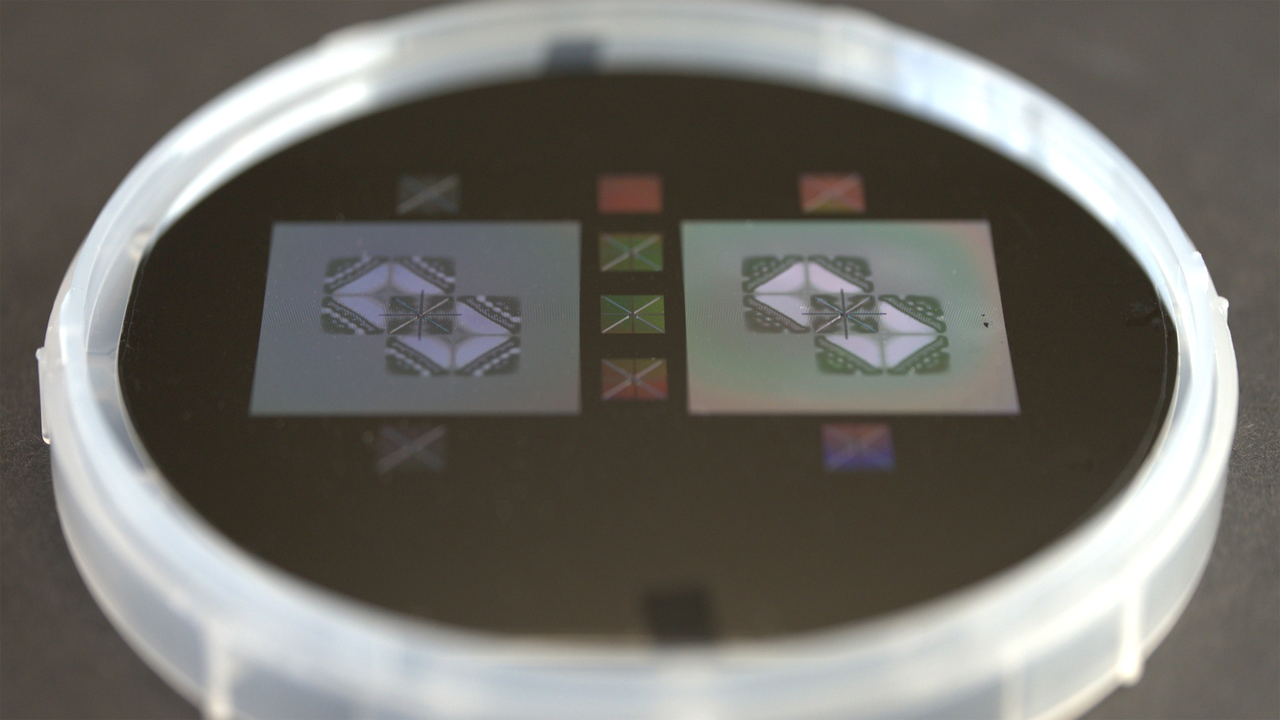
Researchers at ETH Zurich have developed a groundbreaking phononic metamaterial, fabricated on wafer-thin silicon membranes, which enables unprecedented precision control over mechanical waves like vibrations and acoustic signals. This novel design principle allows these vibrations to follow meticulously predetermined paths, unlocking new possibilities for harvesting energy from vibrations or mechanically processing signals without the need for electricity. The technology’s efficacy has been rigorously confirmed through real-time optical measurements of vibration propagation.
Technical / Clinical Details
- Metamaterial Structure: The phononic metamaterial is engineered with periodic microstructures on silicon membranes. These carefully designed patterns allow researchers to manipulate the propagation of sound waves and vibrations in ways impossible with conventional materials, effectively creating a “mechanical circuit board.”
- Precision Waveguiding: The team demonstrated that mechanical waves can be guided along specific, designed pathways, even around corners and through intricate patterns, at sub-wavelength scales. This offers precise control over the direction and localization of vibrational energy.
- Energy Harvesting Applications: By channeling vibrations along predefined paths, the metamaterial could enable more efficient capture and conversion of ambient mechanical energy into electrical power, leading to self-powered sensor networks or low-power autonomous devices.
- Mechanical Signal Processing: The ability to control mechanical waves without electrical conversion opens the door to mechanical computers. These devices could process information using vibrations, offering potential advantages in harsh electromagnetic environments or for ultra-low-power applications.
- Real-time Validation: The functionality and precision of the metamaterial were verified using advanced optical measurement techniques, which allowed for real-time visualization of vibration propagation and control, providing robust evidence of the technology’s capabilities.
Background & Context
The field of metamaterials aims to engineer materials with properties not found in nature, by structuring them at scales smaller than the wavelength of the phenomena they interact with. While electromagnetic and optical metamaterials have seen considerable progress, phononic metamaterials, which control sound and vibrations, are an emerging frontier. This work addresses a fundamental challenge in wave physics by offering precise, tunable control over mechanical energy flow, which has broad implications for acoustic, thermal, and mechanical engineering.
Strategic Significance & Outlook
This research from ETH Zurich represents a pivotal advancement with significant implications for future technological development. For sensors, it could lead to highly sensitive and robust devices that detect specific vibrational signatures. In energy harvesting, it offers a pathway to more efficient and pervasive self-powered systems. Perhaps most intriguingly, the ability to mechanically process signals could pave the way for entirely new paradigms in computing, particularly for applications requiring extreme energy efficiency or resilience to electromagnetic interference. The integration of this technology into compact, portable quantum systems, as suggested by related research (Article 24, Search 1), further underscores its transformative potential across various high-tech sectors.









Comments