Key Findings
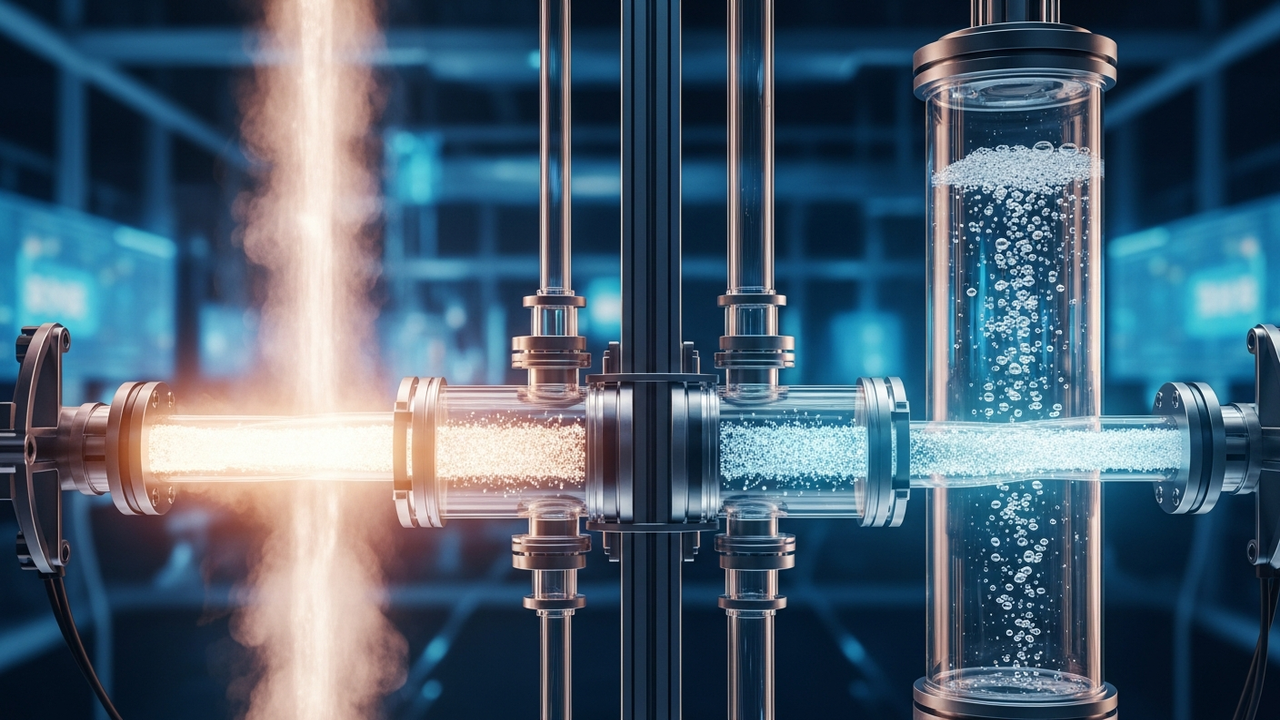
Researchers at the University of Birmingham have unveiled a groundbreaking method for producing hydrogen directly from industrial waste heat. Their discovery centers on a new perovskite-based catalyst capable of splitting water into hydrogen and oxygen at substantially lower temperatures, specifically between 150–500 °C, far below the requirements of conventional technologies. This innovation opens a new avenue for converting waste heat from high-temperature industrial processes into clean hydrogen fuel, potentially drastically cutting production costs.
Technical Details
The core of this new technology lies in its independence from the high electrical energy input typically demanded by electrolytic systems. The perovskite catalyst lowers the energetic barrier for water dissociation, allowing the reaction to proceed efficiently even with relatively modest temperature gradients. Catalyst regeneration, occurring between 700–1000 °C, can also be powered by waste heat, a plentiful byproduct from industries such as manufacturing, steel production, cement factories, and renewable energy sites. This mechanism enhances overall energy efficiency and mitigates operational costs. Compared to water electrolysis, the broader temperature range for heat utilization expands the applicability of available industrial waste heat sources.
Background & Context
Current hydrogen production methods, including ‘green hydrogen’ (electrolysis powered by renewables) and ‘blue hydrogen’ (from natural gas with carbon capture), face challenges regarding cost, energy intensity, and supply chain complexities. This research from the University of Birmingham pioneers a novel ‘thermal hydrogen’ pathway, demonstrating the potential to transform industrial byproducts into valuable fuel. This approach is particularly significant for hard-to-abate, energy-intensive sectors, offering a practical strategy for emission reduction while leveraging existing industrial infrastructure.
Strategic Significance & Outlook
Should this technology reach commercial scale, it could accelerate the transition to a hydrogen economy by enabling hydrogen production at costs even lower than those of green and blue hydrogen. The research team plans to further optimize the catalyst system and conduct demonstration tests for scalability. In the long term, this could facilitate a decentralized hydrogen production model where industries produce their own hydrogen using on-site waste heat, enhancing energy self-sufficiency and fostering regional economic growth. The ability to harness otherwise wasted energy aligns perfectly with global sustainability goals and offers a potent tool for achieving net-zero emissions.
Source: https://www.sciencedaily.com/releases/2026/06/260602111818.htm