Key Findings
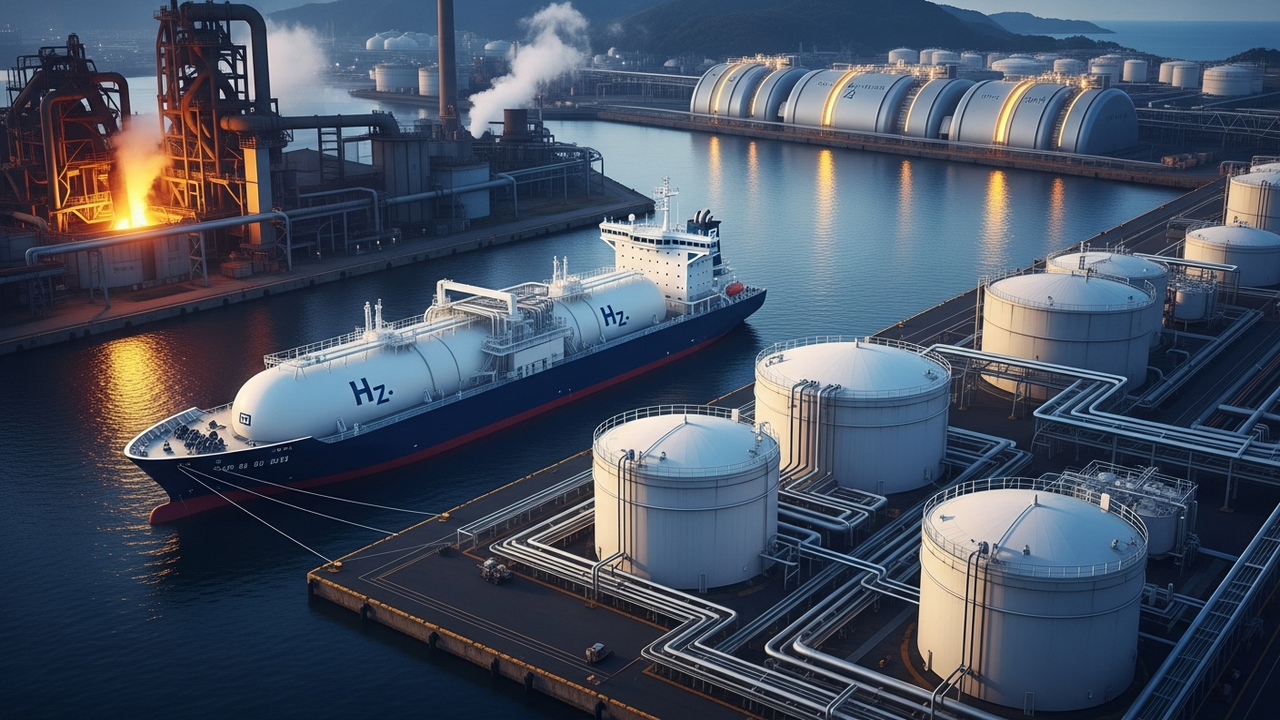
Japan is pursuing a comprehensive hydrogen strategy that extends far beyond the mere adoption of hydrogen fuel cell electric vehicles (FCEVs). This strategy centers on hydrogen’s critical role across diverse sectors, including maritime transport, heavy industry fuel switching, fertilizer production, steelmaking processes, and long-term energy storage. Notably, the nation is making significant investments in secure and efficient liquefied hydrogen transport technology, with the world’s first liquid hydrogen carrier, ‘Suiso Frontier,’ symbolizing its commitment to national energy security.
Technical & Policy Details
Japan’s hydrogen strategy is an integral part of its national effort to overcome geographical limitations as an energy resource-scarce nation. The storage and transportation of liquid hydrogen at ultra-low temperatures of -253°C present immense technical challenges, yet Japan is actively investing in this complex technological domain. Key initiatives include:
- Liquefied Hydrogen Supply Chain: Advancing the establishment of international supply chains, such as importing liquefied hydrogen from Australia and securing a contract for a 40,000 cubic meter liquefied hydrogen carrier with Kawasaki Heavy Industries and Japan Suiso Energy.
- Industrial Decarbonization: Exploring hydrogen direct reduced iron (H2-DRI) technology in steelmaking, hydrogen co-firing in existing gas infrastructure, and transitioning to dedicated hydrogen combustion systems.
- Advanced Materials Research: Intensifying R&D into advanced materials and storage technologies to address unique hydrogen-specific challenges like hydrogen embrittlement.
- International Cooperation: Sharing expertise on building hydrogen ecosystems with emerging hydrogen-producing nations like Kazakhstan, aiming to diversify global hydrogen supply networks.
Japan also closely monitors trends in renewable hydrogen and ammonia infrastructure, trade flows, and pricing across the Asia-Pacific region, including the development of regional hubs like Chifeng in Inner Mongolia, China, and NTPC Green Energy’s projects in India.
Background & Context
Given its high reliance on fossil fuel imports, establishing energy security is a top national priority for Japan. Hydrogen, as an ‘energy carrier’ that can be imported from renewable energy-rich countries, offers a potential solution to this challenge. While initial focus was on FCEVs, the emphasis has shifted towards more economically and strategically impactful applications in heavy industry and power generation. This reflects both the urgent needs of hard-to-abate industrial sectors and a pragmatic approach to areas where large-scale hydrogen consumption is anticipated.
Strategic Significance & Outlook
By establishing leadership in hydrogen technology and supply chains, Japan aims to play a crucial role in the global energy transition. The mastery of liquefied hydrogen transport technology is essential for enabling long-distance transport from renewable-rich regions to consumption centers, thus forming a global hydrogen trading market. Japan will continue to deepen international partnerships, overcome technical and economic challenges within the hydrogen ecosystem, and contribute to the realization of a sustainable society. Specifically, the reduction in green hydrogen costs is expected to expand trilateral cooperation opportunities for green steel production among India, Japan, and South Korea.