Key Findings
Research published in ACS Omega reports the successful development of electrospun poly(lactic acid) (PLA) nanofiber mats reinforced with silver-coated titanium dioxide (Ag@TiO2) nanoparticles. This innovative composite material demonstrates potent antibacterial activity against both Gram-positive and Gram-negative bacteria, alongside improved mechanical stability and antifouling properties, positioning it with significant potential for advanced wound dressings and other biomedical applications.
Technical / Clinical Details
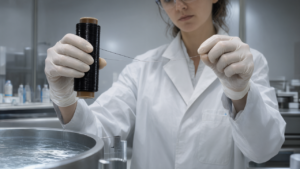
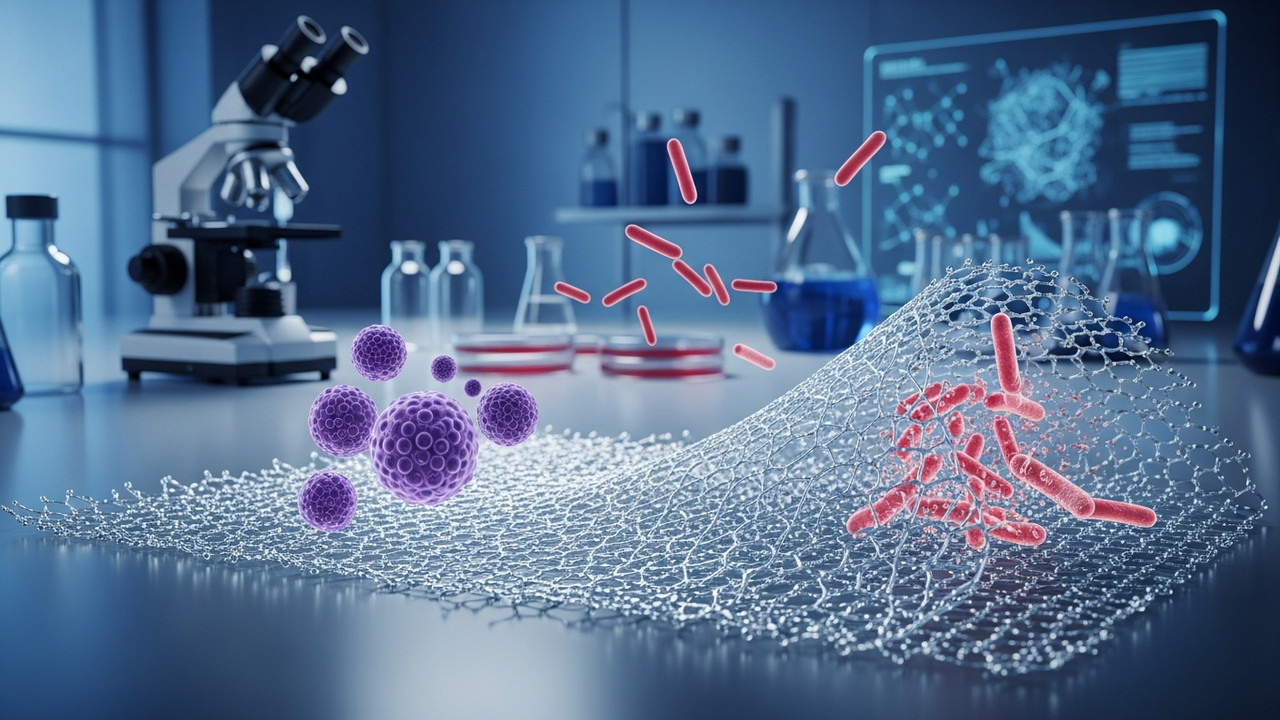
In this study, nanofiber mats were fabricated using electrospinning, starting from poly(lactic acid) (PLA), a biocompatible and biodegradable polymer. This nanofiber structure provides a high surface area and an interconnected porous network, which is ideal for uniform dispersion and sustained release of antimicrobial agents. To enhance antibacterial activity, Ag@TiO2 nanoparticles were incorporated into the PLA nanofibers. Titanium dioxide (TiO2) is known for its photocatalytic activity, while silver (Ag) possesses a broad spectrum of antibacterial properties. The Ag@TiO2 nanoparticles exhibit a synergistic effect, delivering stronger antimicrobial action than either component alone. Experiments confirmed that this composite nanofiber mat demonstrated significant inhibitory effects against both representative Gram-positive bacteria, Staphylococcus aureus, and Gram-negative bacteria, Escherichia coli. Furthermore, the incorporation of nanoparticles improved mechanical properties such as tensile strength and elasticity, enhancing the physical stability of the mats in biological environments. The improved antifouling properties suggest a potential to inhibit microbial adhesion and biofilm formation.
Background & Context
Bacterial infections pose severe threats to patient health, particularly in open wounds and medical device-associated infections, leading to increased healthcare costs. Current wound dressings often have limited antimicrobial action or can contribute to the emergence of antibiotic-resistant strains. Antimicrobial nanomaterials, especially composites incorporating silver and titanium dioxide, are attracting significant attention as next-generation wound care solutions due to their potent antimicrobial effects and low cytotoxicity. The use of PLA, a biodegradable polymer, aligns with the trend toward sustainable medical material development, offering reduced environmental impact and safe degradation within the body.
Strategic Significance & Outlook
The newly developed Ag@TiO2 nanoparticle-reinforced PLA nanofiber mats hold the potential to become a groundbreaking therapeutic option for high-risk infections and chronic wounds. Their combination of antibacterial properties, mechanical strength, and antifouling characteristics is expected to deliver superior performance in a wide range of biomedical applications, including post-surgical wound management, burn treatment, ulcer care, and even surface coatings for medical implants. Future research will primarily focus on evaluating biocompatibility and long-term efficacy through in vivo studies, as well as addressing manufacturing scalability. This technology paves the way for new medical materials to combat infections and accelerate patient healing processes.