Key Findings
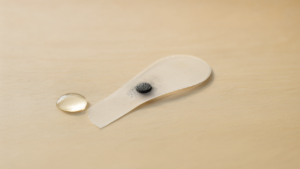
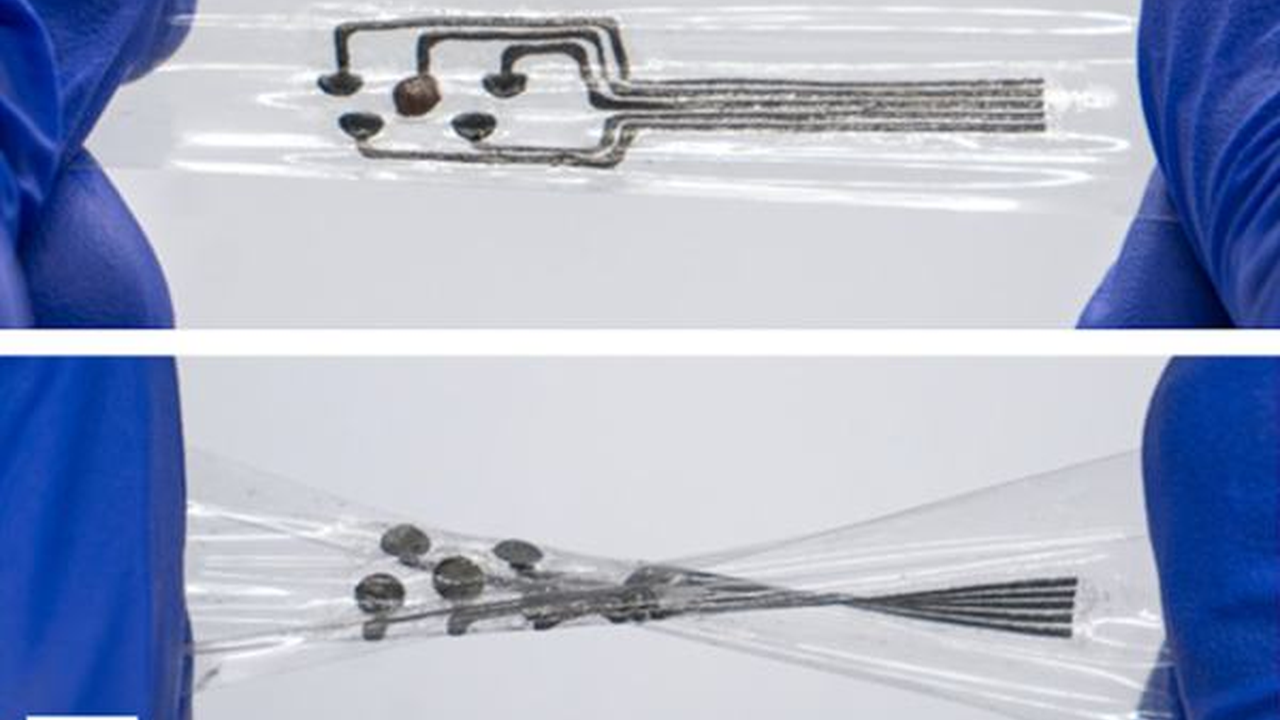
A Caltech research team has developed SIRES (stretchable interface for resilient electrochemical sensing), a new soft and highly stretchable bioelectronic material designed to integrate seamlessly with living tissues and adapt to their movements. This innovative material achieves a remarkable 300% stretchability while simultaneously maintaining excellent electrical signal conductivity and strong adhesion to biological tissues, overcoming a long-standing challenge in the field. This breakthrough significantly advances the potential for wearable and implantable sensors to perform stably in dynamic biological environments, such such as during strenuous exercise or the natural pulsations and contractions of organs.
Technical and Clinical Details
The SIRES material is constructed entirely from a polyurethane base for its conductors, electrodes, and functional films, ensuring high flexibility and biocompatibility. A key innovation in this research is the development of a molecular hydrogel-based adhesive that strongly bonds to wet biological tissue surfaces. This robust adhesion allows the sensors to remain securely in place on highly active organs like the beating heart, contracting bladder, or peristaltic stomach and intestines, enabling precise and long-term monitoring of biological signals without detachment. Traditional rigid sensors often fail in such dynamic settings, leading to patient discomfort and measurement inaccuracies. SIRES fundamentally addresses these issues, paving the way for continuous physiological data acquisition that can facilitate early disease detection and personalized adaptive therapies.
Background and Industry Context
In the field of wearable and implantable sensors, biocompatibility, flexibility, and long-term stability have consistently been paramount research challenges. The quest for materials capable of conforming to the complex mechanical properties of biological tissues has been particularly urgent. Caltech’s SIRES technology represents a significant leap forward in achieving this at a high level. Conventional sensors frequently induce mechanical stress on skin or organs, potentially causing inflammation and discomfort. Soft electronics like SIRES circumvent these problems, promoting the development of more patient-centric medical devices. This technology holds promise for a wide range of medical applications, from continuous glucose monitoring for diabetic patients to arrhythmia detection in cardiac patients and activity monitoring for neurological disorders.
Strategic Significance and Outlook
The SIRES technology is set to accelerate the development of continuous biological monitoring systems and adaptive therapeutic interventions based on real-time data. Future applications could extend to the real-time detection of specific disease biomarkers and the precise control of drug delivery systems. When combined with AI, this platform has the potential to analyze biological data and predict anomalies early, contributing to intelligent healthcare solutions. While further validation of long-term in vivo stability and scalable manufacturing techniques are necessary for commercialization, the profound impact of SIRES on medical innovation is undeniable.