Key Findings
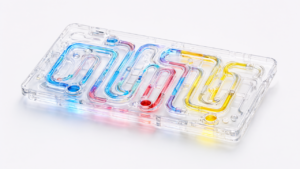
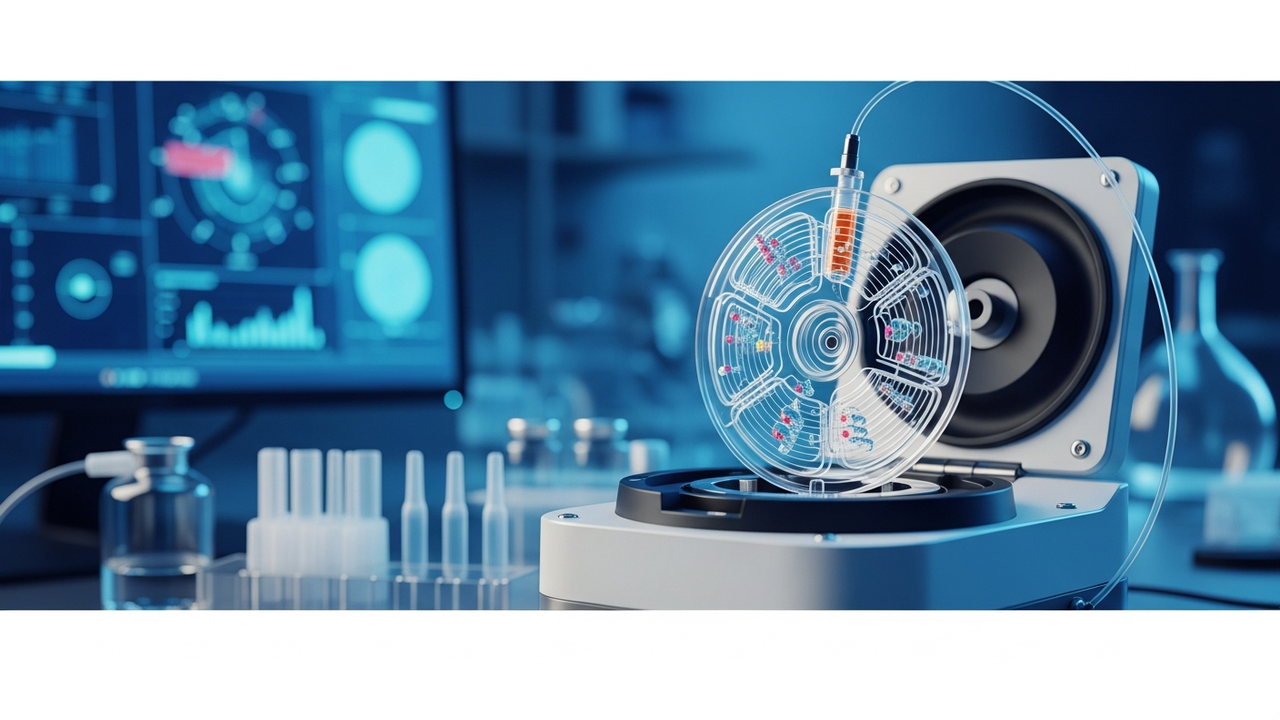
The June 2026 issue of the academic journal ‘Biosensors,’ published by MDPI, features 26 peer-reviewed articles, with particular attention drawn to research on a centrifugal microfluidic chip specifically designed for the detection of foodborne pathogens. This innovative chip efficiently integrates a series of complex analytical steps—including sample pretreatment, nucleic acid extraction, amplification, and signal detection—into a single, portable Point-of-Care Testing (POCT) system. By adopting a dual-channel configuration, the chip optimally splits and guides reagent flow, significantly accelerating and simplifying the overall testing process.
Technical and Clinical Details
This centrifugal microfluidic chip utilizes centrifugal force to precisely control fluid movement within micro-channels. This automates multi-stage sample processing, such as cell separation, lysis, and washing, thereby substantially reducing manual handling, contamination risks, and operational time. Furthermore, by combining with immunomagnetic separation technology, target pathogens can be captured and concentrated from complex food samples with high efficiency. For subsequent nucleic acid detection, multi-enzyme isothermal rapid amplification, which does not require thermal cycling like PCR, is employed. This enables rapid nucleic acid amplification with low power consumption, followed by signal detection using methods such as fluorescence or electrochemistry. This system provides a powerful tool for ensuring food safety by enabling sensitive and rapid detection of foodborne pathogens, even in resource-limited environments.
Background and Industry Context
Foodborne illnesses represent a significant global public health challenge, with outbreaks not only causing health issues for consumers but also leading to economic losses for the food industry. Traditional pathogen detection methods are often time-consuming due due to culture requirements or necessitate expensive and bulky laboratory equipment, making them unsuitable for real-time monitoring at food processing sites or during distribution. The development of POCT systems like this centrifugal microfluidic chip addresses these bottlenecks, enabling rapid and cost-effective testing throughout the entire food supply chain. This facilitates early identification and removal of contaminated food products, preventing widespread recalls and health crises.
Strategic Significance and Outlook
This centrifugal microfluidic chip technology is expected to find applications beyond foodborne pathogen detection, extending to areas such as water quality testing, environmental monitoring, and rapid clinical diagnostics. Future developments will likely include the integration of multiplexing capabilities to simultaneously detect multiple pathogens and the incorporation of automated data analysis functions powered by AI. These advancements will lead to further automation of testing and enhanced diagnostic accuracy, potentially contributing significantly to global public health management and food safety. For commercialization, validation of long-term stability and optimization of manufacturing costs will be critical.