Key Findings
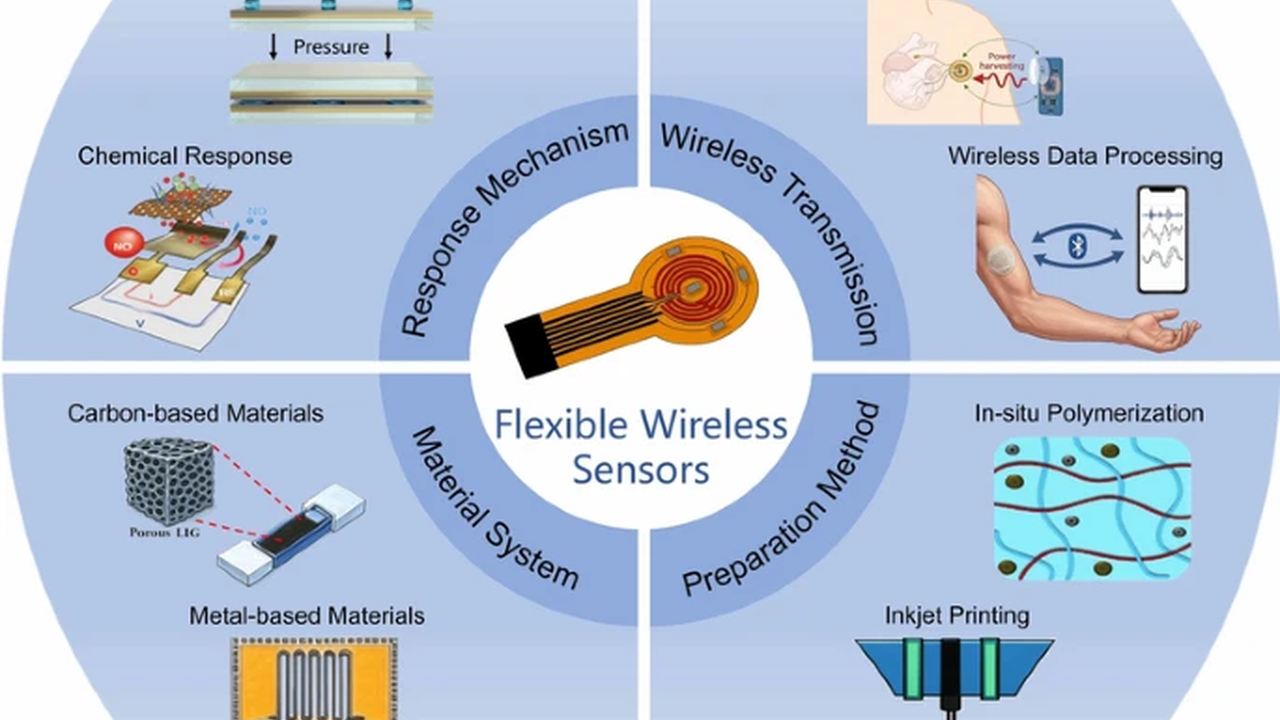
A recent review article published in Nano-Micro Letters offers a detailed, system-level perspective on polymer-based flexible wireless sensors designed for epidermal, subcutaneous, and short-term implantable health monitoring. This review integrates principles of material design with outcomes from applied research, clearly delineating how various polymer material systems impact sensor performance, signal stability, and monitoring reliability. Particular emphasis is placed on material-level noise reduction techniques, strategies for enhancing sensor sensitivity, approaches to multi-functional integration, and the broad potential for clinical applications.
Technical and Clinical Details
Polymer-based flexible wireless sensors are anticipated to form the foundation of next-generation wearable and implantable medical devices due to their high biocompatibility, mechanical flexibility, and lightweight nature. Epidermal sensors are worn directly on the skin surface, non-invasively measuring heart rate, activity levels, skin temperature, and biomarkers in sweat (e.g., glucose, lactate, electrolytes). Subcutaneous and short-term implantable sensors are placed beneath the skin for continuous monitoring of interstitial fluid glucose or drug concentrations. The review explains how materials like conductive polymers, elastomers, and hydrogels are used to tune electrical properties, stretchability, and adhesion. These sensors are integrated with wireless communication modules (e.g., Bluetooth, NFC) to transmit data in real-time to smartphones or cloud platforms. Challenges include material-derived noise, signal drift in biofluids, long-term stability, and manufacturing scalability, but these are being steadily overcome through advancements in material science and electronic engineering.
Background and Industry Context
The increasing prevalence of chronic diseases and the advancement of aging societies have dramatically heightened the need for continuous health monitoring. Traditional medical devices are often bulky, expensive, and primarily used in hospital settings. However, with the shift towards preventive and personalized medicine, there has been an explosive demand for wearable and implantable sensors that seamlessly integrate into daily life to provide real-time health insights. Polymer-based flexible sensors offer an ideal material platform to meet this need. Their flexibility allows them to conform to the body’s complex shapes and be worn comfortably for extended periods without patient discomfort. Additionally, wireless communication capabilities enable efficient telemedicine and remote patient monitoring.
Strategic Significance and Outlook
Polymer-based flexible wireless sensor technology is expected to undergo rapid development in the coming years. Future prospects include the development of multi-functional and multiplex sensors capable of simultaneously detecting a wider range of biomarkers, AI-integrated data analysis for disease prediction and personalized treatment recommendations, and even the realization of smart sensors with self-powered or self-healing capabilities. These technologies hold the potential to advance personalized preventive healthcare and significantly transform the paradigm of chronic disease management for conditions like diabetes, cardiovascular diseases, and neurological disorders. For commercialization, rigorous evaluation of biocompatibility, validation of long-term stability, and the establishment of large-scale production techniques will be crucial.
Source: https://www.nmlett.org/index.php/nml/article/view/2544