Key Findings
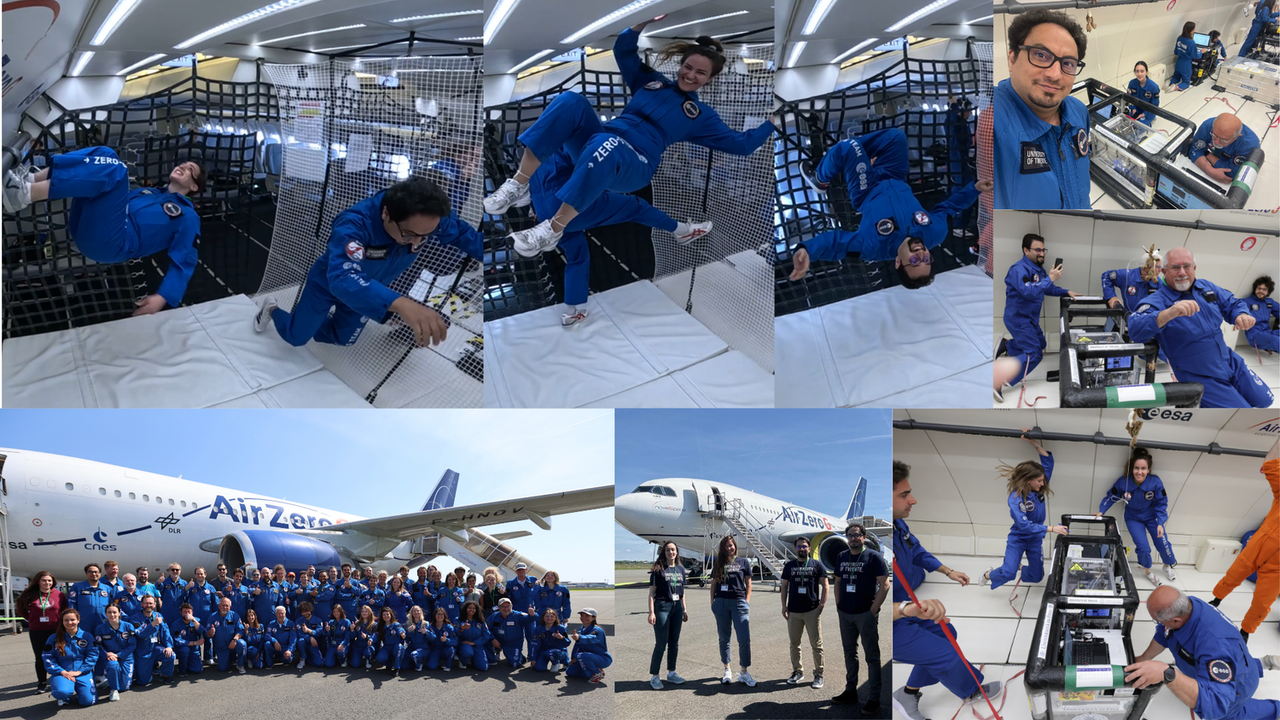
A research team from the University of Twente in the Netherlands, under the leadership of Davoud Jafari, successfully completed a series of parabolic flight experiments to investigate the behavior of advanced smart surfaces in microgravity environments. This innovative research is groundbreaking in its integration of three previously studied, critical technologies—additive manufacturing (3D printing), boiling heat transfer, and electric field control—into a single experimental platform. This integrated approach has provided new perspectives on addressing thermal management and materials manufacturing challenges in space.
Technical Details
Parabolic flights are an experimental method that creates temporary microgravity conditions as an aircraft traces a parabolic trajectory. In this campaign, specially designed experimental setups were used to evaluate the performance of smart surfaces under rapidly changing gravity. Specifically, microstructured surfaces were created using additive manufacturing techniques, and boiling heat transfer processes were observed on these surfaces. Furthermore, electric field control technology was integrated to actively manipulate liquid behavior and the formation and movement of bubbles by applying external electric fields. This integrated experiment yielded valuable data on how microgravity affects these physical phenomena and how they can be optimized. The insights gained are directly applicable to improving the efficiency of heat exchangers and developing smart materials adapted to extreme environments in future spacecraft and lunar bases.
Background and Industry Context
With the acceleration of long-duration space exploration and the push towards constructing lunar and Martian bases, efficient thermal management and reliable materials manufacturing in space environments have become critically important challenges. In microgravity, the absence of buoyancy-driven convection significantly alters heat transfer mechanisms compared to Earth. Moreover, advanced heat exchange technologies are essential for stabilizing the internal environments of spacecraft and habitat modules. This research holds the potential to offer innovative solutions to these challenges by combining optimized surface structures produced through additive manufacturing with fluid manipulation via electric field control. This aligns with the European Space Agency (ESA)’s initiative to strengthen European leadership in in-space operations and services.
Future Outlook
The findings from the University of Twente’s research are expected to have a significant impact on the design of thermal management systems for future space missions and the advancement of sophisticated manufacturing processes in space. Smart surfaces with improved heat transfer capabilities will contribute to the miniaturization and weight reduction of spacecraft, decreased power consumption, and enhanced system reliability in harsh space environments. This is particularly relevant for improving the performance of cooling systems and energy conversion devices utilized on the lunar and Martian surfaces. The knowledge gained from this research will not only improve astronaut comfort and safety and increase the sustainability of deep-space exploration but also has potential applications in terrestrial industries, such as electronics and energy systems operating under extreme conditions.
Source: https://www.utwente.nl/en/news/2026/6/938933/testing-smart-surfaces-in-zero-gravity