Key Findings
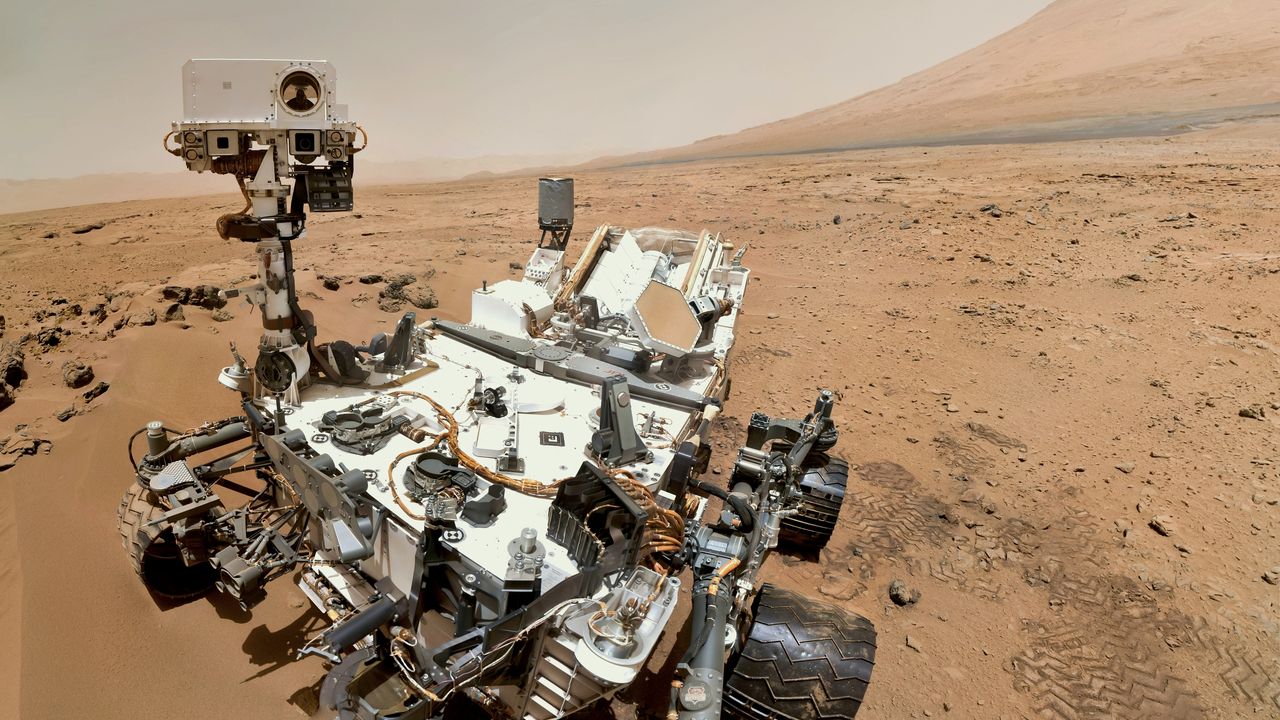
The U.S. Department of Energy (DOE) has provided a detailed account of the long history of nuclear power in space and its indispensable role in deep-space exploration and future lunar and Martian bases. From the first Radioisotope Thermoelectric Generator (RTG) deployed on the Transit 4A satellite in 1961 to the modern Curiosity Mars rover, nuclear power systems have enabled sustained electricity supply in environments beyond the reach of solar energy. This technology offers a decisive advantage for space missions, particularly for outer-planet exploration and long-duration lunar missions, due to its lack of moving parts and high reliability.
Technical Details
At the core of RTGs is the conversion of heat generated by the radioactive decay of Plutonium-238 (Pu-238) directly into electrical energy using semiconductor thermoelements via the Seebeck effect. Pu-238 has a long half-life of 87.7 years, ensuring a stable heat source over extended periods. This capability allows probes and rovers to receive continuous power in challenging environments such as deep space where solar panels are ineffective, during prolonged lunar nights, or amidst Martian dust storms. Currently, the DOE is expanding its production scale to meet NASA’s request for an annual production target of 1.5 kg of Pu-238 by 2026. Furthermore, space nuclear reactor systems are under development, with NASA planning to launch the ‘Space Reactor-1 (SR-1) Freedom’ nuclear-powered spacecraft to Mars by late 2028. These systems are expected to provide significantly more power than conventional RTGs, contributing to nuclear electric propulsion (NEP) that drastically reduces travel times to Mars and to lunar surface power systems.
Background and Industry Context
The history of space nuclear power spans from early scientific missions, powering lunar experiments during the Apollo program, to deep-space probes like Pioneer, Voyager, Galileo, Cassini, and Mars rovers Perseverance and Curiosity, underpinning numerous successes. These missions have demonstrated the extreme reliability of RTGs as a power source. However, after the Cold War, plutonium production scaled down, leading to limited supplies. The new frontiers of space exploration today, especially initiatives like the Artemis program aiming to establish a sustainable human presence on the Moon and Mars, are creating a renewed demand for more robust, high-power space nuclear systems. In response, the DOE is re-invigorating plutonium production and paving the way for the development of next-generation space nuclear technologies.
Future Outlook
Space nuclear power is a technology that will fundamentally transform the possibilities of future space exploration. The continued use of RTGs and the development of higher-power space nuclear reactors will enable missions to remote destinations previously unreachable by humans, long-duration deep-space travel, and sustainable base operations on the Moon and Mars. Nuclear-powered spacecraft like NASA’s ‘SR-1 Freedom’ will reduce travel times to Mars by several months, expanding options for scientific payloads and human missions. Lunar fission surface power systems will also provide stable energy during the long, cold, and dark lunar nights, dramatically increasing the potential for lunar In-Situ Resource Utilization (ISRU) and scientific observation. The advancement of this technology is expected to contribute to the overall development of the space industry and accelerate humanity’s expansion into the cosmic frontier.
Source: https://www.energy.gov/articles/history-nuclear-power-space