Key Findings
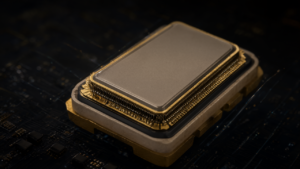
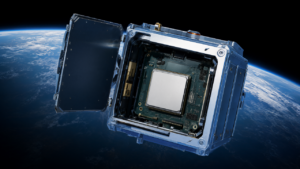
GlobalFoundries and BAE Systems have established a strategic collaboration for the development of high-performance and highly reliable Radiation Hardened By Design (RHBD) semiconductor solutions, engineered to withstand the extreme radiation environments encountered in deep space exploration. This partnership ensures that electronics will consistently function under continuous radiation exposure, from current critical projects like the Artemis II lunar flyby mission to future lunar and Mars exploration endeavors. This initiative fundamentally strengthens the ‘resilience, predictability, and reliability’ of electronics in space.
Technical Details
Beyond its RHBD technology portfolio, GlobalFoundries is also developing Radiation Hardened By Process (RHBP) techniques, which further enhance radiation tolerance through optimized doping implants and substrate materials. The RHBD approach integrates radiation immunity at the chip design stage, employing methods such as error correction codes, redundancy, and triple modular redundancy (TMR) to mitigate the risks of transient malfunctions (soft errors) and permanent damage (hard errors) caused by radiation events. Conversely, RHBP optimizes the semiconductor manufacturing process itself to suppress material degradation and characteristic changes due to radiation. The integration of BAE Systems’ expertise in space-grade electronic system development with GF’s semiconductor manufacturing technology delivers solutions for space applications characterized by high performance, security, low power consumption, and robust reliability.
Background and Industry Context
The deep space environment, lacking the protection of Earth’s magnetosphere, is extremely harsh, constantly exposed to high-energy ionizing radiation from solar proton events, galactic cosmic rays, and the Van Allen belts. This radiation can induce single-event effects (SEE) and total ionizing dose (TID) damage in semiconductor devices, leading to malfunction or failure. For crewed missions like the Artemis program, the absolute necessity for mission-critical electronic systems to operate accurately at all times is paramount, alongside astronaut safety. Therefore, conventional commercial off-the-shelf (COTS) components are insufficient, and the demand for specialized radiation-hardened chips is rapidly increasing. This challenge is also common in the development of orbital data centers and computer chips for autonomous spacecraft, with companies like AMD, Aitech Systems, and VORAGO Technologies also focusing on developing similar solutions.
Future Outlook
The collaboration between GlobalFoundries and BAE Systems will significantly expand the feasibility of future deep-space exploration. Advances in radiation-hardened chips will enable the design of more complex and longer-duration missions, fundamentally improving the reliability of electronic equipment for lunar bases and crewed missions to Mars. This not only enhances astronaut safety but also extends the operational life of scientific instruments, allowing for the collection of more scientific data. Furthermore, this technology will foster the application of edge computing and AI in space, contributing to the evolution of autonomous spacecraft. Ultimately, this initiative is expected to strengthen the technological foundation for humanity to safely and effectively expand its frontiers in space.