Key Findings
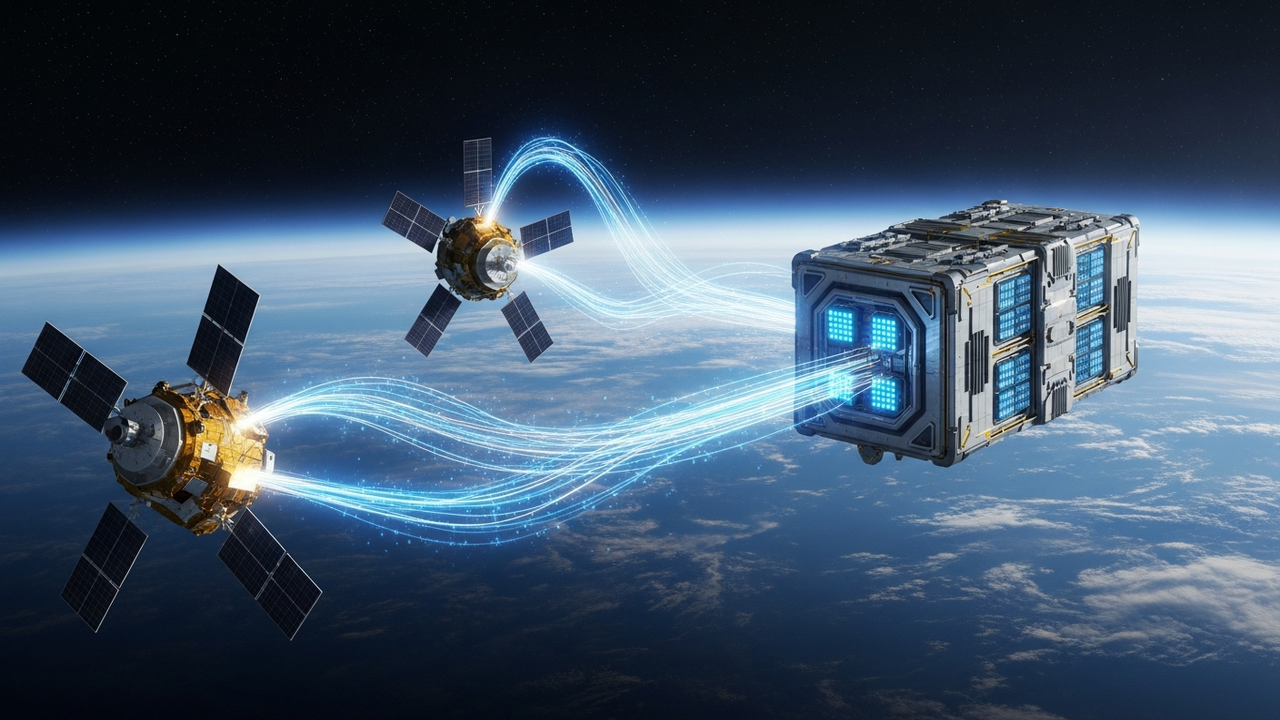
Several major corporations are actively developing and deploying the first generation of orbital data centers and space data infrastructure, spearheading a paradigm shift in computing capabilities in space. SpaceX has unveiled the detailed design for its ambitious ‘AI1 satellite,’ an in-orbit AI data center, revealing it will feature interchangeable chip payloads and a powerful compute payload averaging 120 kW and peaking at 150 kW. The company has already filed an application with the FCC for a constellation of one million data center satellites, signaling the industry’s transition from an experimental phase to commercial-scale deployment. AWS, Microsoft, and Google are also deploying their own space data services, aiming to enable in-space AI training and cloud connectivity.
Technical Details
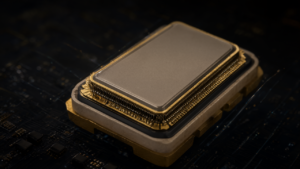
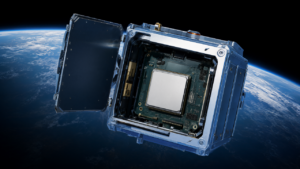
SpaceX’s AI1 satellite is designed as an orbital aircraft intended to execute AI workloads independently from Earth’s power grid, with a deployed wingspan reaching 70 meters, surpassing that of a Boeing 747-8. This large-scale deployment aims to dramatically increase in-orbit computational processing power. The realization of orbital data centers necessitates overcoming several technical challenges. Firstly, securing sufficient power sources, and secondly, advanced thermal management systems are required to efficiently dissipate the intense computational heat to the extreme vacuum and thermal cycles of space. Furthermore, robust radiation-hardened semiconductor designs and redundancy are crucial to ensure long-term reliability in the space radiation environment. Companies like AMD and Aitech Systems are developing solutions for thermal removal, radiation mitigation, and production-scale space-grade computing, while VORAGO Technologies has introduced radiation-tolerant microcontrollers. NEC is also building its first optical communication satellite constellation using AMD technology. Google’s Project Suncatcher plans to launch test satellites by 2027 to validate the feasibility of in-orbit AI training.
Background and Industry Context
Terrestrial data centers are facing limitations in terms of power consumption, cooling infrastructure, and physical security. Orbital data centers offer a potential solution to these challenges. The vacuum and low temperatures of space present opportunities for efficient thermal management, while radiation poses new challenges for electronic component design. The rapidly growing demand for AI and big data analytics increases the value of placing computational resources closer to data sources (satellites). Major cloud providers, AWS Ground Station and Microsoft Azure Orbital, are already offering cloud connectivity services to satellites, advancing the integration of space and terrestrial data ecosystems. This trend indicates that the space economy is being positioned as a new frontier for the data-driven economy.
Future Outlook
The commercial-scale deployment of orbital data centers will have a revolutionary impact not only on the space industry but also on terrestrial fields such as AI, data analytics, and telecommunications. If platforms like SpaceX’s AI1 satellite are realized, a portion of the power-intensive AI training conducted on Earth could be transferred to space, improving sustainability and efficiency. This would give rise to new services, including real-time processing of Earth observation data, more advanced in-space surveillance and analysis, and enhanced autonomy for spacecraft themselves. However, increasing space debris, ensuring cybersecurity, and establishing international regulatory frameworks remain critical challenges for future large-scale deployment. If these challenges are addressed, orbital data centers will become a major infrastructure to dramatically expand humanity’s data processing capabilities and potential for space utilization.
Source: https://www.tomshardware.com/tech-industry/spacex-details-its-ai1-compute-satellite