Key Findings
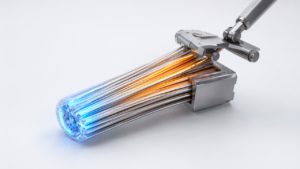
A research team at the U.S. Department of Energy has achieved a significant advancement in additive manufacturing, successfully producing 3D-printed high-entropy alloys (HEAs) with both exceptional strength and ductility. This new HEA material exhibits a yield strength of approximately 1.3 gigapascals (GPa), surpassing even the strongest commercially available titanium alloys. Crucially, it also demonstrates an impressive elongation of about 14%, a notable improvement over other additively manufactured metal alloys, thereby enhancing the material’s fracture resistance and reliability in high-stress environments.
Technical / Clinical Details
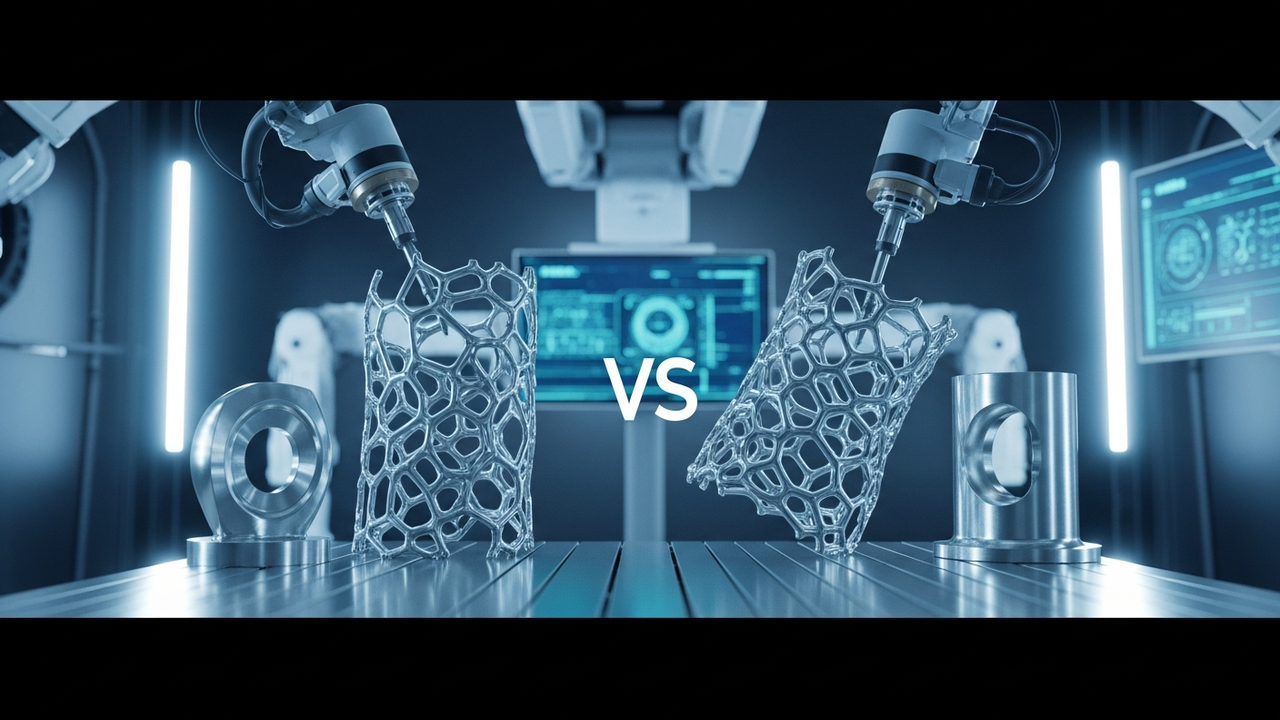
This breakthrough is attributed to a novel laser-based additive manufacturing approach that precisely controls the formation of nanometer-thick layered structures, comprising both face-centered cubic (FCC) and body-centered cubic (BCC) phases. This intricate nanoscale structural engineering effectively overcomes the traditional strength-ductility trade-off inherent in many alloys, where increasing strength often leads to a reduction in ductility. The refined internal architecture at the nanoscale dictates the material’s superior response to external forces, resolving critical fabrication challenges previously associated with 3D-printed HEAs.
Background & Context
High-entropy alloys, characterized by their multiple principal elements in near-equiatomic ratios, are a class of advanced materials with unique properties such as high temperature stability, corrosion resistance, and wear resistance. However, their complex compositions and crystal structures have historically posed challenges for additive manufacturing, particularly regarding maintaining adequate ductility. This research provides a crucial solution to this long-standing issue, enabling the production of lightweight, complex HEA components with enhanced durability. The implications are profound for industries such as aerospace, defense, energy, and automotive, where high-performance, resilient materials are paramount for safety and operational efficiency.
Strategic Significance & Outlook
The ability to produce HEAs with such a combination of high strength and ductility opens up new possibilities for critical applications, including more fuel-efficient vehicles, stronger industrial components, and longer-lasting machinery. Future research will likely focus on expanding the range of HEA systems applicable with this technique and scaling up production for industrial implementation. This additive manufacturing innovation also sets a precedent for the development of other advanced materials, potentially accelerating their journey from laboratory discovery to real-world deployment across various high-performance sectors.
Source: https://www.energy.gov/science/bes/articles/3d-printed-alloys-offer-improved-strength-and-ductility