Key Findings
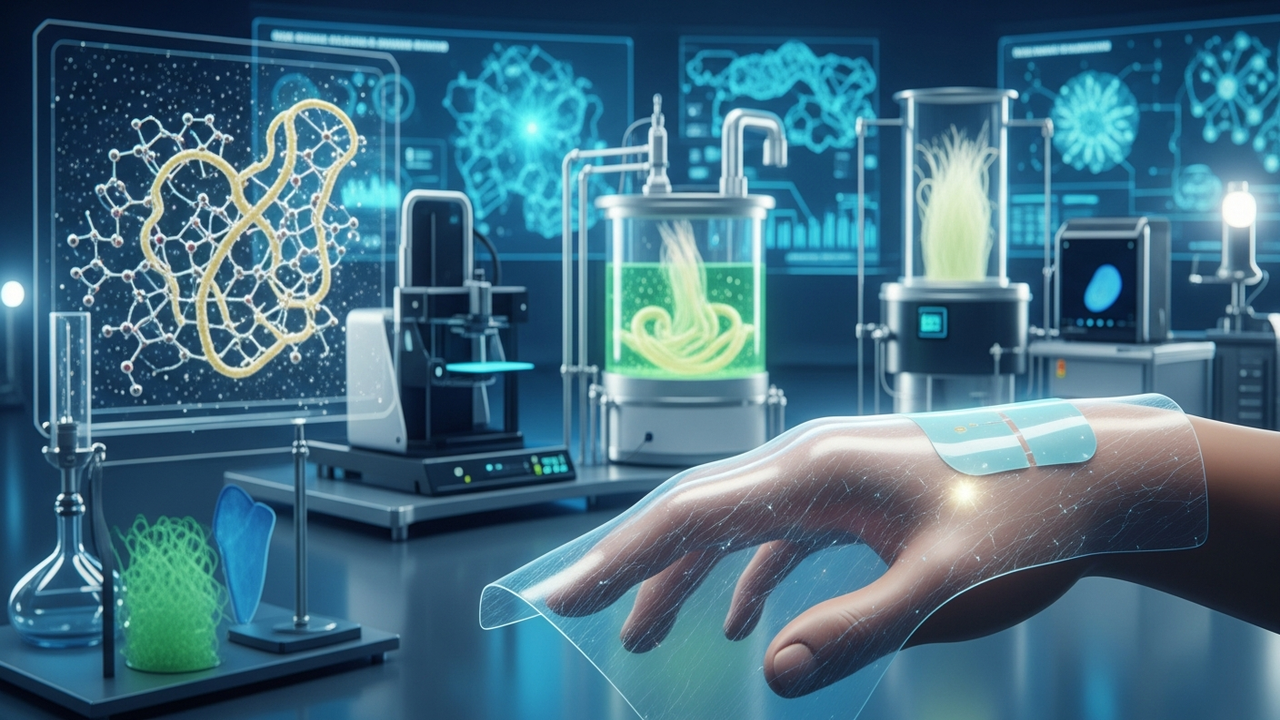
A comprehensive review article published in MDPI Materials provides a thorough assessment of advancements in cellulose-based self-healing materials. The review highlights the significant potential of these materials to autonomously detect and repair damage, thereby substantially extending their lifespan and enhancing durability. Key self-healing strategies, including extrinsic mechanisms, dynamic covalent bonds, and supramolecular interactions, are analyzed in detail, elucidating how each mechanism contributes to the material’s functional integrity.
Technical / Clinical Details
The review covers diverse approaches to achieving self-healing properties. For instance, the incorporation of nanocellulose into silicone or polyurethane matrices has led to materials that exhibit self-healing capabilities at temperatures as low as 5°C and possess excellent fatigue resistance. Also featured are vitrimer-like systems utilizing cellulose-functionalized halloysite nanotubes (HNT-C) in epoxy coatings, which are shown to promote self-healing and improve coating toughness. These strategies involve either encapsulating healing agents within the material or introducing reversible bonds that trigger chemical or physical reactions upon damage, thereby restoring the material’s structural integrity.
Background & Context
Self-healing materials are a highly sought-after area in materials science due to their potential to contribute to sustainable societies and reduce maintenance costs. The use of cellulose, a renewable resource, as a base material further aligns these developments with environmental sustainability goals. Traditional materials often degrade in performance after initial damage, eventually requiring replacement, leading to increased waste and resource depletion. Self-healing materials fundamentally address this challenge by extending product lifecycles and enhancing safety. Their applications are expected across a wide range of sectors, including electronic skin, medical implants, environmental sensors, and automotive and aerospace components.
Strategic Significance & Outlook
The review paper outlines future prospects for cellulose-based self-healing materials, particularly focusing on the construction of multifunctional systems. Specific applications emphasized include ultra-stretchable sensors for electronic skin that respond to external stimuli, biocompatible matrices for long-term chronic wound management, and freeze-resistant eutectogels capable of maintaining performance in extreme environments. These applications demonstrate how the self-healing capability extends beyond mere damage recovery to enable new high-value functionalities. Future research is expected to concentrate on improving healing efficiency, integrating multiple functionalities, and developing scalable manufacturing processes, driving further practical advancements.