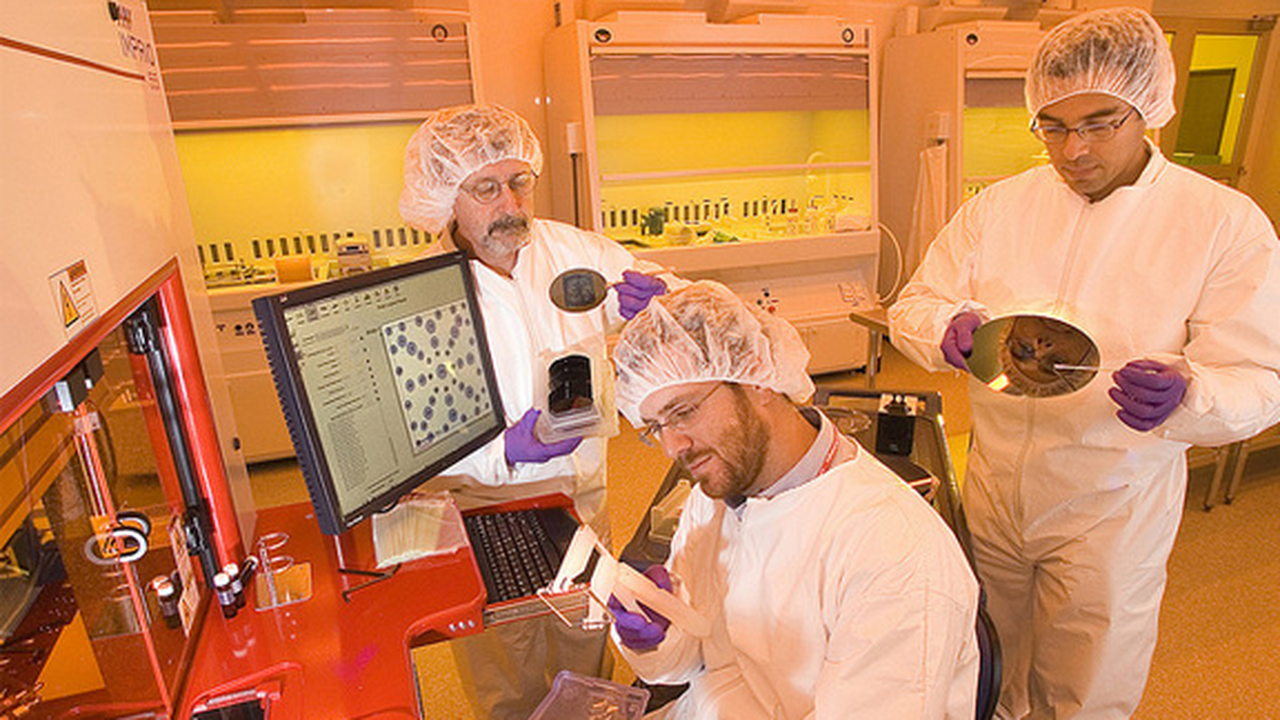
Key Findings
The five Nanoscale Science Research Centers (NSRCs) under the U.S. Department of Energy (DOE) are significantly advancing the understanding of material structures and physical properties at the nanoscale, and accelerating the design of new material systems, through groundbreaking improvements in scanning probe microscopy (SPM) technology. This progress offers unprecedented insights into fundamental principles of material design by enabling the visualization of chemical reactions and bonding at the atomic level.
Technical / Clinical Details
SPM is a powerful tool that uses an extremely small probe to scan material surfaces, measuring topography, electrical, magnetic, and optical properties at the atomic scale. At the NSRCs, the capabilities of SPM are being extended further to allow for real-time observation of atomic-level behavior in dynamic processes and complex material systems. High-precision analyses are being conducted in fields such as energy storage and conversion materials (e.g., next-generation batteries and solar cells), as well as magnetic systems, complex oxides, and high-temperature superconductors. This research aims to elucidate the fundamental relationships between material properties and performance, providing materials scientists with ‘nanoscale blueprints’ for designing materials with specific functionalities.
Background & Context
Innovative materials are essential for advancing clean energy technologies and developing higher-performance electronic devices. The functionality of many of these materials heavily depends on atomic arrangements and intermolecular interactions at the nanoscale. Traditional analytical techniques have struggled to fully comprehend behavior at such minute scales, creating a bottleneck in new material development. The advancements in SPM at the DOE’s NSRCs bridge this gap, significantly enhancing materials scientists’ ability to design and build materials ‘bottom-up.’ This is a critical step towards deepening fundamental scientific understanding and rapidly translating it into practical technological applications.
Strategic Significance & Outlook
This nanoscale science research is expected to have a broad impact across various sectors. In the energy domain, it will accelerate the development of highly efficient energy storage systems and more durable fuel cells. In electronics, it may enable the design of ultra-small, high-speed processors and novel quantum computing materials. The NSRCs serve as collaborative research platforms, leveraging world-leading experimental and computational capabilities to accelerate material research and innovation. Future research is anticipated to integrate SPM with AI and machine learning technologies to predict properties of even more complex material systems and optimize the design process, driving significant leaps in material science.
Source: https://www.energy.gov/science/articles/opening-eye-popping-possibilities-smallest-scales