Key Findings
The U.S. Department of Energy (DOE) is providing a total of $3 billion in grant programs under the Infrastructure Investment and Jobs Act (IIJA) to bolster domestic production and recycling capabilities for advanced batteries and battery materials. This significant funding aims to strengthen the North American battery supply chain and reduce foreign dependence on critical minerals. To date, $1.82 billion has been allocated across 14 projects demonstrating novel approaches to the extraction, component manufacturing, and recycling of lithium, graphite, and other battery materials. Furthermore, an additional $44.8 million has been granted to eight projects focused on improving electric vehicle (EV) battery recycling and enhancing second-life applications.
Technical Details
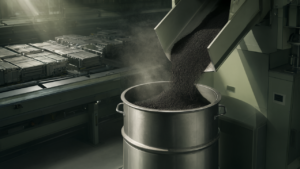
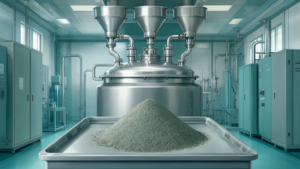
The DOE grants cover multiple stages of the battery value chain. This includes battery material extraction (e.g., a $57 million grant to American Battery Technology Co. for a lithium refining facility), advanced dry process electrode manufacturing (e.g., collaborative projects involving NREL, ORNL, SLAC, and Solid Power), and battery recycling (e.g., reducing costs associated with the transportation, dismantling, and preprocessing of end-of-life EV batteries). These technological innovations aim to improve manufacturing efficiency, reduce costs, and lessen the environmental impact of producing high-energy-density batteries (such as lithium metal and silicon anode types). Specifically, dry electrode processes eliminate solvent use in manufacturing, potentially reducing capital expenditure by up to 30% and obviating the need for toxic solvent recovery systems. Second-life applications maximize the overall lifecycle value of batteries by repurposing used EV batteries for applications like grid storage.
Background and Industry Context
The global energy storage market is experiencing rapid growth, driven by the proliferation of EVs and the expanding integration of renewable energy sources, leading to a surge in demand for battery materials. However, the U.S. faces strategic vulnerabilities due to its high reliance on foreign nations, including China, for the mining, processing, and manufacturing of critical minerals like lithium. The DOE’s program aims to mitigate this dependence and foster domestic technological innovation and production capacity. This policy support is crucial for reducing geopolitical risks in the U.S. battery supply chain and accelerating the transition to a clean energy economy. The increasing volatility of prices for battery materials such as lithium, graphite, nickel, and cobalt also underscores the importance of securing stable domestic supply sources to stabilize battery costs.
Outlook
Outlook
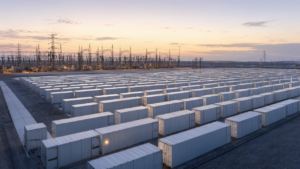
The DOE’s grant programs are pivotal for strengthening the foundation of the U.S. battery industry and enhancing its competitiveness in the global market. Successful execution of these funded projects will enable the production of higher-performance, safer batteries at lower costs, further accelerating the adoption of EVs, supporting data centers, and expanding grid-scale energy storage (BESS). Advances in areas such as dry electrode manufacturing and lithium refining hold the potential to simultaneously reduce manufacturing costs and environmental footprints. The development of domestic recycling capabilities and second-life applications will boost battery sustainability and facilitate the transition towards a circular economy model. Investors and industry stakeholders are closely monitoring the long-term impact of this government funding on next-generation energy storage technologies and energy infrastructure in the U.S.
Source: https://www.energy.gov/cmei/manufacturing/battery-manufacturing-and-recycling-grants