Key Findings
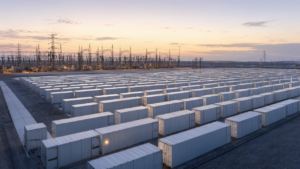
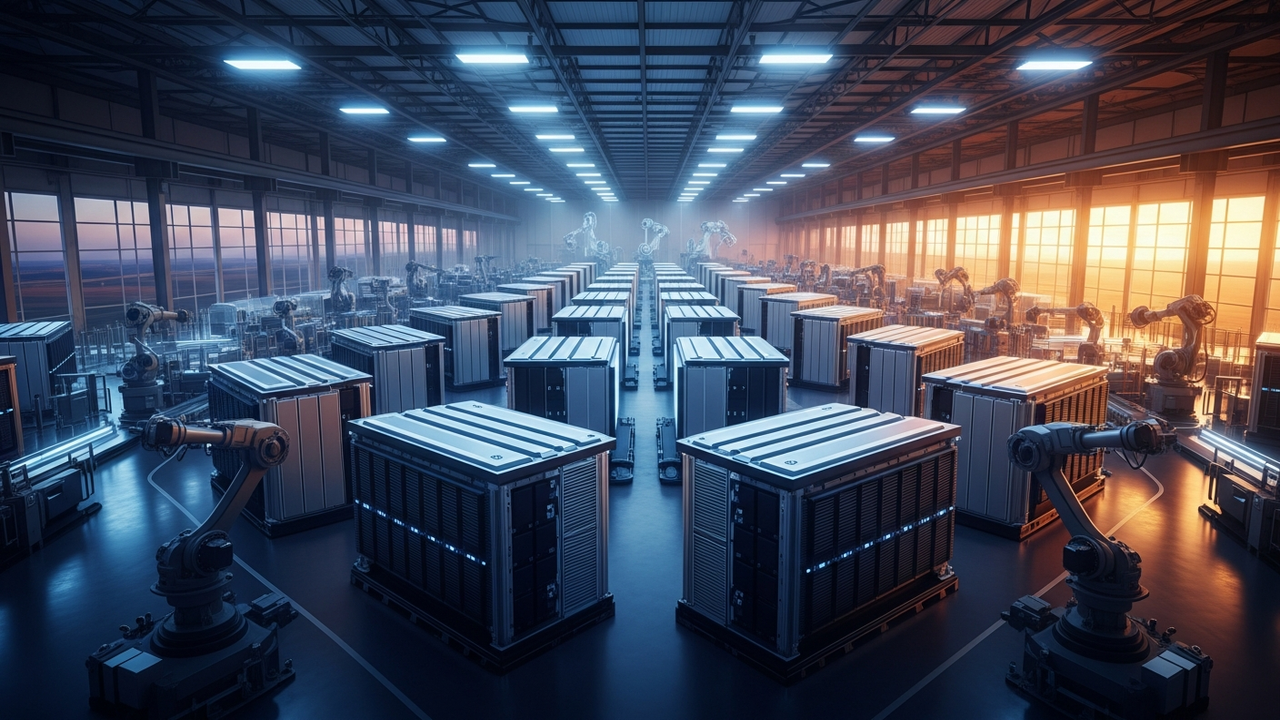
Tesla is currently constructing its largest Megapack factory in Brookshire, Texas, designed to achieve an impressive annual energy storage production capacity of 50 gigawatt-hours (GWh). This capacity will surpass that of its existing California and China plants combined. The new facility will manufacture the next-generation Megapack 3, offering approximately 5 MWh per unit (a 28% increase from Megapack 2), and introduce the innovative “Megablock” system, which integrates four Megapack 3 units with transformers and switchgear into a single 20 MWh assembly. Tesla aims to commence shipments of the Megapack 3 from this facility in the second half of 2026. This strategy is designed to address the challenges of installation time and footprint in utility-scale grid projects, dramatically enhancing energy storage density.
Technical Details
The Megapack 3 offers a 28% increase in capacity over its predecessor, the Megapack 2, enabling more energy storage in a smaller physical footprint. The new “Megablock” system modularizes multiple Megapack 3 units into a 20-foot container, facilitating high-density, rapid deployment. This is crucial for large-scale grid projects where installation time and area represent a significant portion of the total deployment cost. Furthermore, Tesla is utilizing a fully dry electrode process for both the anode and cathode of its 4680 cells, contributing to reduced manufacturing costs and factory space. These innovations collectively enhance the overall efficiency, cost-competitiveness, and scalability of Tesla’s energy storage solutions.
Background and Industry Context
The global energy storage market is experiencing unprecedented growth, driven by the escalating power demands of AI data centers and the accelerating deployment of renewable energy sources (solar, wind). Tesla has established itself as a market leader, deploying a record 46.7 GWh of energy storage systems globally in 2025. The Megapack stands as one of the most visible utility-scale grid storage products on the market. Other automotive giants, such as General Motors (GM) and Ford, are following Tesla’s successful energy storage playbook, intensifying their entry into this market. For instance, Ford has launched a new subsidiary to manufacture LFP-based BESS with an annual capacity of 20 GWh. This heightened competition signals a growing demand for more efficient and cost-effective energy storage solutions.
Outlook
The operation of the new Megapack factory in Texas is essential for Tesla to further solidify its leadership in the global energy storage market. Its massive 50 GWh annual production capacity will provide grid-scale energy storage solutions at an unprecedented scale, accelerating the world’s clean energy transition. Innovative high-density systems like the Megapack 3 and Megablock will be powerful tools for utilities to more effectively integrate renewable energy, enhance grid stability, and mitigate blackout risks. This move is expected to further drive down the cost of energy storage technology and promote its widespread adoption, thereby significantly reducing reliance on fossil fuels and accelerating the transition to a sustainable future. Investors and industry stakeholders are watching Tesla’s energy business growth as a potential new revenue pillar alongside its EV operations.
Source: https://www.basenor.com/blogs/news/teslas-new-texas-megapack-factory-50-gwh-and-1-500-jobs