
Background and Technical Challenges
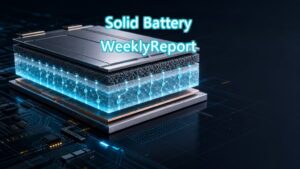
With the expansion of the electric vehicle (EV) market, battery technology is constantly pressured to evolve. All-solid-state batteries (ASSBs) are anticipated as a next-generation technology that can surpass existing lithium-ion batteries (LIBs) in terms of safety, energy density, charging speed, and longevity. However, the practical implementation of ASSBs has faced numerous technical and economic challenges, including interfacial resistance between solid electrolytes and electrodes, manufacturing costs, and ensuring consistent quality during mass production. Roadmaps to overcome these hurdles and achieve large-scale commercialization are rapidly advancing across various countries and manufacturers.
Key Findings and Market Analysis
According to analysis as of 2026, all-solid-state batteries are entering a phase of intensive pilot production and trial integration. It is projected that general consumers will be able to purchase ASSB-equipped EVs from late 2027 to 2028 at the earliest.
Leading automotive and battery manufacturers worldwide are pursuing ASSB development with their own distinct strategies.
Aggressive Moves by Chinese Players
China is leading in the development and market introduction of all-solid-state batteries in terms of both speed and volume:
- Chery: Has completed pilot production of 60Ah, 400Wh/kg all-solid-state battery cells, setting an ambitious future target of 600Wh/kg. They are employing an approach that combines high-nickel cathodes with lithium-rich manganese-based cathodes.
- Changan, Dongfeng, BYD, CATL: These major corporations are also accelerating ASSB development with diverse technological approaches, including sulfide solid electrolytes and in-situ polymerized solid electrolytes, targeting trial deployments and mass production around 2027.
Steady Pursuit by Japanese Players
Japanese manufacturers leverage their long history of fundamental research and robust technological development:
- Toyota: Aims to introduce ASSB-equipped EVs to the market around 2027-2028, focusing on developing technology that balances high performance with superior safety.
- Nissan: Is proceeding with plans to launch all-solid-state battery EVs by 2028.
- Honda: Is actively investing in all-solid-state battery development, with the goal of future integration into EVs.
It is worth noting that semi-solid batteries (hybrid solid-liquid electrolytes) are already commercially available in vehicles like the MG4 EV, indicating that this intermediate technology is leading the market.
Technical Significance and Outlook
The progress in ASSB commercialization is poised to bring about a significant transformation in the entire EV market. Specifically, improvements in energy density will directly lead to extended driving ranges, and enhanced safety will boost consumer confidence. The aggressive push for mass production by Chinese players intensifies the global competitive landscape, pressuring manufacturers in other countries to accelerate their development pace.
Future challenges include whether the announced performance metrics can be replicated in large-scale mass production, and most importantly, how far cost reductions can progress. Compared to existing LIBs, ASSBs are still more expensive, so achieving price competitiveness is key to their widespread adoption. Addressing issues such as interfacial stability between solid electrolytes and electrodes, and managing mechanical stress from temperature changes, also remain continuous technical challenges. However, the roadmaps and concrete advancements from various companies suggest that all-solid-state batteries are not a distant future technology but are likely to begin permeating our daily lives within the next few years.
Source: https://kokishi-computing.com/vehicle/solid-state-battery-ev-2026-roadmap/



Comments