Background
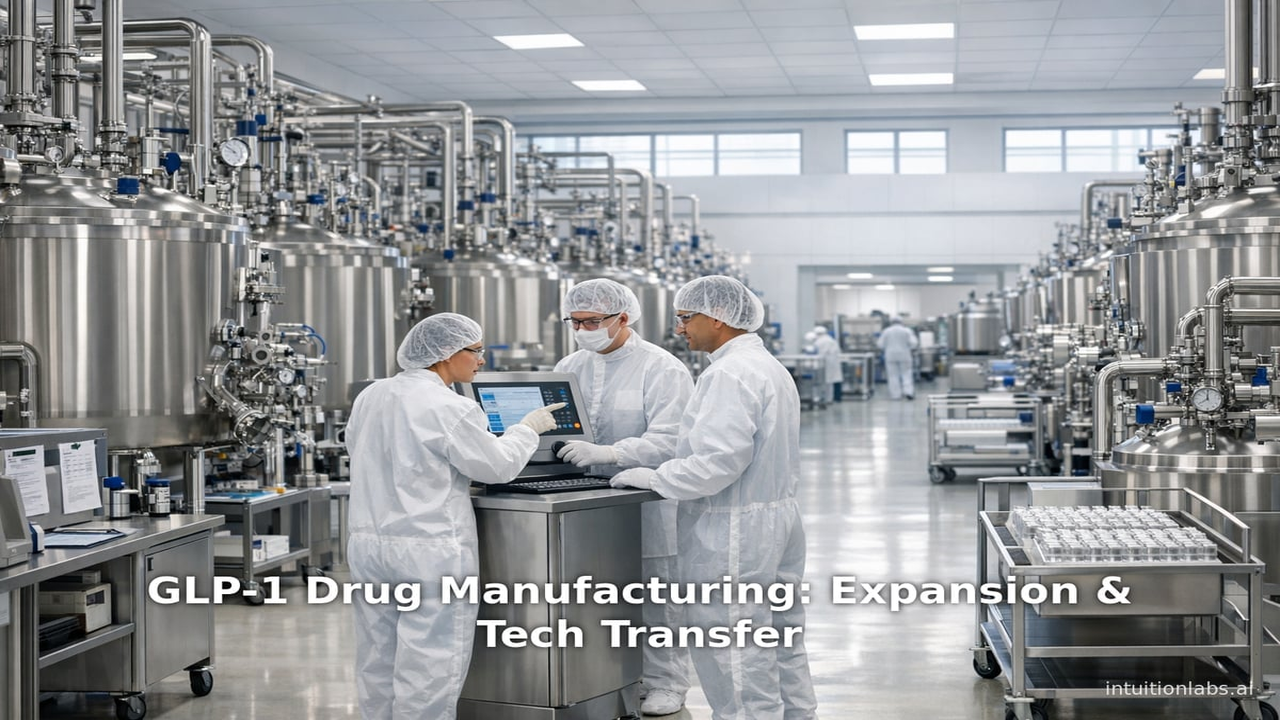
GLP-1 receptor agonists for type 2 diabetes and obesity have ignited an unparalleled global demand due to their remarkable clinical efficacy. While sales of blockbuster products like Wegovy (semaglutide) and Zepbound (tirzepatide) skyrocket, their complex peptide structures and stringent manufacturing requirements are straining global supply capabilities. To address this supply-demand gap, major pharmaceutical companies are drastically expanding their in-house manufacturing capacity and accelerating technology transfer through partnerships and acquisitions with specialized Contract Development and Manufacturing Organizations (CDMOs). High-volume production of peptides, in particular, demands advanced technologies and significant capital investment.
Key Findings / Results
In response to the overwhelming demand for GLP-1 drugs, leading global pharmaceutical companies are initiating aggressive facility expansion programs. Novo Nordisk is investing $4.1 billion in a sprawling new manufacturing plant in North Carolina, slated to begin producing Wegovy and Ozempic by 2029. Furthermore, the company significantly augmented its GLP-1 injectable fill-and-finish capacity through a $16.5 billion acquisition of three Catalent sites, integrating them into its manufacturing network. Concurrently, Eli Lilly is investing over $15 billion in new facilities across Indiana, Wisconsin, Pennsylvania, and Alabama to bolster its manufacturing capabilities. These investments are proceeding in parallel with growing concerns about the environmental footprint of GLP-1 peptide manufacturing, especially the solid-phase peptide synthesis (SPPS) process, which typically generates substantial waste. Consequently, the CDMO sector is accelerating investments in greener chemistry processes and solvent recovery systems to enhance sustainability.
Technical Significance & Outlook
The explosive demand for GLP-1 drugs has created immense market opportunities for specialized peptide CDMOs, with the GLP-1 peptide CDMO market projected for significant annual growth. The imperative for advanced, scalable, and environmentally friendly manufacturing processes is driving strong innovation and investment within the CDMO sector. Pharmaceutical companies are increasingly outsourcing GLP-1 drug manufacturing to CDMOs to manage technical complexities, substantial capital requirements, and specialized expertise. In the future, CDMOs capable of providing sustainable and efficient large-scale peptide synthesis solutions will hold a strong competitive advantage. The article points to a potential shift from traditional batch processing to more advanced continuous flow synthesis as a key differentiator. Ensuring global manufacturing capacity while addressing environmental sustainability concerns will be critical for the sustained growth of the GLP-1 drug market.
Source: https://intuitionlabs.ai/articles/glp-1-drug-manufacturing-cdmo-tech-transfer