Background
Heating and cooling in buildings account for a substantial portion of global energy consumption, placing significant strain on electricity grids, particularly during peak demand periods. To address this challenge, phase change materials (PCMs), capable of efficiently storing and releasing thermal energy, have garnered attention as a promising solution for building thermal management. PCMs absorb or release a large amount of latent heat during phase transition at specific temperatures, thereby stabilizing indoor temperatures, reducing HVAC (Heating, Ventilation, and Air Conditioning) system runtime, and optimizing electricity consumption. However, conventional PCMs, especially organic materials, have faced hurdles such such as flammability, relatively low energy density, poor thermal conductivity, and high material costs, which have impeded their widespread adoption.
Key Findings / Results
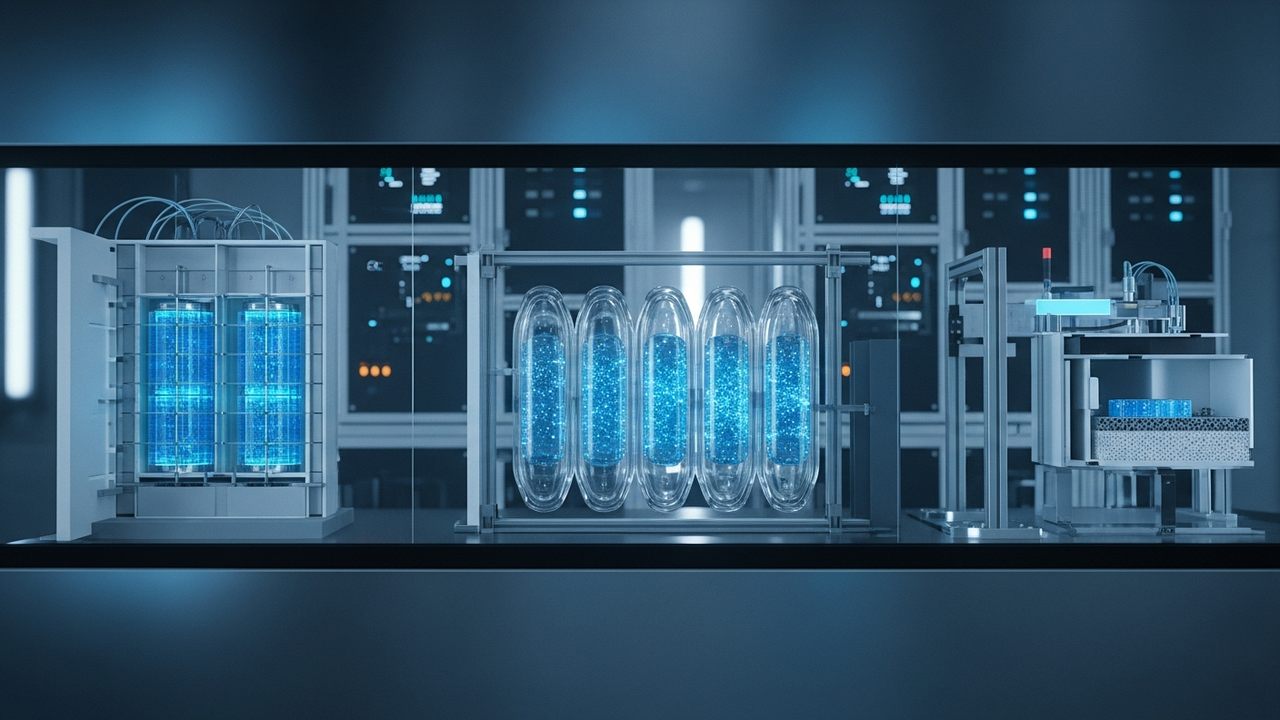
The U.S. Department of Energy (DOE) has launched a collaborative project, led by the University of Massachusetts Lowell with partners Insolcorp LLC and 3M Company, to develop a multipurpose latent heat storage system for building applications. The primary goal of this project is to overcome the limitations of existing PCMs and provide high-performance, cost-effective solutions. Specifically, the development focuses on the following key areas:
- Development of Inorganic Salt Hydrate-Based PCMs: The project emphasizes PCMs based on inexpensive and abundant inorganic salt hydrates, which possess high latent heat enthalpy. These materials are designed to operate efficiently within the typical building temperature range of 5°C to 45°C. As inorganic materials, they intrinsically resolve the flammability issues associated with organic PCMs.
- Innovative Encapsulation Technology: To address inherent drawbacks of salt hydrate PCMs, such as supercooling, incongruent melting, and phase segregation, the project is developing advanced encapsulation techniques featuring highly conductive and impermeable barriers. This encapsulation strategy aims to maximize PCM loading, facilitate heat exchange efficiency, prevent material leakage, eliminate corrosion potential, and enhance long-term durability. This ensures that PCMs can be safely and effectively integrated into building materials and systems.
This comprehensive approach is expected to improve the overall energy storage capacity and efficiency of the system, offering superior performance compared to traditional materials.
Technical Significance & Outlook
The development of this multipurpose latent heat storage system represents a significant contribution to enhancing energy efficiency in the building sector and advancing sustainable societal goals. By mitigating and shifting thermal load peaks, it will contribute to grid stabilization and facilitate the integration of renewable energy sources. Furthermore, by shortening the system’s payback period, it will accelerate the adoption of PCM technology in a broader range of buildings, from commercial properties to residential homes. In the future, this technology is envisioned to become a core component of smart buildings, improving occupant comfort while simultaneously reducing energy consumption and operational costs. Ongoing challenges include long-term demonstration testing of the developed materials and encapsulation technologies, scaling up manufacturing processes, and validating performance under diverse climatic conditions to further optimize for practical implementation.