Key Findings
Enhertu (trastuzumab deruxtecan), an antibody-drug conjugate (ADC) co-developed by AstraZeneca and Daiichi Sankyo, has received European Union (EU) approval as the first tumor-agnostic HER2-directed therapy for patients with previously treated HER2-positive metastatic solid tumors. This landmark approval provides a new standard-of-care option for patients with challenging HER2-positive solid tumors, irrespective of their primary tumor site, significantly broadening the applicability of ADCs. Concurrently, a $25 million (approximately 3.75 billion JPY) milestone payment was made from AstraZeneca to Daiichi Sankyo.
Technical / Clinical Details
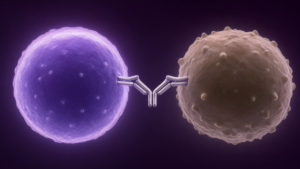
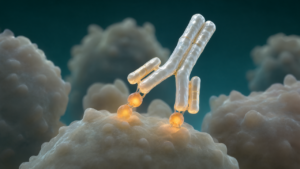
Enhertu is an ADC that conjugates a potent topoisomerase I inhibitor, deruxtecan, to an anti-HER2 antibody via a stable linker. This design allows for selective delivery of the drug to HER2-expressing cancer cells, where the payload is released intracellularly to kill tumor cells. The EU approval is based on data from clinical trials such as the DESTINY-PanTumor02 study. These trials evaluated Enhertu’s efficacy and safety profile in previously treated patients with various types of HER2-positive metastatic solid tumors, including biliary tract, bladder, cervical, endometrial, ovarian, and pancreatic cancers. Results demonstrated favorable objective response rates (ORR) and disease control rates, along with a manageable safety profile. This tumor-agnostic approval signifies a new step in precision medicine, where treatment is selected based on a biomarker (HER2) rather than being limited to specific cancer types.
Background & Context
While HER2 is a well-established therapeutic target in specific cancers like breast and gastric cancers, effective treatment options for HER2-positive solid tumors originating from other sites have been limited. Enhertu’s tumor-agnostic approval offers new hope for patients with these challenging HER2-positive solid tumors. ADCs are rapidly gaining prominence as next-generation cancer therapeutics, demonstrating high anti-tumor activity with reduced side effects compared to traditional chemotherapy due to their targeted drug delivery. The collaboration between AstraZeneca and Daiichi Sankyo strengthens their global leadership in the ADC field, and this approval further elevates Enhertu’s significance within both companies’ pipelines.
Strategic Significance & Outlook
Enhertu’s tumor-agnostic approval in the EU holds the potential to profoundly change the treatment paradigm for HER2-positive solid tumors. This will enable patients with diverse cancer types to access this innovative therapy, leading to anticipated improvements in treatment outcomes. Future developments are expected to include further expansion of Enhertu’s indications and the development of combination therapies with other anti-cancer drugs. Moreover, this approval sets an important precedent, accelerating the development of other biomarker-targeted, tumor-agnostic ADCs and further broadening the concept of precision medicine. The evolution of ADC technology is ongoing, promising to bring further innovation to the treatment of intractable cancers.
Get our weekly technology intelligence — free
Receive an infographic that lets you judge at a glance whether each field’s analysis report is worth reading.
Subscribe Free — Weekly Tech Intelligence
By subscribing, you’ll receive Troy-Technical’s weekly technology intelligence newsletter.
- Your email and selected fields are used only to deliver the newsletter.
- We never share your information with third parties.
- You can unsubscribe anytime via the link in each email.
See our Privacy Policy for details.
Takes about a minute · Unsubscribe anytime