Key Findings
Ensuring data integrity is a critical aspect of regulatory compliance and product quality assurance within automated bioprocess environments. This article highlights the essential role of middleware in effectively preventing potential data transfer gaps between instruments and quality systems, thereby guaranteeing automated, timestamped data capture and robust audit trails. This adherence directly supports compliance with stringent regulatory frameworks, including the U.S. FDA’s 21 CFR Part 11 and the ALCOA+ principles.
Technical and Clinical Details
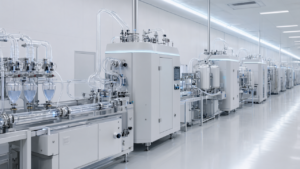
Data integrity is defined by the ALCOA principles (Attributable, Legible, Contemporaneous, Original, Accurate), extended to ALCOA+ by adding Complete, Consistent, Enduring, and Available. In automated bioprocesses, vast amounts of data are generated from diverse instruments, such as bioreactors, chromatography systems, and analytical devices. Middleware acts as a crucial bridge, integrating data from these disparate systems and securely transferring it to a central data repository in a tamper-proof manner. This eliminates the risks of human error and data manipulation associated with manual data entry. Automated timestamping ensures that every data entry, modification, or deletion is recorded with its date, time, and the identity of the performer, providing a comprehensive audit trail. This maintains transparent and traceable records of how data was generated, processed, and accessed, which is vital for regulatory audits and quality control reviews.
Background and Industry Context
The biopharmaceutical manufacturing industry consistently faces stringent regulatory requirements concerning product safety, quality, and efficacy. With the advent of advanced therapies (ATMPs) like cell and gene therapy products, the complexity of manufacturing processes has increased, making automation and digitalization indispensable. However, as automation advances, maintaining data integrity across interconnected systems becomes a new challenge. FDA 21 CFR Part 11 establishes criteria for ensuring the trustworthiness, integrity, and reliability of electronic records and electronic signatures, making its compliance mandatory for biopharmaceutical manufacturers. Lapses in data integrity can lead to severe consequences, including product recalls, market delays, and regulatory warning letters. Therefore, embedding data integrity from the initial stages of system design is key to successful bioprocess automation.
Strategic Significance and Outlook
The importance of middleware in securing data integrity will continue to grow, particularly as AI and machine learning are increasingly integrated into bioprocess optimization. The quality and trustworthiness of data fed into these algorithms directly impact the accuracy of predictive models and the reliability of decision-making. In the future, distributed ledger technologies, such as blockchain, may be integrated into data integrity management to provide even stronger security and traceability. Furthermore, the development of more standardized data interfaces and protocols will facilitate seamless data exchange between heterogeneous systems, thereby reducing the burden of data management. This will accelerate the digital transformation of biopharmaceutical manufacturing, contributing to the faster and safer market introduction of therapeutic drugs.
Get our weekly technology intelligence — free
Receive an infographic that lets you judge at a glance whether each field’s analysis report is worth reading.
Subscribe Free — Weekly Tech Intelligence
By subscribing, you’ll receive Troy-Technical’s weekly technology intelligence newsletter.
- Your email and selected fields are used only to deliver the newsletter.
- We never share your information with third parties.
- You can unsubscribe anytime via the link in each email.
See our Privacy Policy for details.
Takes about a minute · Unsubscribe anytime