Background and EV Battery Sustainability & Manufacturing Challenges
As the adoption of electric vehicles (EVs) accelerates globally, the sustainability and efficient manufacturing throughout the entire EV battery lifecycle have emerged as pressing challenges. While extended battery lifespan is crucial, technologies that facilitate the repair, repurposing, and ultimate recycling of end-of-life batteries are indispensable for achieving a circular economy. Traditional battery packs, often assembled with robust adhesives, are exceedingly difficult to disassemble, complicating and increasing the cost of repair and recycling processes. Furthermore, the use of conventional materials like PET films for insulating battery cells and modules presented manufacturing hurdles, added costs, and inherent risks of defects.
Key Developments and Henkel Japan’s Innovative Technologies
Henkel Japan unveiled groundbreaking material technologies at the Automotive Engineering Exposition 2026 YOKOHAMA, specifically designed to address these critical challenges:
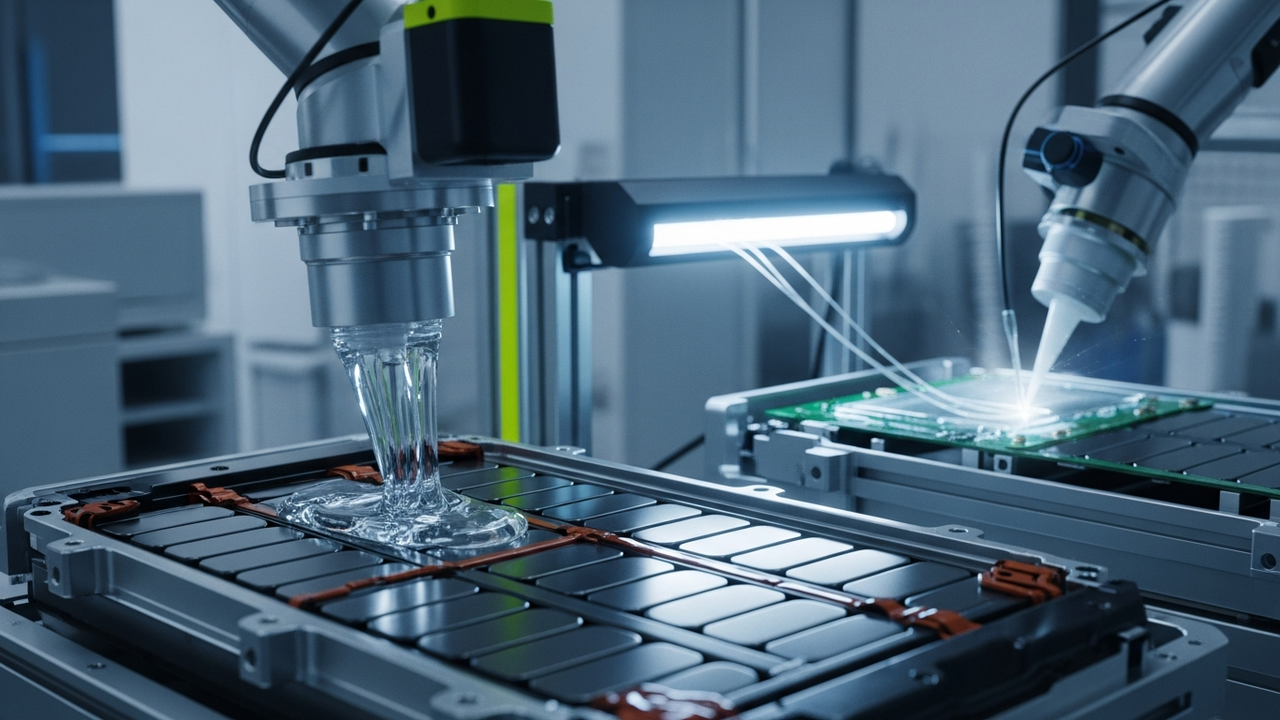
- LOCTITE Easy Disassembly Adhesive (Electric Type): This innovative disassemblable adhesive functions as a structural adhesive for EV battery pack assembly, yet it can be significantly weakened at room temperature by applying a specific electrical signal. This unique feature enables the easy disassembly of battery modules or cells. Consequently, diagnostic, repair, component replacement, and recycling processes for end-of-life batteries are dramatically simplified, contributing to cost reduction and enhanced resource efficiency. This technology expands the possibilities for battery repurposing and reuse, making it a vital enabler for the circular economy.
- LOCTITE UV-Curing Insulating Coating: This newly developed UV-curable insulating coating is a revolutionary material that cures in just a few seconds upon UV light exposure. It is positioned as a superior alternative to traditional PET films used for inter-cell insulation and circuit protection within battery packs. By eliminating the need for film application processes, it contributes to automation and acceleration of manufacturing, resulting in reduced labor costs and shorter production cycle times. Moreover, the uniform coating layer ensures stable insulation quality and reduced defect risks.
- Other Battery-Specific Solutions: The exhibition also showcased a broad spectrum of adhesive, sealing, and thermal management materials designed to enhance the safety, thermal performance, durability, and reliability of EV batteries. These included thermally conductive adhesives, thermal gap fillers, potting compounds, fire-retardant coatings for batteries, and liquid gaskets for battery pack sealing.
Impact and Future Outlook
These technologies introduced by Henkel Japan are poised to significantly impact the sustainable development of the EV industry. The easy-disassembly adhesive fundamentally improves EV battery reparability, allowing for the replacement of only faulty modules instead of the entire expensive battery pack, thereby offering economic benefits to consumers. Concurrently, it contributes to higher battery recycling rates and promotes the circular utilization of scarce resources. The UV-curable insulating coating will contribute to cost reduction and increased productivity in EV battery manufacturing through process efficiency, further supporting EV adoption. These innovations are indispensable for shaping a future where EVs reduce environmental impact across their entire lifecycle and become more economical and sustainable mobility solutions. Henkel is expected to lead the transformation of the automotive industry through its advanced material technologies.