
Background and Technical Challenges
Accelerating the adoption of electric vehicles (EVs) hinges critically on extending driving range, reducing charging times, and lowering battery costs. Conventional lithium-ion batteries are approaching their performance limits, making all-solid-state batteries (ASSBs) a focal point for next-generation technology. ASSBs, which replace liquid electrolytes with solid counterparts, offer the potential for enhanced safety and higher energy density. However, their complex manufacturing processes, high costs, and challenges in ensuring consistent yield at large scales have remained significant technical hurdles.
Key Findings and Technical Breakthroughs
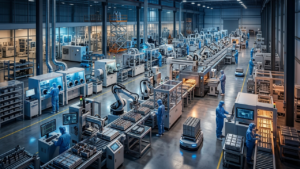
Nissan has announced steady progress towards its goal of introducing vehicles equipped with all-solid-state EV batteries to the market by 2028. The company established a pilot production line for ASSBs at its Yokohama plant in January 2025, signaling its concrete preparations for mass production. Furthermore, Nissan has partnered with U.S.-based LiCAP Technologies to accelerate the development of mass production techniques. LiCAP Technologies’ unique dry electrode technology is expected to significantly reduce manufacturing costs and improve efficiency by eliminating the solvent recovery and drying processes associated with traditional wet-coating methods.
Nissan has confirmed the achievement of several crucial milestones:
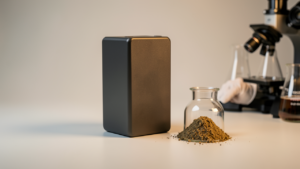
- Prototype Pack Stacking: Successfully developed a prototype all-solid-state battery pack by stacking 23 individual battery cells.
- Vehicle-Specific Charge/Discharge Targets Met: This prototype pack has been validated to meet the required charge and discharge performance targets for actual vehicle applications, marking a significant step from laboratory results toward practical implementation.
- Targeted Range: The introduction of ASSBs is projected to double the range of current EVs, aiming for over 1,000 km (620 miles), based on WLTP (Worldwide Harmonized Light Vehicles Test Procedure) estimates. This could substantially alleviate consumer range anxiety.
- Cost Targets: Nissan aims to reduce battery pack costs to $75/kWh by fiscal year 2028, with a long-term goal of $65/kWh. Achieving this would make ASSBs comparable to or even cheaper than existing LIBs, dramatically enhancing the price competitiveness of EVs.
Technical Significance and Outlook
The announcement by a major automaker like Nissan, detailing the establishment of a production line, strategic partnerships, and a clear target year of 2028, strongly indicates that the adoption of ASSBs in the EV market is entering a realistic phase. The embrace of dry electrode technology is key to overcoming major barriers in ASSB mass production, not only by reducing environmental impact but also by cutting manufacturing costs and time.
The goal of doubling EV range has the potential to significantly reduce consumer apprehension towards EVs, accelerating their widespread adoption. Furthermore, if cost reduction targets are met, ASSB-equipped EVs could expand beyond the premium segment into broader markets.
Future challenges include replicating prototype performance in large-scale production, ensuring long-term durability in real-world conditions, establishing a robust supply chain, and securing stable raw material supplies. However, Nissan’s initiative demonstrates a strong commitment from the Japanese automotive industry to reclaim global leadership in next-generation battery technology, with a potentially profound impact on the global EV market.
Source: https://electrek.co/2026/04/20/nissans-first-ev-solid-state-batteries-on-track-2028/


Comments