Background: Aircraft Decarbonization and the Promise of Hydrogen Fuel
The aviation industry faces immense pressure to significantly reduce carbon dioxide emissions as part of climate change mitigation efforts, making the transition to electric or hydrogen propulsion an urgent priority. Hydrogen-powered aircraft, in particular, hold great promise as the ultimate zero-emission solution, as their only exhaust product is water. However, hydrogen fuel has a low energy density by volume, requiring large tank volumes even when stored as liquid hydrogen. Furthermore, liquid hydrogen must be stored at extremely low temperatures (-253°C), necessitating exceptionally lightweight and robust materials and innovative tank designs for safe and efficient integration into aircraft.
Key Findings: Modular Assembly Concept for CFRP Hydrogen Tanks
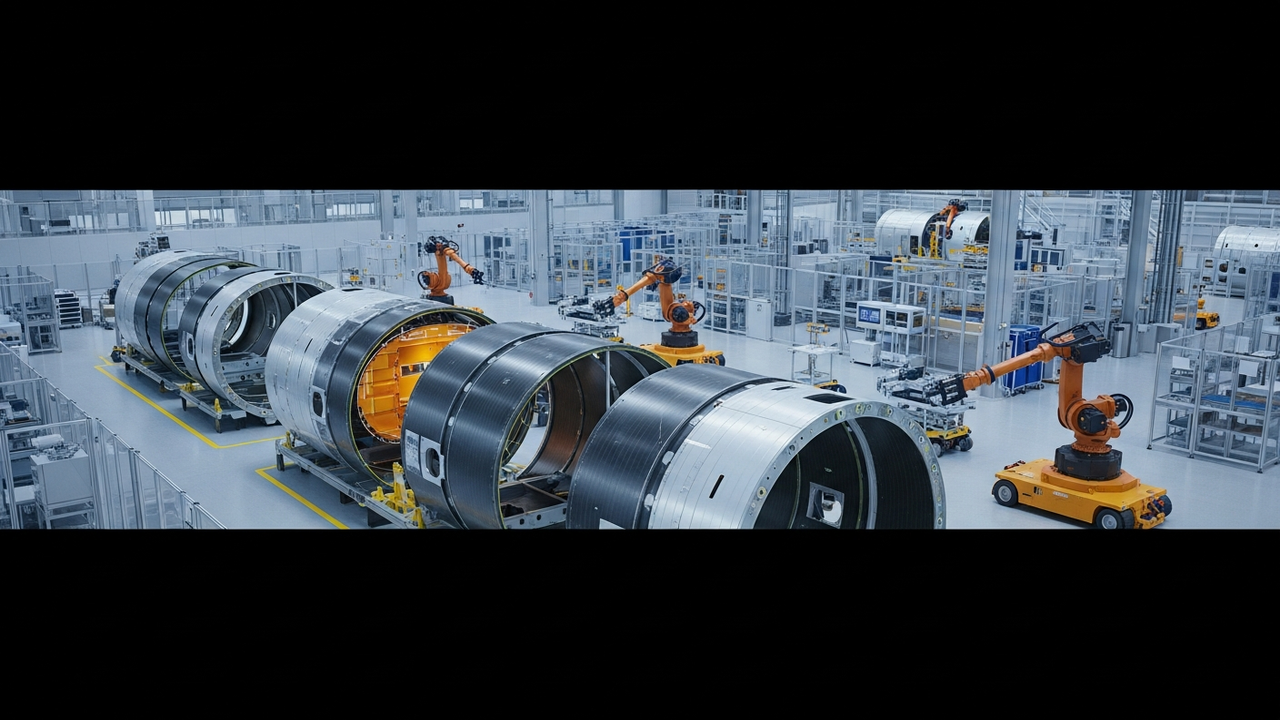
The research published in MDPI proposes a groundbreaking modular assembly concept for liquid hydrogen tanks made of Carbon Fiber Reinforced Plastic (CFRP) for large passenger aircraft. This design aims to overcome two major constraints: limited installation space within aircraft and strict weight limitations. Key technical features include:
- Modular Design: Instead of a single, large integrated tank, the concept utilizes multiple CFRP modules that can be efficiently arranged in irregularly shaped spaces within the aircraft fuselage or wings. This facilitates easier integration into existing aircraft designs and improves space utilization.
- Significant Weight Reduction: CFRP offers an excellent strength-to-weight ratio compared to steel or aluminum, contributing significantly to tank structural lightweighting. This modular design, through optimized laminate configurations and manufacturing techniques, targets a 20% to 40% weight reduction compared to traditional metallic tanks. This translates to improved aircraft fuel efficiency, extended range, and increased payload capacity.
- Adaptation to High Production Rates: To meet the projected surge in demand for hydrogen aircraft (driven by increasing annual passenger numbers), tank manufacturing speeds must be dramatically increased. The modular assembly concept enables high-volume production and rapid assembly by allowing individual modules to be manufactured in parallel and then integrated. Combined with automated manufacturing processes, cost-effective production is anticipated.
- Cryogenic Environment Adaptation: Critical to the design is the selection of CFRP materials and structural designs capable of withstanding the extremely low temperatures of liquid hydrogen storage. Special technical approaches are adopted to manage thermal stresses, thermal shrinkage, and the risk of hydrogen embrittlement.
This concept aims to balance flexibility in the design phase with efficiency in the manufacturing phase.
Technical Significance & Outlook: Accelerating the Dawn of the Hydrogen Aircraft Era
This modular assembly concept for CFRP hydrogen tanks represents a significant breakthrough towards aircraft decarbonization. The substantial weight reduction, high production potential, and ease of integration into existing aircraft designs will significantly accelerate the practical implementation of hydrogen-fueled aircraft. This will enable airlines to transition to sustainable operational models and dramatically reduce the environmental footprint of the entire aviation industry.
Beyond aviation, this technology has potential applications in designing and manufacturing large hydrogen tanks for other sectors, including ground transportation, space propulsion, and stationary energy storage. Further advancements in material technology, automation of manufacturing processes, and the development of international regulations and standards are expected to provide a major impetus for realizing a hydrogen society. This research offers a concrete roadmap for achieving clean aviation in the future, and its development warrants close attention.









Comments