Background: Industrial Decarbonization and the Potential of SOEC Technology
Global industrial sectors, particularly energy-intensive industries like steel, chemicals, and cement, consume vast amounts of process heat and hydrogen, making them major sources of CO2 emissions. Decarbonizing these industries necessitates the supply of green hydrogen as a replacement for fossil fuels. Among water electrolysis technologies, Solid Oxide Electrolysis Cells (SOEC) operate at high temperatures and can efficiently utilize thermal energy, potentially achieving higher electrical efficiency compared to conventional alkaline or PEM (Proton Exchange Membrane) electrolysis. This characteristic is particularly advantageous when industrial waste heat can be integrated into the process.
Sunfire Commences SOEC Test Facility at BASF Schwarzheide
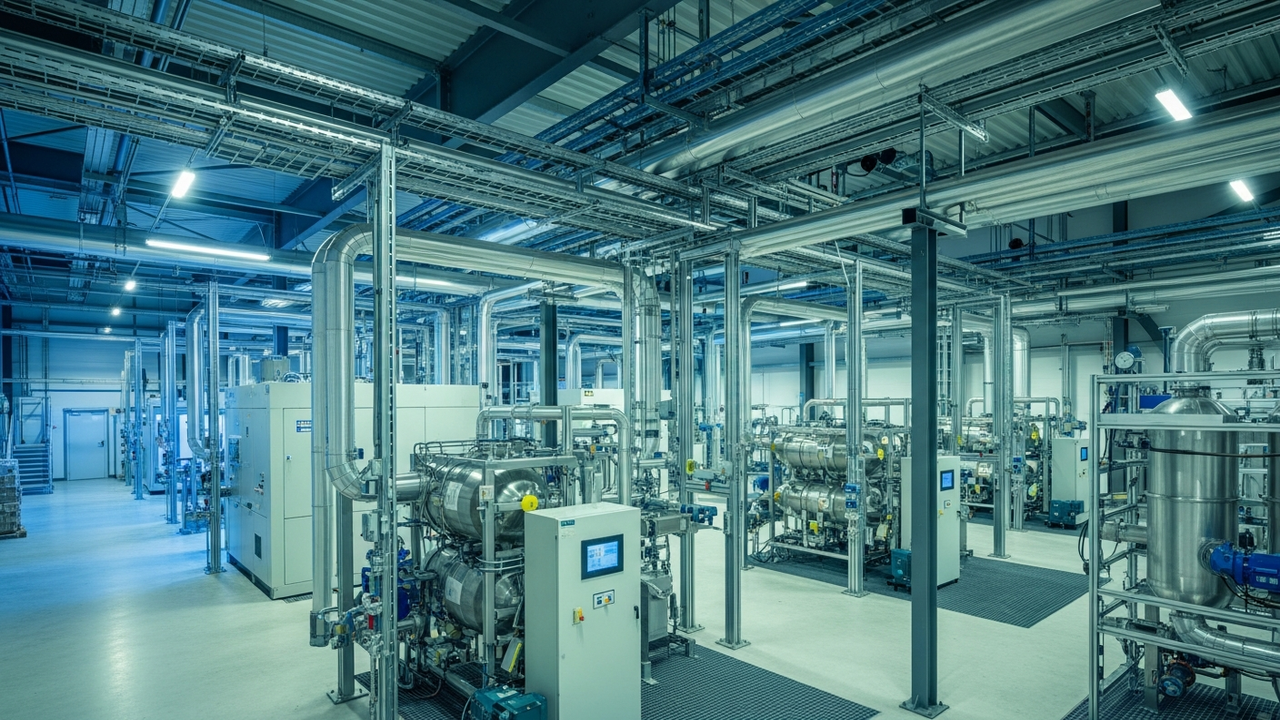
Sunfire, a German electrolyzer manufacturer, has announced the commencement of construction for a large-scale Solid Oxide Electrolysis Cell (SOEC) test facility within BASF’s Schwarzheide industrial park. This facility aims to validate the industrial-scale applicability of SOEC technology and to accelerate further technological refinement and commercialization.
- Technical Features: Sunfire’s SOEC operates at high temperatures, around 850°C. This high-temperature environment reduces the electrical energy required for hydrogen production from steam, maximizing electrolysis efficiency. It also expands the potential for waste heat utilization, improving overall energy efficiency.
- Collaboration with BASF: The construction of the facility within chemical giant BASF’s industrial park is strategically significant for exploring the potential of co-electrolysis (syngas production from steam and CO2) using waste heat and CO2 from chemical processes. This opens the door for decarbonizing the chemical industry and moving towards more sustainable product manufacturing.
- Testing Objectives: The test facility will evaluate the long-term durability of SOEC stacks, partial load operation capabilities, system integration, and adaptability to fluctuating renewable energy supplies. These are crucial steps for ensuring commercial-scale reliability and economic viability.
Impact and Outlook: Green Hydrogen Cost Reduction and Industrial Transformation
The construction of Sunfire’s SOEC test facility is highly significant for reducing green hydrogen production costs and accelerating the decarbonization of heavy industries. Successful large-scale deployment of SOEC technology will enhance the economic viability of the hydrogen economy and promote the adoption of green hydrogen across a wider range of industries.
This initiative is a crucial pillar of Germany’s and Europe’s hydrogen strategies, contributing to a reduced reliance on fossil fuels and enhanced energy security. In the future, SOEC technology is expected to become a primary option for green hydrogen supply, meeting various industrial needs alongside or even surpassing conventional electrolyzer technologies.
Source: #



Comments