Key Findings
Sanjai Parthasarathi of Coherent emphasizes that advanced laser and photonics technologies are becoming central to the scalability, efficiency, and reliability of AI systems, serving as foundational elements of modern digital infrastructure amidst the explosive growth of AI and surging demand from hyperscale data centers. Photonics offers high bandwidth density, low power consumption per bit, and superior scalability for AI clusters, surpassing the physical limitations of traditional copper technologies. This is achieved particularly through paradigm-shifting approaches like Co-Packaged Optics (CPO), which effectively address complex networking challenges in data centers such as scale-up, scale-out, and scale-across through optical interconnects.
Technical / Clinical Details
AI workloads demand high-speed data movement and low power consumption, which are challenging to meet with conventional electrical interconnects. Photonics offers specific advantages for this challenge:
- High Bandwidth Density: Light can transmit information at much higher frequencies than electricity, allowing more data to be processed simultaneously within a limited physical space. This ensures bottleneck-free data transfer between GPUs and accelerators in AI clusters.
- Low Power-Per-Bit: Optical signal transmission requires less energy than electrical signals, significantly reducing overall power consumption in data centers. This is crucial for lowering AI system operational costs and enhancing sustainability.
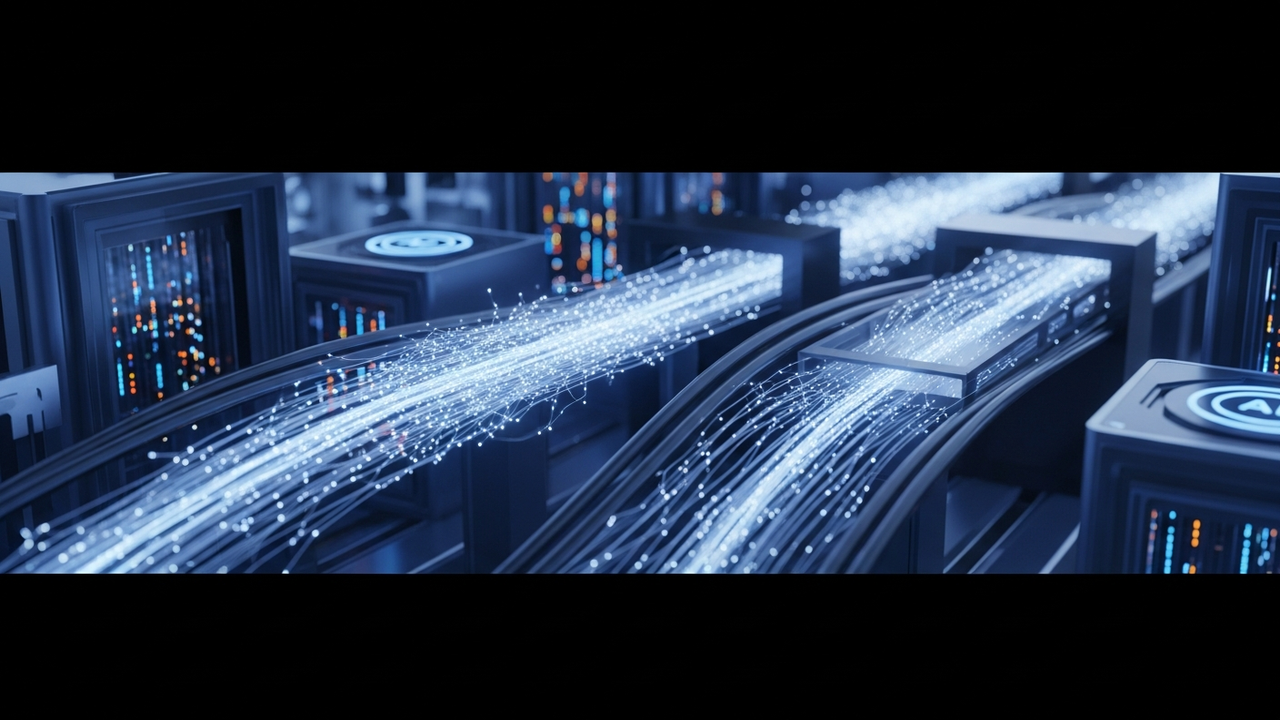
- Scalability: Optical fibers support high-speed, long-distance data transmission with minimal signal degradation, enabling flexible design and expansion of large-scale AI data centers and clusters. This facilitates system configurations where tens to hundreds of thousands of GPUs operate collaboratively, akin to a “single giant GPU.”
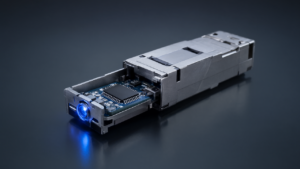
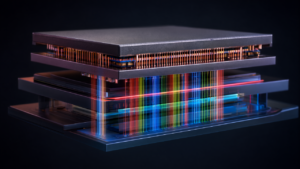
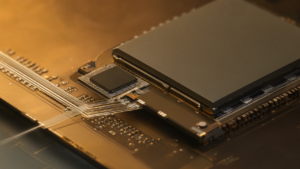
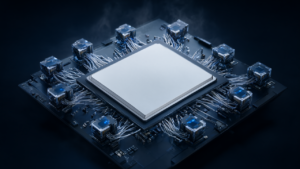
- Co-Packaged Optics (CPO): Integrating optical engines within the same package as CPUs or GPUs minimizes electrical trace lengths, maximizing power efficiency and bandwidth. This is rapidly being adopted as the next-generation interconnect architecture in AI data centers.
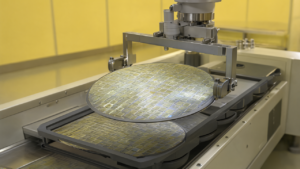
Scaling the production of photonic devices while maintaining performance and yield is a significant challenge, making established manufacturing platforms and vertically integrated capabilities indispensable.
Background & Context
The rapid expansion of AI infrastructure has heightened focus on energy efficiency, to the extent that “power per token” is a critical performance metric in the 2026 market. Leading semiconductor companies like Nvidia, Broadcom, and Marvell are engaged in intense competition over electrical and thermal efficiency. In this environment, Photonic Integrated Circuits (PICs) are recognized as a foundational scaling layer for computing in the AI era. Initiatives like Europe’s PhotonDelta are bolstering the photonics industry by promoting supply chain “reshoring” and aiming to strengthen regional manufacturing capabilities.
Strategic Significance & Outlook
As AI demand continues to rise, photonics will remain an indispensable technology for improving data center performance and efficiency. The proliferation of advanced optical interconnect technologies like CPO signifies a fundamental paradigm shift in AI data center design and operation, enabling the realization of more powerful and sustainable AI systems. Optical solutions are expected to accelerate data movement and improve power efficiency across chips, racks, and entire data centers, thereby driving further AI development and the creation of new applications.
Source: https://www.photonics.com/Articles/Photonics-is-Pacing-AIs-Prolific-Growth/p5/a72170