Background
Quantum dots (QDs) are nanomaterials with promising applications across diverse fields, including next-generation displays (QLED), solar cells, bioimaging, and quantum computing. However, identifying QDs with optimal performance has historically been a highly challenging and time-consuming endeavor, constrained by complex chemical synthesis pathways and a vast array of experimental parameters. Global materials science research is actively seeking faster and more efficient methods for new material development. In response, autonomous laboratories leveraging AI and robotics are emerging as a cutting-edge approach, a push further supported by investments from entities like the U.S. Department of Defense, recognizing their potential to bolster national technological superiority.
Key Findings
North Carolina State University’s autonomous laboratory, dubbed ‘Rainbow,’ has achieved a remarkable breakthrough in optimizing next-generation quantum dots. This AI-driven system has slashed a process that would typically take human experimentation approximately seven years down to a mere few weeks. By autonomously executing up to 1,000 experiments and analyses daily, Rainbow has demonstrated unparalleled efficiency in identifying top-tier quantum dots, marking a significant leap in the pace of scientific discovery.
Technical Details and Methodology
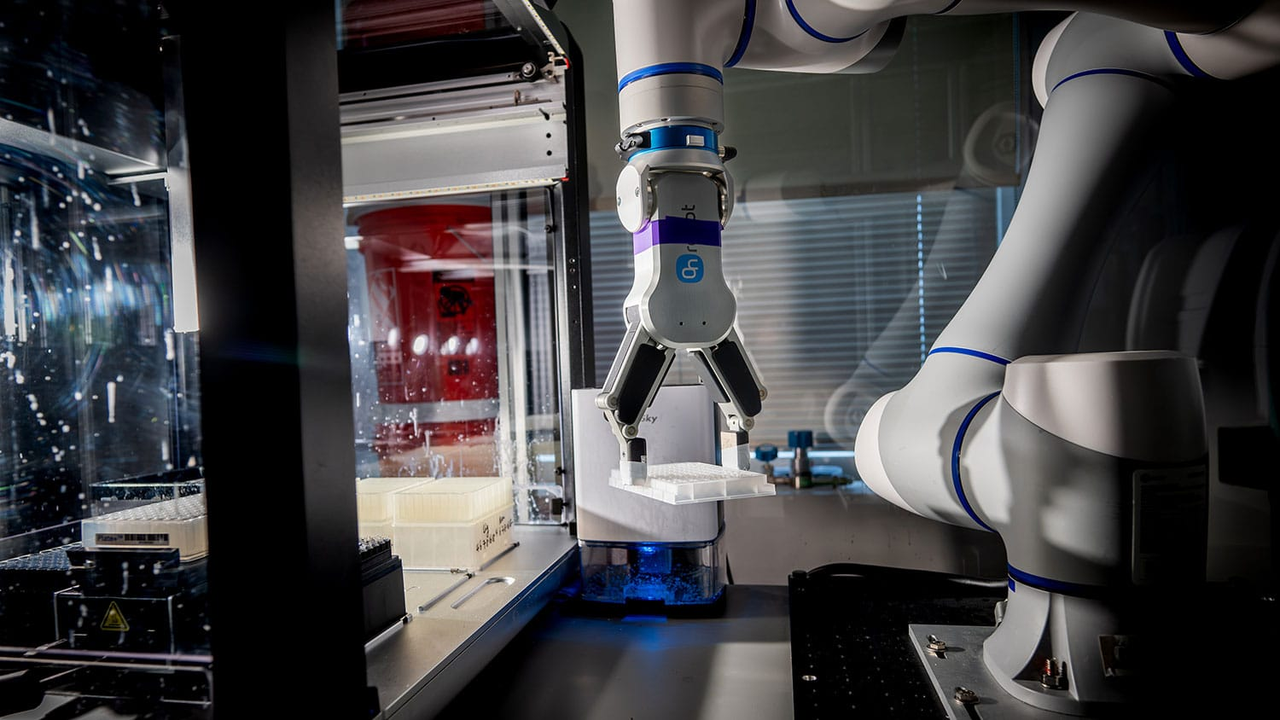
‘Rainbow’ is a fully autonomous materials science research platform that seamlessly integrates artificial intelligence (AI) with advanced robotics. The system independently carries out the entire process of quantum dot synthesis, characterization, and data analysis without human intervention. Specifically, AI leverages historical experimental data and theoretical models to propose the next optimal experimental conditions. Robotic arms then execute these instructions automatically, performing tasks such as precise reagent mixing, reaction initiation, and sample collection. Subsequently, automated analytical instruments evaluate the optical and electronic properties of the synthesized quantum dots. These comprehensive results are fed back into the AI, completing a closed-loop learning cycle. This iterative process of learning and experimentation allows for a far more efficient exploration of the vast materials discovery space compared to traditional ‘trial-and-error’ approaches. Previously, optimizing quantum dots involved manually adjusting numerous parameters (e.g., temperature, pressure, reagent concentration, reaction time), often taking several years to identify a single optimized composition. Rainbow dramatically shortens this timeline, effectively resolving a major bottleneck in new materials development.
Future Outlook and Broader Implications
The success of NC State’s ‘Rainbow’ laboratory holds profound implications, not just for materials science but also for accelerating discovery processes across other scientific disciplines, including chemistry, biology, and pharmacology. Moving forward, the capabilities of this autonomous lab are expected to extend beyond quantum dots, applicable to exploring various new materials and optimizing the properties of existing ones. Widespread adoption of this AI-driven approach is anticipated to significantly reduce R&D lead times, fostering more rapid technological innovation and industrial application. Ultimately, this paradigm of AI-driven science is poised to become a powerful tool for more swiftly identifying solutions to global challenges in energy, healthcare, and environmental sustainability.
Source: https://news.ncsu.edu/2026/06/speeding-up-scientific-discovery/