Background
The burgeoning demands of artificial intelligence (AI) are fundamentally reshaping data center architectures, with an acute need for unprecedented bandwidth and extremely low latency, particularly for GPU-to-GPU communication. As conventional electrical interconnects increasingly approach their physical limitations, optical communication technology has emerged as an indispensable cornerstone of next-generation AI infrastructure. This strategic shift is underscored by NVIDIA’s substantial $1 billion investment in Nokia, a clear testament to Nokia’s pivotal role in AI-driven network infrastructure. This collaboration is anticipated to accelerate the “opticalization” of the entire AI ecosystem, bolstering the development of high-performance optical networking solutions critical for both AI model training and inference.
Key Findings
Nokia’s optical network infrastructure revenue is forecast to reach €4 billion by 2026, marking a substantial 31% year-over-year increase. This robust expansion is primarily fueled by a strategic $1 billion investment from NVIDIA, dated October 2025, and the escalating demand from hyperscale cloud providers for advanced data center connectivity to augment their AI capabilities. This significant growth trajectory, reflective of strong performance across Nokia’s optical and IP networking businesses, is expected to elevate the company’s overall network infrastructure revenue by 14% to €8.7 billion. Concurrently, Nokia’s stock price has experienced a considerable year-to-date rise, driven by market confidence in its expanding footprint within AI-driven network infrastructure.
Technical Deep Dive
Nokia’s optical network infrastructure delivers critical high-bandwidth, low-latency, and high-reliability connectivity solutions essential for the demanding environment of modern AI data centers. Core technical aspects driving this capability include:
- Coherent Optical Transmission: Leveraging advanced coherent detection technology, Nokia enables ultra-high-speed data transmission over substantial distances, thereby maximizing the efficiency and capacity of Data Center Interconnect (DCI). This is crucial for distributing AI workloads and datasets across geographically dispersed data centers.
- WDM (Wavelength Division Multiplexing) Systems: By multiplexing multiple optical signals (wavelengths) onto a single fiber, WDM systems dramatically increase data transmission capacity. This capability is vital for efficiently handling the exascale data volumes characteristic of AI training and inference.
- Network Automation and Software-Defined Networking (SDN): To manage the increasingly complex and dynamic traffic patterns within AI-driven data centers, Nokia is advancing its network automation and SDN solutions. These technologies facilitate dynamic resource allocation, intelligent traffic steering, and overall network optimization, ensuring optimal performance for AI workloads.
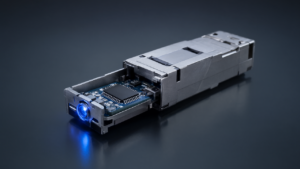
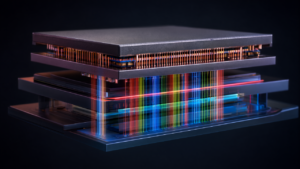
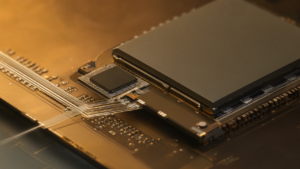
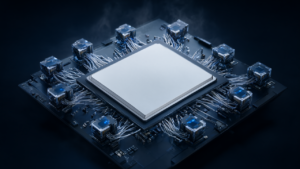
- Silicon Photonics Integration: Looking ahead to next-generation interconnects, Nokia is actively pursuing silicon photonics integration. This includes collaboration with partners like NVIDIA on solutions for Co-Packaged Optics (CPO) and Near-Packaged Optics (NPO), aiming to develop more power-efficient, high-density optical interconnects directly integrated with processing units.
Further demonstrating this growth, Nokia reported a 56.4% year-over-year increase in optical networking revenue to €821 million in October 2025, directly correlating AI-driven demand with tangible revenue expansion.
Strategic Significance & Outlook
The robust growth forecast for Nokia’s optical network business underscores the profound impact of AI development on global telecommunications infrastructure. Anticipating sustained high demand from hyperscalers, Nokia is poised to accelerate innovation in optical transmission technology, continually delivering advanced solutions tailored to the unique challenges of AI data centers. This trajectory not only solidifies Nokia’s competitive advantage in the optical networking market but also reinforces its strategic position as a foundational infrastructure provider in the unfolding AI era. The company’s continued momentum in both optical and IP networking is expected to be instrumental in enabling the capabilities of the next-generation digital economy.