Background
Traditional chemotherapy has long faced challenges associated with high systemic toxicity, significantly impairing patients’ quality of life. Gene therapy for cancer has emerged as a promising avenue to overcome these limitations, but it has been constrained by the need for precise delivery to tumors and minimal off-target effects. Advancements in nanotechnology provide a powerful tool to address these drug delivery challenges. The clinical success of LNP-based mRNA vaccines during the COVID-19 pandemic serves as a major milestone for nanocarrier technology in clinical applications, further fueling expectations for its use in cancer therapy.
Key Findings
In the domain of precision cancer gene therapy, the innovative convergence of tumor-specific promoters with nanodelivery systems holds immense potential to dramatically enhance therapeutic specificity. This approach allows therapeutic agents to concentrate their action on targeted cancer cells, minimizing adverse effects on healthy tissues. Notably, lipid nanoparticle (LNP)-based mRNA and siRNA therapies have already demonstrated promising clinical success, validating the efficacy of nanocarrier technology in this field.
Technical & Clinical Details
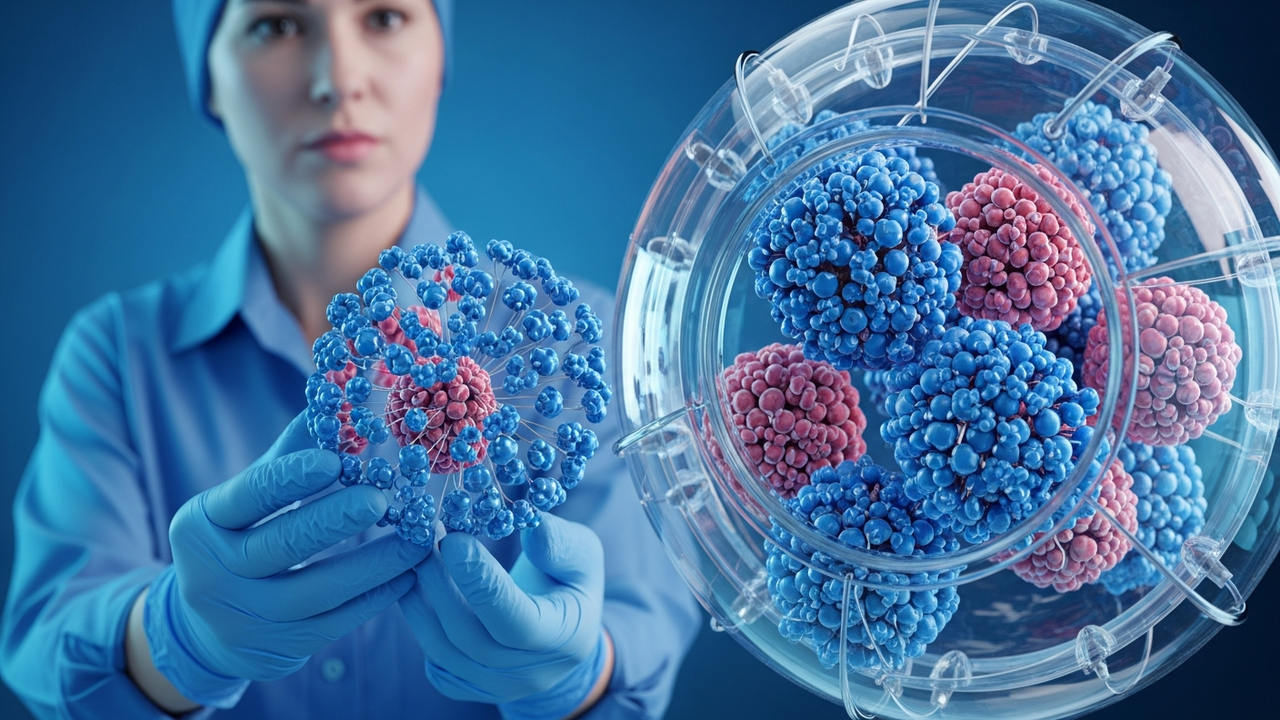
Nanocarriers are designed to control drug pharmacokinetics in vivo, promoting selective accumulation in tumors and facilitating cellular internalization. Key nanocarrier types include lipid-based systems such as liposomes and LNPs, polymer-based systems, and inorganic/hybrid nanosystems like gold nanoparticles and metal-organic frameworks (MOFs). These nanocarriers are engineered to protect therapeutic agents from degradation in biological environments and to ensure their release into target cells at optimal times. Furthermore, surface engineering strategies, such as ligand decoration (attaching molecules that bind to specific receptors on cancer cells to the nanocarrier surface) and PEGylation (modifying with polyethylene glycol to evade immune recognition and extend circulation time), are crucial for enhancing systemic biodistribution and tumor penetration. This allows for the maintenance of effective therapeutic concentrations at the tumor site while simultaneously reducing systemic toxicity.
Strategic Significance & Outlook
The integration of tumor-specific promoters and nanodelivery systems is paramount for shaping the future of precision cancer gene therapy. Future research will focus on developing more effective targeting strategies, biocompatible nanocarrier materials, and scaling up and standardizing manufacturing processes. The development of multifunctional nanocarriers—for instance, those capable of simultaneous drug delivery and diagnostic imaging—is also underway and is expected to contribute significantly to the advancement of personalized medicine. Progress in this field has the potential to dramatically improve treatment outcomes and the quality of life for cancer patients.