Key Findings
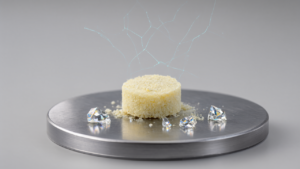
All-solid-state lithium-ion batteries are highlighted for their superior advantages in safety, stability, and energy density compared to conventional batteries employing flammable liquid electrolytes. This study specifically demonstrates the effectiveness of embedding nanofiller additives within solid composite electrolytes as a strategy to suppress lithium dendrite growth, a major challenge in lithium-metal battery development.
Technical / Clinical Details
The formation of lithium dendrites poses a severe problem, leading to short circuits and premature battery degradation. This research clarifies that the mechanical properties of solid electrolytes are critically important for inhibiting this dendrite growth. Specifically, the high mechanical strength of solid electrolytes acts as a physical barrier against the branched growth of lithium metal. Furthermore, the introduction of nanofiller additives allows for maintaining the ionic conductivity of the solid electrolyte while simultaneously increasing its resistance to dendrite penetration. This approach effectively reduces the electrode-electrolyte interfacial resistance and prevents crack propagation within the battery, thereby contributing to significant improvements in cycle life and safety.
Background & Context
With the widespread adoption of electric vehicles (EVs) and portable electronic devices, there is a strong demand for safer and higher-performing battery technologies. All-solid-state batteries, due to their inherent safety and high energy density potential, are considered the most promising candidates for next-generation battery technology. However, the issue of lithium dendrites has been a major impediment to the commercialization of all-solid-state batteries, especially those utilizing lithium metal anodes. This research presents one of the significant solutions to this long-standing problem, offering crucial insights that could accelerate the commercialization of all-solid-state batteries.
Strategic Significance & Outlook
The optimization of solid electrolyte mechanical properties and nanofiller additives indicates a vital direction for achieving dendrite-free, long-life all-solid-state lithium-metal batteries. Future research will need to explore the applicability of this approach to different solid electrolyte materials (e.g., sulfide, oxide, polymer systems) and its scalability to larger cell formats. These advancements hold the potential to dramatically extend the driving range of EVs, reduce charging times, and exponentially enhance battery safety, marking a new era in energy storage.