Key Findings
Sekisui Chemical Co., Ltd., a diversified Japanese conglomerate spanning housing, urban infrastructure & environmental products, high-performance plastics, and medical sectors, is currently pursuing a perovskite solar cell program that is not yet revenue-generating. Analysis suggests that this substantial investment in perovskite technology is increasing financial pressure and project execution risks, particularly during a period when its established core businesses have not met operating profit targets. This scenario underscores a common challenge for conglomerates: how to strategically balance aggressive investments in emerging growth areas with the short-term profitability of existing operations.
Technical Details
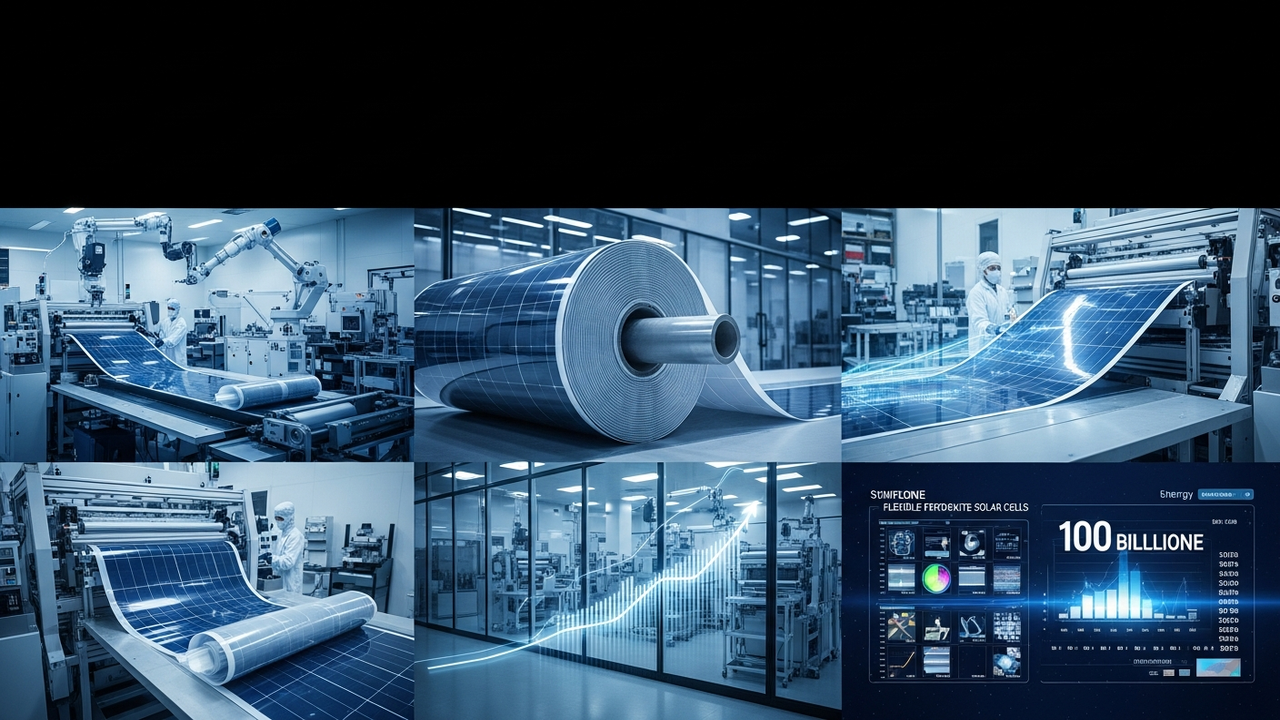
Sekisui Chemical’s perovskite solar cell program focuses on developing flexible film-type solar cells under the brand name ‘Solafil’. This technology leverages characteristics such as lightweight, thinness, and flexibility, aiming for applications on building facades, curved surfaces, and structures with low load-bearing capacity, where traditional silicon solar cells are difficult to install. The company has announced plans to establish a 100 MW mass production line by 2027, targeting a power conversion efficiency of 20% and a 20-year service life. Such large-scale production infrastructure requires substantial initial investment, making technical validation and market success imperative.
Background & Context
Perovskite solar cells are garnering global attention as a next-generation renewable energy technology, but challenges in durability, cost, and manufacturability persist for their commercialization. A chemical materials manufacturer like Sekisui Chemical entering this field benefits from its expertise in material development. However, entering a new market entails risks such as long payback periods for upfront investments and intense technological competition. Against the backdrop of the Japanese government’s regulatory easing to promote perovskite solar cells, Sekisui Chemical’s initiatives play a crucial role in enhancing Japan’s energy self-sufficiency and achieving its decarbonization goals. Nevertheless, its strategic positioning and financial implications remain key considerations for investors.
Strategic Significance & Outlook
Sekisui Chemical aims to establish a new revenue stream through the mass production and market introduction of its ‘Solafil’ perovskite solar cells. If successful, the company could create synergies with its high-performance plastics and housing businesses, establishing a dominant position in the Building-Integrated Photovoltaics (BIPV) market. However, this requires overcoming technical hurdles, managing initial production costs, and accurately capturing market demand. While the company’s extensive industrial footprint and global reach are potential strengths supporting this new venture, the financial health of the perovskite business will increasingly become a critical factor in Sekisui Chemical’s future strategic management.
Source: #