Key Findings
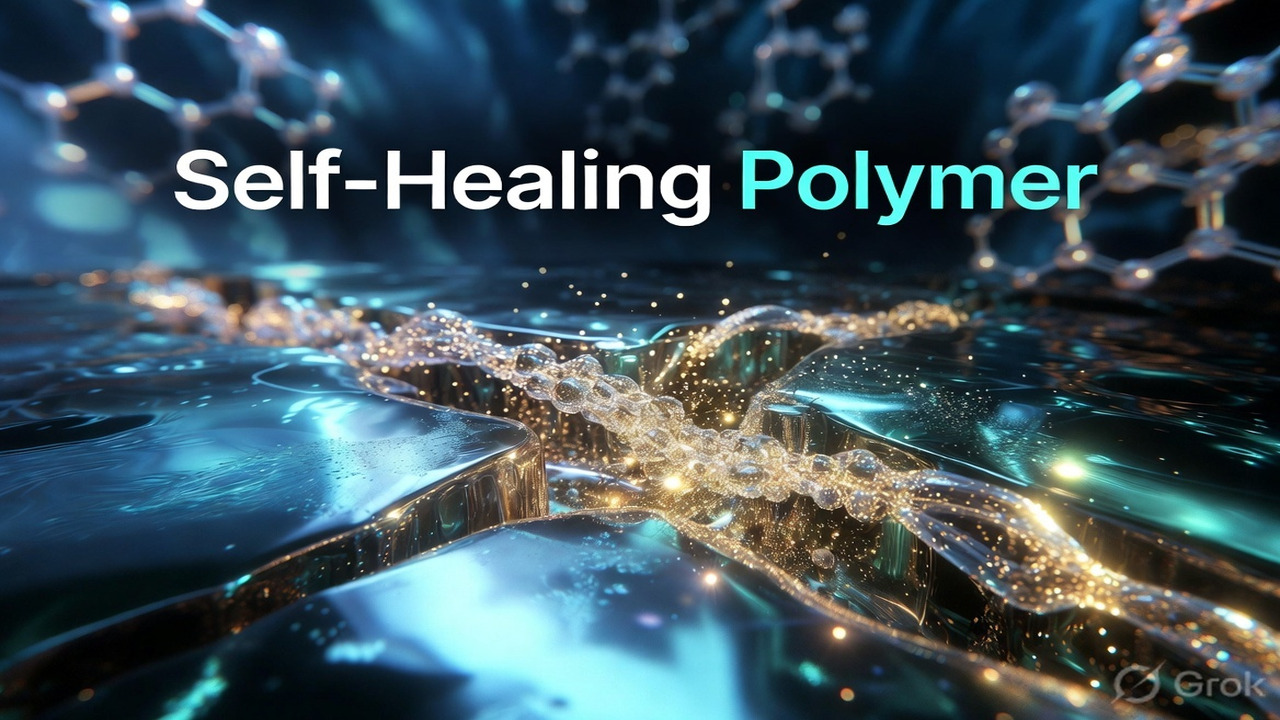
Self-healing polymers are transforming industries as innovative materials capable of autonomously repairing damage without human intervention. Especially for Original Equipment Manufacturers (OEMs) in sectors such as automotive, aerospace, and electronics, these polymers are dramatically extending product durability and lifespan, reducing maintenance costs, and contributing to overall sustainability goals. The market for these materials, valued at $2-3 billion in 2025, is projected to grow rapidly to $13-26 billion by 2035, with advanced technologies like vitrimers drawing significant attention.
Technical & Clinical Details
Self-healing polymers are broadly categorized into two mechanisms: ‘extrinsic’ and ‘intrinsic.’ Extrinsic self-healing involves the release of encapsulated healing agents upon damage, which then seal cracks. Intrinsic self-healing, on the other hand, utilizes inherent chemical interactions within the material, such as reversible covalent bonds, hydrogen bonds, or metal coordination, to repair damage. Vitrimers, in particular, are a type of intrinsic mechanism that uses reversible covalent bonds (e.g., transesterification reactions) allowing the material to flow and reform under heat or light stimulation. This makes vitrimers noteworthy as ‘third-generation polymers’ that combine the excellent mechanical properties of thermosets (rigidity, heat resistance) with the recyclability and reprocessability of thermoplastics. Damaged areas can be rejoined by applying heat, restoring properties close to their original strength.
Background & Context
Modern industries increasingly demand product longevity, efficient resource utilization, and waste reduction. Especially in fields using high-performance materials, minor damage can lead to complete product failure, resulting in substantial costs and environmental impact. Self-healing polymers offer a direct solution to these challenges, extending product lifecycles, improving resource efficiency, and minimizing waste generation. The aerospace industry explores them for enhancing safety by preventing structural degradation from micro-cracks, the automotive industry for maintaining aesthetics and durability of paints and interior materials, and the electronics industry for extending the lifespan of flexible circuits and batteries.
Strategic Significance & Outlook
The self-healing polymers market is expected to expand significantly in the coming years, driven by continued technological innovation and cost reduction. Intrinsic self-healing materials like vitrimers, in particular, will be a focal point for improving performance, processability, and scalability towards broader practical applications. Future R&D goals include addressing more complex damage types, enhancing healing efficiency, and achieving self-healing capabilities at lower temperatures. These advancements are vital for redefining material sustainability and accelerating the transition towards a circular economy.
Source: https://voiceofplastic.com/https-voiceofplastic-com-self-healing-polymer/






Comments