Key Findings
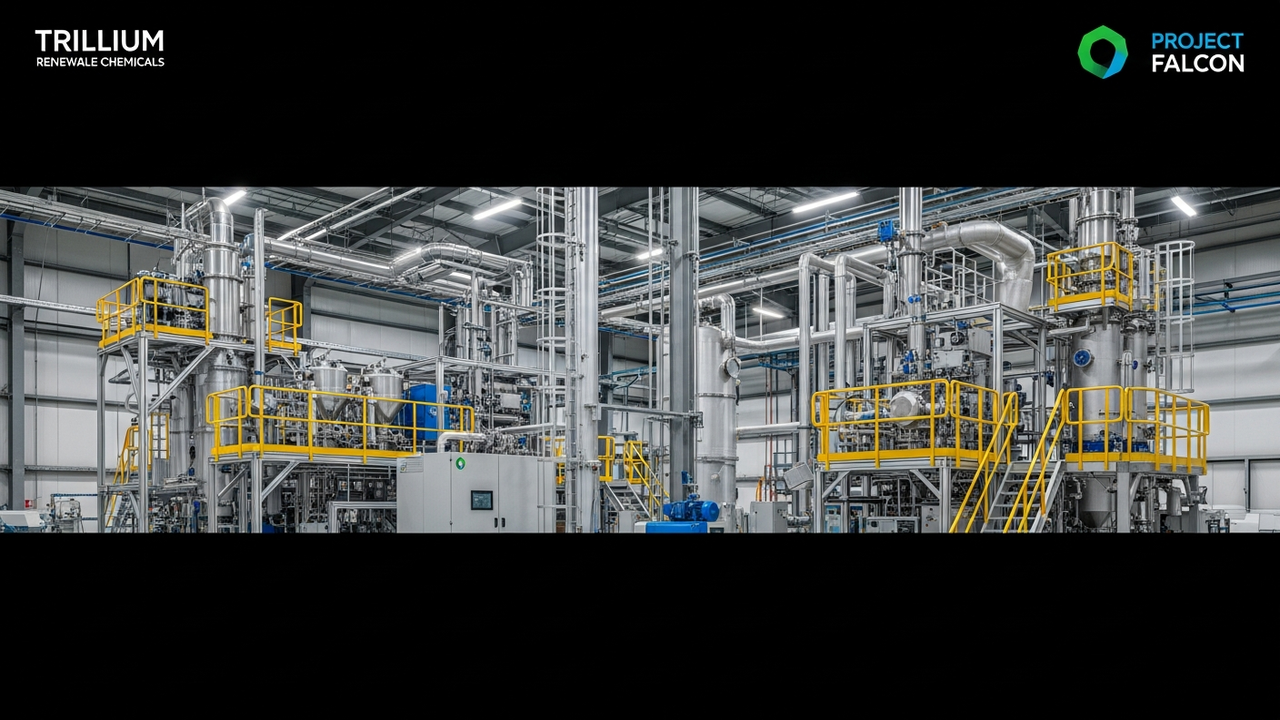
Trillium Renewable Chemicals has announced the completion of construction and initiation of commissioning for ‘Project Falcon,’ its demonstration plant for producing bio-based acrylonitrile (ACN) from biomass. This marks a significant milestone towards the company’s goal of developing commercial facilities for renewable acrylonitrile, with product shipments to initial customers expected to commence in late 2026. The technology is designed for easy integration into existing chemical supply chains, enabling a sustainable, fossil-fuel-independent ACN supply.
Technical & Clinical Details
Acrylonitrile is a crucial basic chemical for manufacturing a wide range of polymer materials, including carbon fiber, ABS resins, acrylic fibers, and nitrile rubber. Traditional ACN production predominantly relies on the ‘Sohio process,’ using propylene and ammonia as feedstocks, which presents challenges related to fossil fuel dependency and significant greenhouse gas emissions. Trillium’s ‘Project Falcon’ employs a proprietary process to produce ACN from renewable biomass feedstocks (e.g., glycerol). This bio-based method significantly reduces carbon dioxide emissions, contributing to the establishment of a sustainable supply chain.
The demonstration plant simulates commercial-scale production processes to validate product quality, yield, and process stability. Initial shipments to customers will enable performance evaluation in real-world applications, a vital step for establishing market credibility. This process is compatible with existing ACN plants and can be implemented without extensive infrastructure modifications, offering polymer material manufacturers the flexibility to transition to green ACN readily.
Background & Context
The chemical industry provides the foundation for diverse products such as plastics, fibers, and rubber, but its manufacturing processes consume vast amounts of fossil fuels and are major contributors to CO2 emissions. Amidst the accelerating global shift towards decarbonization and a circular economy, demand for bio-based chemicals is rising. Technologies for producing basic chemicals like ACN from renewable resources are essential for reducing the environmental footprint of the entire supply chain and enabling companies to meet sustainability goals. Strategic investors like Hyosung Advanced Materials backing Trillium underscore the high commercial potential of this technology.
Strategic Significance & Outlook
The success of Trillium’s ‘Project Falcon’ and subsequent commercial plant development will significantly impact the growth of the bio-based chemical industry. The market introduction of renewable ACN will promote the ‘greening’ of polymer products such as carbon fiber composites, ABS resins, and acrylic fibers, contributing to enhanced sustainability in industries like automotive, aerospace, construction, and textiles. Future key drivers for widespread adoption will include optimizing production costs, scaling up operations, and expanding feedstock versatility to accommodate various biomass sources. Trillium’s technology is poised to be a crucial element in transforming the chemical industry towards a more sustainable future, reducing reliance on fossil fuels.
Source: https://www.investmentreports.co/interview/corey-tyree-2334






Comments