Background
Modern society demands high-sensitivity and high-precision sensing across diverse fields, including medical diagnostics, environmental pollutant monitoring, advanced security systems, and next-generation computing technologies. Traditional sensing technologies have faced limitations, particularly in detecting early disease biomarkers and trace harmful substances in the environment. Nanoelectronics sensing technology represents a breakthrough for these unsolved challenges, promising faster and more accurate information that will contribute to improving societal safety and health.
Key Findings
Researchers at the University of California have developed a groundbreaking nanoelectronics sensing technology utilizing sensing elements based on carbon nanotubes and graphene. This new technology combines ultra-high sensitivity, capable of detecting minute current changes at the picoampere (pA) level and extremely faint voltage changes at the femtovolt (fV) level, with excellent noise reduction capabilities.
Technical & Clinical Details
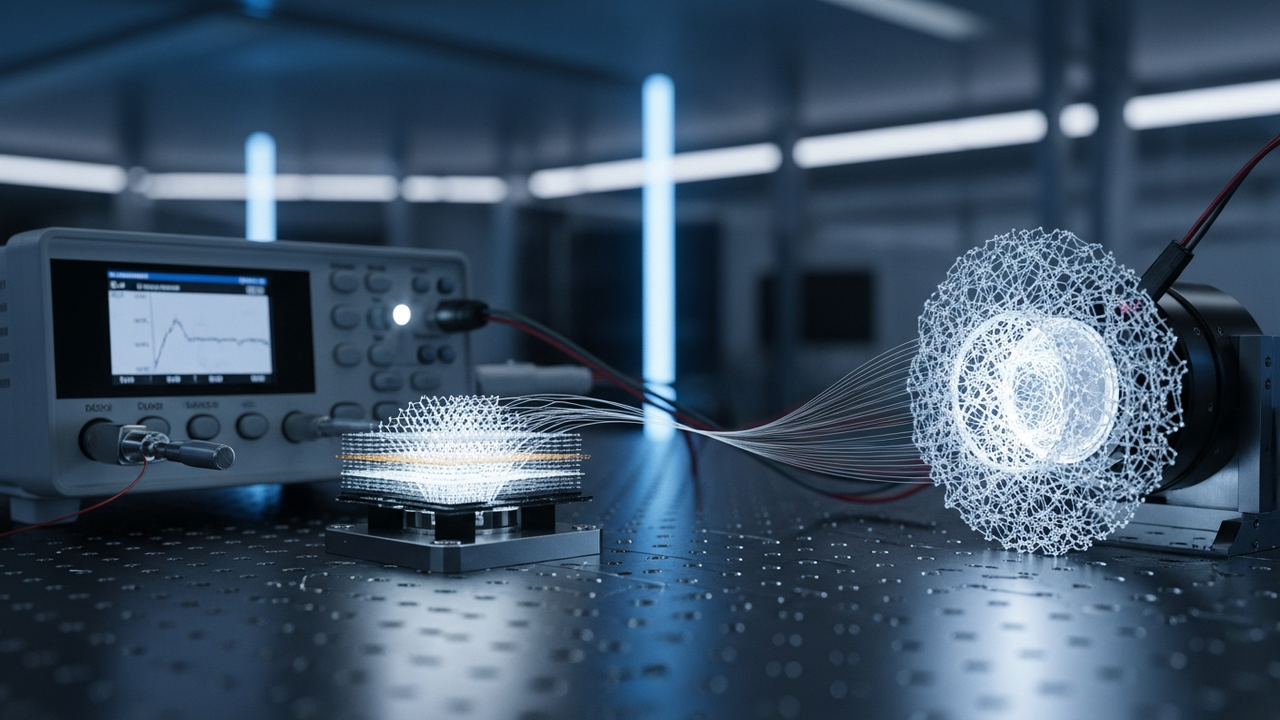
The core of this technology lies in carbon nanotubes (CNTs) and graphene, materials characterized by atomic-level thinness and exceptional electrical properties. These nanomaterials offer significantly higher surface-area-to-volume ratios and electron mobility compared to conventional semiconductor materials. The research team precisely structured CNTs and graphene to create sensing elements that react with extreme sensitivity to subtle external physical, chemical, or electrical stimuli. This ultra-high sensitivity is achieved by maximizing the interaction area with the target analyte and leveraging quantum effects inherent to the nanoscale. Furthermore, optimized material design and signal processing algorithms substantially suppress environmental noise, enabling highly reliable data acquisition.
Future Outlook
This groundbreaking nanoelectronics sensing technology holds the potential to revolutionize a wide array of application fields. In medicine, it could enable disease diagnosis at very early stages, accelerating the advancement of personalized medicine. For environmental monitoring, it promises real-time detection of trace pollutants, enhancing the effectiveness of conservation efforts. Furthermore, in quantum computing, this technology could contribute to developing elements capable of stable quantum state detection and manipulation without requiring cryogenic environments, marking a significant step towards room-temperature quantum computers. Accelerated research and development are anticipated for further miniaturization, integration, and reduction of manufacturing costs for this technology.
Source: https://eureka.patsnap.com/report-improve-sensitivity-of-sense-leads-in-nanoelectronics