Key Findings
America Makes and NCDMM, the U.S. national additive manufacturing (AM) technology innovation institute, have awarded $2 million to a crucial project titled ‘Artificial Intelligence for Material Allowables in Additive Manufacturing (AIM-4AM).’ This funding represents a strategic step towards revolutionizing the qualification process for AM materials through AI, aiming to facilitate the rapid certification and commercialization of high-performance materials.
Technical / Clinical Details
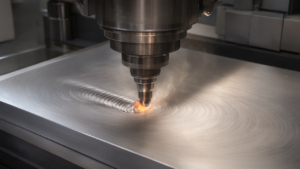
The AIM-4AM project will harness the power of machine learning (ML) to address the long-standing challenges of delays and high costs in material qualification within the additive manufacturing sector. Specifically, it targets 17-4PH stainless steel produced by laser powder bed fusion (LPBF) technology. The project will integrate the following key elements:
- Data Collection and Integration: Gathering and consolidating vast amounts of data related to various manufacturing parameters in the LPBF process (e.g., laser power, scan speed, powder characteristics), the material’s internal structure (microstructure), and its resulting mechanical properties (e.g., strength, ductility, fatigue life).
- Machine Learning Model Development: Developing ML models that learn the complex, non-linear relationships between process, structure, and properties from these intricate datasets. The ML models will be used to predict how specific process parameters influence final material properties and to identify optimal manufacturing conditions.
- Reduction of Physical Testing: As the developed ML models become capable of reliably predicting material behavior, they will enable a significant reduction in the extensive physical testing traditionally required. This will dramatically decrease the time and cost associated with testing.
This approach will shorten the time required for additive manufacturing material qualification, allowing manufacturers to bring new materials to market more rapidly.
Background & Context
Additive manufacturing (3D printing) is a transformative manufacturing technology with the potential to create innovative products across diverse industries like aerospace, medical, and automotive. However, ensuring the reliability and quality of AM parts requires that the materials used meet stringent qualification standards. Traditional material qualification processes are heavily reliant on physical testing, which is time-consuming and costly, thus acting as a bottleneck to the widespread adoption and industrialization of AM technology. AI, particularly machine learning, offers a powerful means to solve this challenge by enabling data-driven approaches in materials science and manufacturing. Investment in this area by national innovation institutes like America Makes demonstrates the U.S.’s strong commitment to strengthening its competitiveness in advanced manufacturing.
Strategic Significance & Outlook
The success of the AIM-4AM project will fundamentally transform the additive manufacturing material qualification process, establishing a faster and more cost-effective methodology. Following its demonstration with 17-4PH stainless steel, this AI-based qualification approach is expected to be expanded to other AM materials and processes. This will accelerate the development and commercialization of new alloys, composites, and ceramics, paving the way for broader adoption of AM technology across a wider range of industries. In the long term, AI will play a critical role in standardizing quality assurance in additive manufacturing and streamlining the entire process from design to manufacturing and certification, thereby accelerating innovation cycles throughout the manufacturing sector.