Key Findings
Atom Computing has demonstrated the industry’s first complete and sustained multi-round quantum error correction (QEC) on a neutral atom quantum computer. This groundbreaking achievement is particularly significant as it showcases ‘sub-threshold’ operation, where the logical error rate effectively decreases as the system size and redundancy are increased, marking a major stride towards realizing fault-tolerant quantum computing (FTQC).
Technical Details
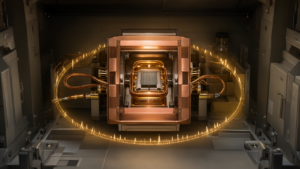
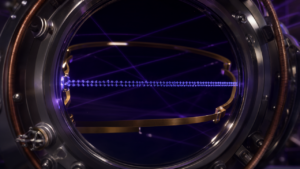
The demonstration was performed on Atom Computing’s neutral atom system, utilizing an error correction code known as a toric code. The research team not only confirmed that increasing qubit groupings from 16 to 32 did not lead to an increase in error rates but also observed lower error rates with larger groupings. This signifies the demonstration of operation below the ‘error threshold,’ which is a theoretical foundation for quantum error correction. Atom Computing’s system integrates multiple fundamental capabilities into a single, continuously operating architecture, including iterative error correction, mid-circuit measurements, qubit swapping, continuous replenishment, arbitrary connectivity, and persistent logical memory. The continuous qubit replenishment capability, in particular, allows for the replacement of faulty qubits with healthy ones as errors occur, significantly enhancing the system’s robustness.
Background and Industry Context
One of the biggest obstacles to the practical application of quantum computing is qubit decoherence and high error rates. QEC is key to overcoming this error problem and enabling reliable quantum computations. For fault tolerance, it is essential that logical qubit error rates continue to decrease even as the number of physical qubits dramatically increases. Previously, Google had reported sub-threshold operation with superconducting qubits. Atom Computing’s achievement now demonstrates this critical milestone on a neutral atom platform, positioning neutral atom technology as a strong competitor alongside superconducting systems. This reflects an industry shift in focus from mere physical qubit count to ‘useful’ quantum computers that combine reliability and scalability.
Strategic Significance and Outlook
Atom Computing’s demonstration of multi-round QEC will accelerate the roadmap for the commercialization of fault-tolerant quantum computers. The company is collaborating with Microsoft and has a roadmap to develop a 50-logical-qubit machine by the latter half of 2026. This technology significantly advances the application of quantum computing to complex problems where error tolerance is crucial, such as drug discovery, materials science, and financial modeling. Neutral atom platforms, with their high connectivity and relatively easy scalability, are expected to play a vital role in the upcoming quantum hardware competition. This breakthrough represents a decisive step in the transition of quantum computing from the laboratory to industrial applications.
Source: https://quantumzeitgeist.com/neutral-atom-quantum-computer-repeatable/