Key Findings
A research paper, published as a preprint on bioRxiv on June 10, 2026, proposes a novel theoretical model that describes the electroadhesion phenomenon of polymer networks mediated by polycation interfacial bridging. This model comprehensively integrates multiple physicochemical interactions—namely, electrophoresis, ionic complexation, and polymer chain entanglement—which were previously understood in fragments. By doing so, it provides deep insights into the adhesive forces of polymers and their control mechanisms. This discovery opens new avenues for the design of electrically controllable adhesive materials.
Technical Details
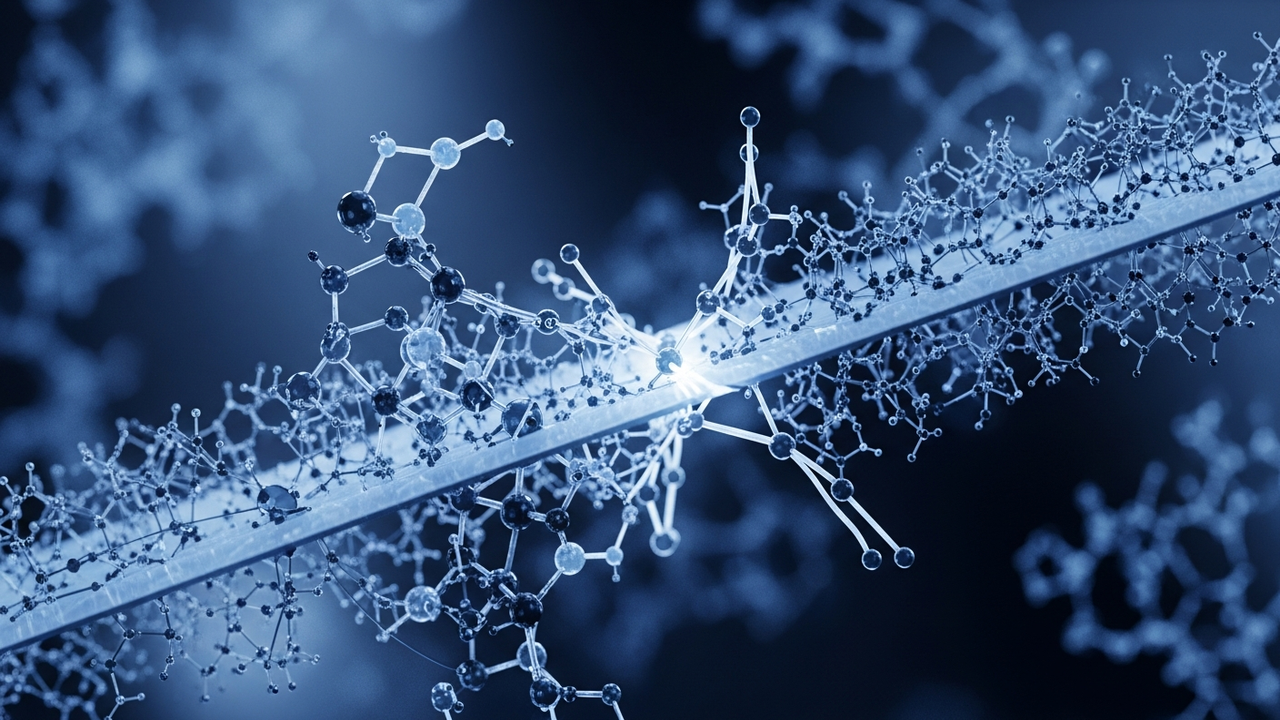
The proposed theoretical model elaborates on how polymer networks and polycations interact at an interface, leading to enhanced adhesion through electrical forces. Specifically, it considers the following key mechanisms: First, ‘sticky electrophoresis’ refers to the phenomenon where polycations migrate towards the polymer network surface under an electric field, creating transient adhesion. Second, ‘ionic complexation’ describes the formation of strong bonds through electrostatic interactions between anionic groups within the polymer network and the polycations. Third, ‘chain entanglement’ accounts for the physical intertwining of polymer and polycation chains, which improves mechanical stability at the adhesive interface. By understanding and controlling the balance of these interactions, it becomes possible to develop ‘smart adhesives’ whose adhesion strength can be adjusted by an external electric field, as well as functional materials that can dissociate under specific conditions.
Background & Context
Polymer adhesion technology is indispensable in many advanced technological fields, including medical devices, wearable electronics, robotics, and biomimetic materials. However, conventional adhesives have been limited by their inability to easily alter their properties once bonded. Materials whose adhesion can be switched on/off or adjusted in strength by external stimuli, particularly electrical signals, enable innovative applications such such as device fixation in minimally invasive surgery, reconfigurable flexible circuits, or the realization of self-healing materials. This research aims to accelerate the development of these next-generation materials by deepening the fundamental understanding of electroadhesion mechanisms.
Strategic Significance & Outlook
The theoretical model proposed in this study will serve as a crucial guide for the design principles and performance prediction of electroadhesive polymer materials. Building upon this model, more efficient and reliable electro-responsive adhesives and bioadhesives are expected to be developed. For instance, applications ranging from controlled adhesion and detachment of drug delivery devices to biological tissues, manufacturing of flexible displays, and soft robotic grippers are envisioned. In the future, as this theoretical framework is further validated and refined by experimental data, the commercialization and practical implementation of electroadhesive polymers are expected to accelerate significantly, bringing innovation to various industrial sectors.
Source: https://www.biorxiv.org/content/10.64898/2026.06.05.730541v1