Key Findings
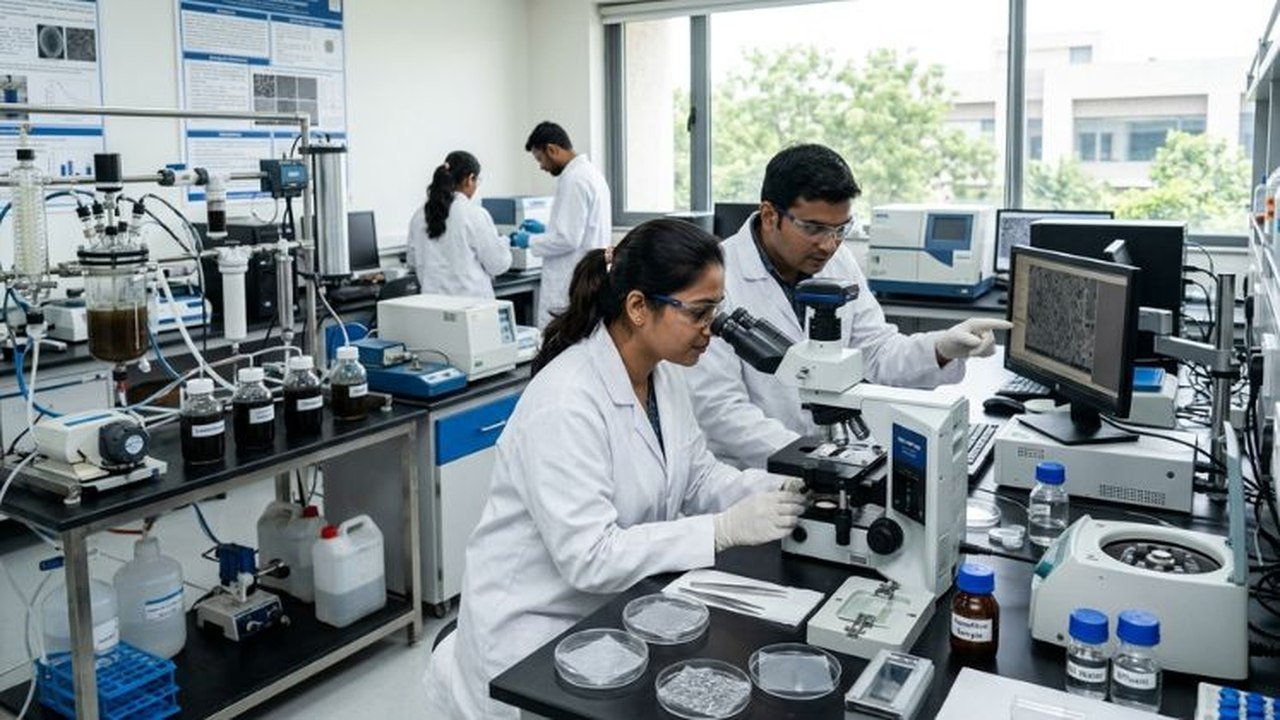
Scientists at India’s CSIR-IICT (Council of Scientific and Industrial Research – Indian Institute of Chemical Technology) have developed a high-performance electrospun nanofiber membrane specifically designed for textile wastewater treatment, achieving an exceptional 99.1% dye removal efficiency. This groundbreaking composite membrane, enhanced with Metal-Organic Frameworks (MOFs) and graphene materials, sets a new standard for environmental remediation technologies.
Technical / Clinical Details
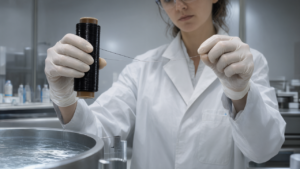
The developed nanofiber membrane is fabricated using electrospinning, a method that draws polymer solutions into ultra-fine fibers under high voltage, resulting in an exceptionally high surface area and an interconnected porous structure. This unique architecture provides an ideal platform for effective adsorption and degradation of dye molecules in wastewater. Furthermore, the membrane is enhanced with MOFs, graphene oxide (GO), and graphene nanoplatelets (GNP). MOFs are highly effective in capturing dye molecules due to their regular pore structures and high adsorption capacities. GO and GNP further improve the membrane’s dye removal efficiency and durability due to their large surface area, excellent chemical stability, and potential catalytic activity. Experimental results demonstrated that this composite nanofiber membrane exhibits high removal capabilities across a wide range of dyes, achieving a particularly high efficiency of 99.1%. The system’s scalability and energy efficiency also suggest its adaptability for large-scale industrial applications.
Background & Context
The textile industry is globally recognized as one of the most environmentally intensive industries, consuming vast amounts of water and discharging wastewater laden with dyes and chemicals. This effluent is harmful to aquatic life and can adversely affect human health. Governments worldwide are imposing stricter discharge standards for industrial wastewater, and in major textile-producing countries like India, innovative technological solutions are urgently needed to meet ‘zero discharge’ targets. Existing wastewater treatment technologies often face challenges such as high costs, insufficient efficiency, or the creation of secondary pollution.
Strategic Significance & Outlook
The high-performance nanofiber membrane developed by CSIR-IICT holds the potential to revolutionize the field of textile wastewater treatment. The commercialization and large-scale deployment of this technology will be a crucial means for the Indian textile industry to comply with environmental regulations and achieve its ‘zero discharge’ goals. Furthermore, this membrane’s potential extends beyond dye removal to include heavy metals and other organic pollutants, promising broader contributions to water treatment. Its scalability and energy efficiency position it as a vital technology for sustainable water resource management for industries globally, including in developing nations.